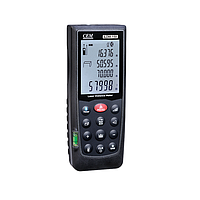
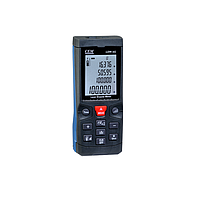
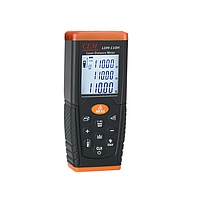
Distance meter
Fast, repeatable distance measurement is essential in construction, maintenance, facility management, installation work, and many survey-related tasks. A reliable distance meter helps reduce manual errors, speeds up layout and verification work, and makes it easier to capture dimensions for area, volume, and indirect height calculations.
On this page, you can explore handheld laser distance meters for short to long measuring ranges, from everyday indoor checks to more demanding field use. The category includes practical options from brands such as FLUKE, LEICA, BOSCH, SATA, and Chauvin Arnoux, covering a wide spread of accuracy, protection class, and measuring functions.
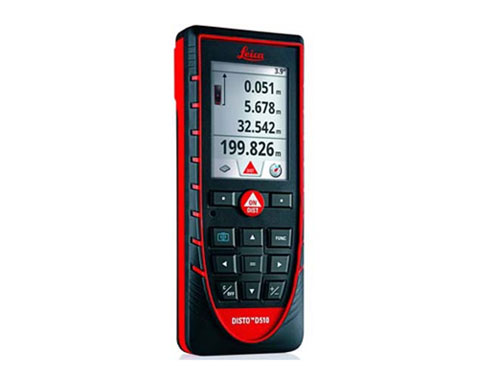
Where distance meters are commonly used
Laser distance meters are widely used anywhere quick dimensional checks are needed without stretching a tape over long paths. Typical applications include room measurement, ceiling height checks, equipment installation, cable routing estimates, warehouse planning, fit-out work, and verification of machine or structure spacing.
In technical B2B environments, they are also useful for pre-installation surveys, maintenance planning, and documentation. When a job requires related motion or field measurement tools, teams may also look at products such as speed sensors for equipment monitoring or a walkie-talkie for on-site coordination.
Typical functions buyers look for
Modern handheld units usually do much more than single-point distance readings. Many models in this category support continuous measurement, area and volume calculations, add/subtract functions, and indirect measurements based on angle or Pythagoras methods. These features are especially useful when direct access to the target point is limited.
Another practical consideration is the measurement reference system. Some devices let users measure from the front, back, tripod position, or an endpiece, which helps improve consistency in corners, edge measurements, and hard-to-reach layouts. Memory storage, backlit displays, and multiple units such as m, ft, and in also improve day-to-day usability.
How to choose the right measuring range and accuracy
The first selection factor is working distance. For common indoor use, a 40 m to 60 m unit is often sufficient. Examples include the FLUKE-417D with a typical range up to 40 m, the FLUKE FLUKE-405/CNAP at 50 m, and the SATA 62712 or Chauvin Arnoux CA 1730 at 60 m. These are generally suitable for rooms, offices, apartments, workshops, and light installation jobs.
For larger spaces or more versatile site work, longer-range models make more sense. The FLUKE FLUKE-408/CNAP reaches 80 m, while the FLUKE FLUKE-410/CNAP extends to 100 m. On the higher-performance side, LEICA models such as the DISTO X4 and DISTO X3 go up to 150 m, and some advanced models like the Leica DISTO™ D810 package or LEICA DISTO S910 Pack support even longer-range or more advanced measurement workflows.
Accuracy matters just as much as range. For many industrial and building tasks, tolerance around ±2 mm is practical. Where tighter measurement performance, digital documentation, or advanced point-to-point workflows are important, users may prefer models with approximately ±1.0 mm class performance and enhanced targeting support.
Durability and field suitability
Not every measuring environment is clean or controlled. Dust, splashes, handling impact, and temperature variation can affect tool life and measurement convenience. That is why protection class and mechanical durability should be part of the buying decision, not just range.
Several products in this category are designed for harsher use. For example, some FLUKE and LEICA models offer IP65 protection, while others such as the FLUKE-417D, FLUKE-424D ESPR, and Chauvin Arnoux CA 1730 provide IP54-class protection. Drop resistance is also relevant for maintenance teams and site technicians who carry instruments throughout the day.
Battery type is another practical detail. Depending on the model, users will find AAA, AA, or rechargeable battery configurations. For teams that rely on portable tools across long shifts, battery life per charge or per set of cells can influence productivity just as much as nominal specifications.
Examples of product positioning within this category
For straightforward day-to-day measurement, the FLUKE-417D and BOSCH GLM 50-23 G are good examples of compact laser distance meters for general use. They fit users who want a portable instrument for common distance and room calculations without moving into advanced survey-style features.
For broader functionality in the mid-range segment, the FLUKE FLUKE-405/CNAP, FLUKE FLUKE-408/CNAP, SATA 62712, and Chauvin Arnoux CA 1730 combine common measurement modes with practical distance capacity. These are suitable when the job regularly includes area, volume, or indirect height measurements.
At the advanced end, LEICA DISTO instruments such as the X3, X4, D810 package, and S910 Pack are relevant for users who need stronger outdoor usability, pointfinder support, tilt-based measurement, connectivity, or more sophisticated layout and documentation workflows. The right choice depends on whether the priority is speed, ruggedness, longer reach, or integration with digital measurement processes.
Features that can improve measurement efficiency
In practice, productivity often comes from small details rather than headline specs alone. A bright display, side button operation, memory for recent readings, automatic reference detection, and delayed measurement can save time across repeated jobs. These features help users work more confidently in corners, overhead positions, or spaces where one-handed operation is useful.
Some models also support tilt measurement, Bluetooth connectivity, software transfer, or app-based workflows. That can be valuable for professionals who need to document dimensions, transfer readings into reports, or support more advanced planning and layout activities. If your work extends into broader field measurement applications, categories such as Doppler Radar may also be relevant in specialized projects.
What to consider before ordering
Before selecting a distance meter, it helps to define the actual measuring environment. Indoor reflective walls, open outdoor targets, dark surfaces, bright ambient light, and long-range aiming conditions can all affect performance. Buyers should compare real working distance, expected target conditions, and the need for angle or indirect measurement functions.
It is also worth checking protection class, display readability, memory capacity, battery format, and whether the device is intended mainly for construction trades, maintenance, or more advanced survey-related tasks. Choosing based on real workflow usually leads to a better result than selecting by maximum range alone.
Distance meter solutions for technical purchasing
This category brings together practical options for users who need handheld laser measurement tools across industrial, commercial, and project-based environments. From compact 40 m devices to rugged 150 m models and advanced LEICA DISTO solutions, the selection supports different levels of accuracy, durability, and feature depth.
If you are comparing models, focus on the balance between range, measurement functions, protection level, and operating convenience. A well-matched distance meter can streamline daily measurement tasks, improve consistency, and support faster decisions from installation through inspection and documentation.
Get exclusive volume discounts, bulk pricing updates, and new product alerts delivered directly to your inbox.
By subscribing, you agree to our Terms of Service and Privacy Policy.
Direct access to our certified experts