Dimmer-than-usual lights, an air conditioner that fails to cool despite running continuously, sluggish startup, or spontaneous computer restarts often lead people to immediately suspect "weak power." Interestingly, however, these symptoms can also occur even when power usage remains within normal limits.
Replacing wiring, purchasing a voltage stabilizer, or calling a technician right away can sometimes result in unnecessary time and expense; a simple electrical measurement can often help pinpoint the cause much more quickly.
At what voltage level do devices begin to be affected?
For those who may not be aware, the nominal voltage for residential electricity in Vietnam is approximately 220V. Most household appliances operate stably when the voltage fluctuates between 200V and 240V; however, if the voltage drops below this range, many devices may begin to exhibit abnormal behavior.
You might encounter issues such as:
+ Dim lighting.
+ Difficulty engaging the air conditioner compressor.
+ Slow-running water pumps.
+ Fans running weaker than usual.
+ Computers or electronic devices spontaneously restarting.
This is an ideal time to check the voltage.
Measure the voltage first; you will likely know where to check
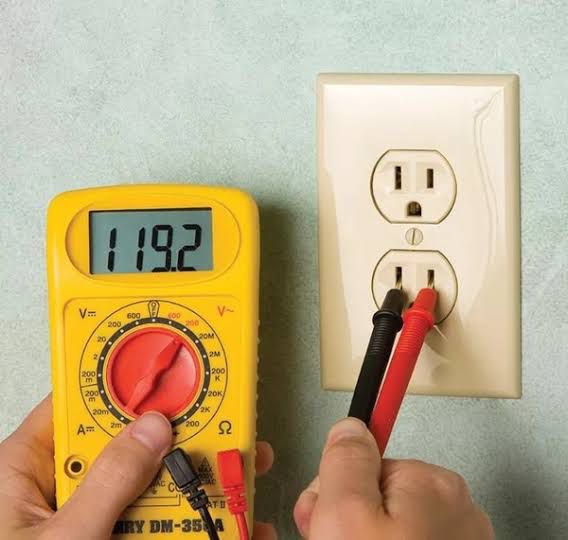
Many people believe that a utility company inspection is required to determine if the power supply is weak. In reality, however, a handheld multimeter is sufficient to quickly assess the power supply status in a home or small workshop.
The procedure is quite simple:
- Set the multimeter to AC voltage measurement mode.
- Insert the test probes into the power outlet.
- Observe the reading on the display.
- If the voltage remains around 220V but equipment performs poorly, the issue likely lies with the device itself or the wiring system.
- Conversely, if multiple outlets show readings of only 180–190V, it indicates a significant voltage drop in the power supply.
A voltage drop is not always caused by the power utility.
Measuring the voltage helps make identifying the cause easier.
Some common scenarios include:
+ A sharp increase in electricity demand during peak hours.
+ The house is located far from the transformer station.
+ Excessively long power lines.
+ Wires with a small cross-sectional area.
+ Loose or oxidized connections.
+ Too many high-power appliances operating simultaneously.
Each cause requires a different solution; therefore, measuring the voltage should always be the first step taken before replacing any equipment.
Reference:
6 early signs of a burnt start capacitor to avoid losing millions
Can an analog multimeter still test a capacitor?
Concerns about fluctuating voltage
A constantly fluctuating power supply often causes more issues than a stable low voltage. For instance, the voltage might reach around 225V, drop to 185V a few minutes later, and then rise again; this continuous variation causes instability in the operation of many electronic devices.
Common signs include:
+ Computers spontaneously restarting.
+ Air conditioners displaying error codes.
+ Refrigerators cycling on and off repeatedly.
+ Rapid deterioration of electronic power supply units.
+ Motors overheating abnormally.
Significant voltage variations observed across multiple readings serve as grounds to inspect the power supply system or contact the utility provider to verify the power status.
Should you buy a voltage stabilizer right away, or measure the voltage first?
A voltage stabilizer is effective when the issue originates from the external power supply. In cases of prolonged low input voltage, the device helps maintain a stable voltage level for household appliances.
The situation is entirely different, however, if the power supply is normal but there is a hidden short circuit in the outlet, loose wiring, or a malfunction within the appliance itself. In such instances, installing a voltage stabilizer will not solve the problem. Measuring the voltage provides a clearer picture before deciding to invest in additional equipment.
Taking small measurements often helps avoid having to make corrections repeatedly
The true value of a multimeter lies not merely in the number of parameters it can measure, but in its ability to help users determine the correct troubleshooting approach right from the start.
In addition to AC and DC voltage, the device supports:
+ Resistance measurement.
+ Continuity testing.
+ Current measurement (model-dependent).
+ Battery testing.
+ Quick assessment of certain electronic components.
When dealing with low power or unstable voltage, a simple voltage measurement can eliminate much of the guesswork and prevent unnecessary component replacements.
The information above is intended to assist you in diagnosing and resolving issues related to low power or unstable voltage using a multimeter. We hope this article helps you identify the root cause before proceeding with repairs or investing in additional equipment. EMIN offers a wide range of handheld multimeters suitable for electricians, maintenance technicians, and users who wish to check their power supply independently.