
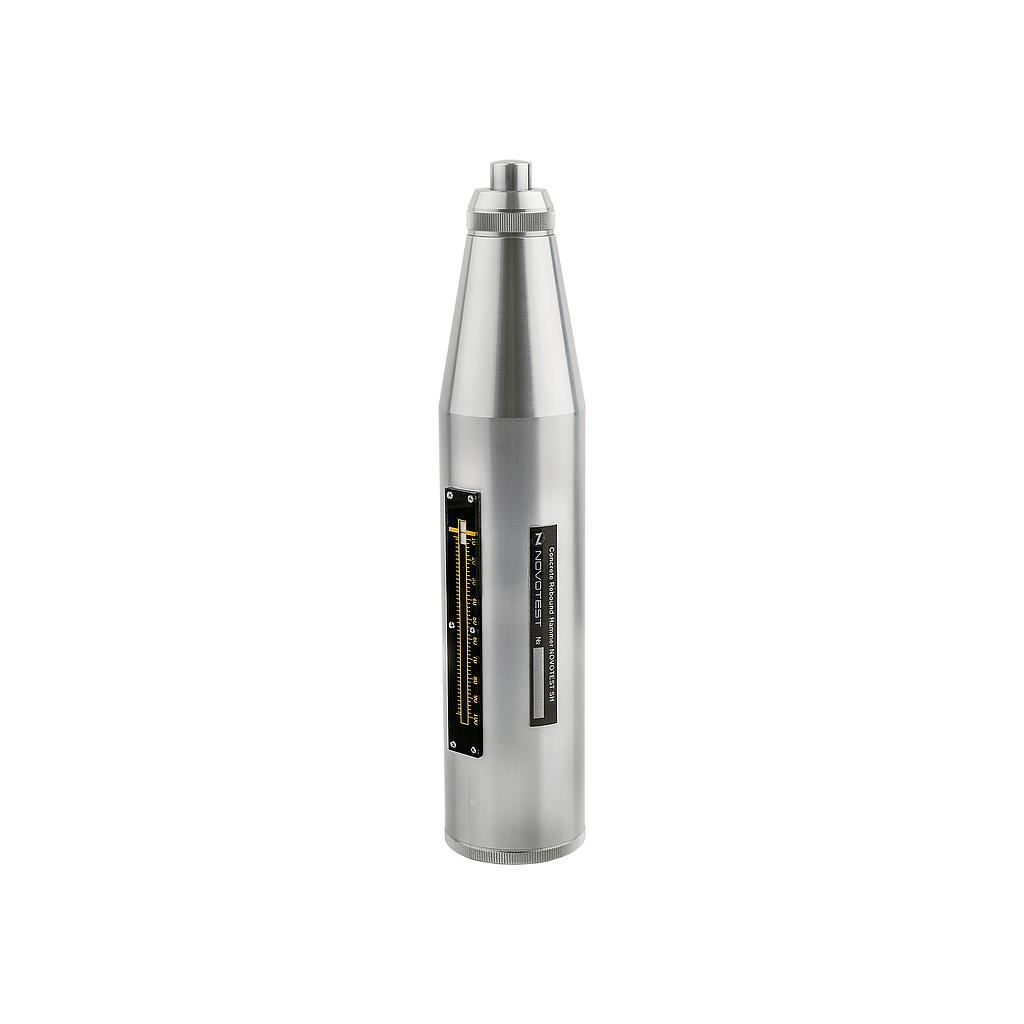
NOVOTEST SH-75 Concrete Rebound Hammer (10~60MPa, 735J, 50~100mm)
Measurement range of strength, MPa: 10 – 60
Impact energy, J: 735
Minimum thickness of testing object, mm: 50 – 100
Measurement accuracy, %: 10
Hardness value of impact plunger working surface, HRC, no less: 60
Surface roughness of testing object, Ra um, no worse: 40
Radius of impact plunger, mm: 25
Operating temperature range, ° C: -20 … +50
Weight of the device, kg, no more: 1
Gross weight of package, kg: 1.9
Dimensions of the package, cm: 20*34*10
Description:
- Concrete rebound hammer (sclerometer) – is a device for concrete and other building materials strength testing. The engineer Ernst Schmidt invented the construction of the sclerometer.
- The method is based on the impacting the impact plunger on the concrete surface with predetermined (normed) impacting energy and subsequent measuring of the height of the striker rebounding. The height of the striker rebounding will be proportional to the strength of concrete. The strength of concrete is determined with the calibration charts that are supplied with the instrument.
- Concrete Rebound Hammer NOVOTEST SH is very ease in operation, has good reliability of design and high measurement accuracy, so that this method is the most common method of measuring the strength of concrete in the world. The strength testing with the Concrete rebound hammer is correspond with ASTM C 805; ASTM D 5873 (for rock); DIN 1048, p. 2; ENV 206; EN 12 504-2; ISO / DIS 8045.
Datasheet
Get exclusive volume discounts, bulk pricing updates, and new product alerts delivered directly to your inbox.
By subscribing, you agree to our Terms of Service and Privacy Policy.
Direct access to our certified experts