Pressure Controllers
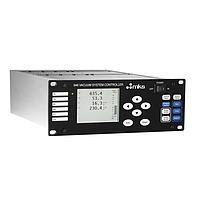
Stable process pressure is essential in many industrial systems, from HVAC airflow balancing to cleanroom monitoring and gas handling lines. When a loop needs more than simple indication, Pressure Controllers help combine measurement, switching, and output control in one device so operators can monitor conditions and respond automatically.
On this page, you can explore pressure control instruments used to maintain target values, trigger alarms, and feed pressure data into broader automation systems. This category is especially relevant where repeatable control, local visibility, and reliable signal output matter in day-to-day operation.
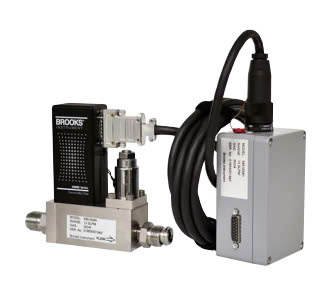
Where pressure controllers fit in an industrial system
A pressure controller sits between basic pressure indication and full process automation. Instead of only displaying a reading, it can compare the actual pressure to a setpoint and then activate relays or transmit an analog signal for external equipment. This makes it suitable for applications that require both monitoring and control action.
In practical terms, these instruments are often used to supervise differential pressure across filters, maintain airflow conditions, or provide alarm functions when process values move outside acceptable limits. For users who only need trending and indication, pressure, temperature & humidity monitors may be a useful related option, while controllers are better suited to closed-loop or threshold-based tasks.
Typical applications for differential pressure control
Many pressure control tasks involve differential pressure rather than line pressure alone. Measuring the pressure difference between two points is common in air handling systems, dust collection, clean environments, and filter status monitoring. A controller can help maintain system performance by detecting changes early and initiating a response through relays or control outputs.
This approach is particularly valuable when process stability affects product quality, energy efficiency, or maintenance scheduling. As differential pressure rises across a filter, for example, the controller can indicate loading, trigger an alarm, or communicate the reading to a building management or plant control network.
Key features buyers often look for
Selection usually starts with the pressure range, but that is only one part of the decision. Buyers also consider accuracy, response time, enclosure protection, electrical interface, and whether the instrument supports local switching, analog output, or digital communications. A controller with a clear display and menu-based setup can also simplify commissioning and routine adjustments.
For industrial environments, enclosure design matters. Models in this category may be suitable for demanding locations where dust resistance, washdown tolerance, or panel and field installation requirements influence the choice. If the application only requires handheld or spot-check testing rather than installed control, a related category such as manometers may be more appropriate.
Representative products in this category
Several featured models in this range come from Dwyer, including the Digihelic® differential pressure controller series. Examples such as the DHII-002, DHII-004, DHII-007, and DHII-017 illustrate how one product family can address different operating ranges while keeping a similar control concept. This is useful for standardizing installation and operator experience across multiple points in a facility.
These highlighted controllers combine a local LCD display with relay outputs, 4-20 mA signal capability, and Modbus RTU over RS485. That combination supports both standalone alarming and integration into a larger automation architecture. The featured units also indicate a focus on differential pressure measurement for non-corrosive dry gases, which is a common requirement in building systems and light industrial gas monitoring.
How to choose the right pressure controller
The first step is to define the process variable clearly: gauge, absolute, vacuum, or differential pressure. In this category, the available examples are centered on differential pressure control, so selection should match the actual measurement point and media. Once the measurement type is confirmed, choose a range that covers normal operation without sacrificing useful resolution at the lower end.
Next, evaluate the control and communication needs. A simple alarm task may only need relay outputs, while integration into a PLC or supervisory system may call for 4-20 mA output or Modbus RTU. It is also worth checking installation constraints such as conduit entry, connection type, supply power, and environmental protection, especially for field-mounted equipment.
Finally, think about maintenance and long-term operation. A controller with accessible menu configuration, visible alarm indication, and stable long-term performance can reduce service time and improve repeatability. In applications involving deep vacuum rather than differential air or gas pressure, users may want to compare options with a portable vacuum pressure solution or a dedicated vacuum control approach.
Why communication and switching functions matter
Modern plants often expect field instruments to do more than measure. Built-in relays allow a pressure controller to activate alarms, interlocks, or local devices directly, reducing the need for extra components in simple control schemes. At the same time, digital communication enables remote visibility, centralized diagnostics, and easier integration into existing control platforms.
This combination is especially useful when operators need both immediate local action and supervisory oversight. A unit that offers relay outputs alongside a network-ready interface can support staged responses, from warning notifications to shutdown logic, depending on how the system is designed. That flexibility is one reason pressure controllers remain important in both new installations and retrofit projects.
Related technologies and broader measurement context
Pressure control rarely exists in isolation. In many systems, users evaluate controllers alongside other pressure instruments depending on whether the priority is regulation, indication, trending, or atmospheric reference. For example, applications tied to ambient condition tracking may also involve a barometer, while fluid power diagnostics may call for hydraulic-specific measurement tools.
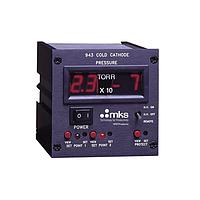
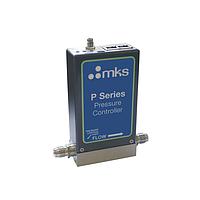
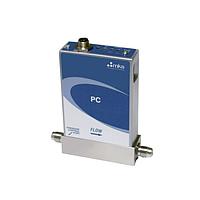
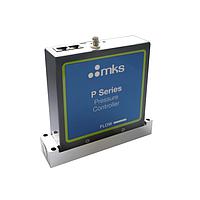
Manufacturer preference can also shape the selection process. This category includes brands commonly associated with industrial instrumentation, such as Brooks Instrument, Dwyer, INFICON, MKS, and OMEGA, each relevant in different pressure and process environments. The right fit depends less on brand visibility alone and more on control method, media compatibility, installation needs, and system integration requirements.
Choosing with confidence
A well-matched pressure controller helps improve process consistency, reduce manual intervention, and provide clearer visibility into changing system conditions. Whether the task is filter monitoring, airflow supervision, or alarm-based pressure management, the best choice is the one that aligns measurement type, range, output needs, and installation conditions.
Use this category to compare pressure control options with the functions required by your application. If you already know the pressure type, control signal, and operating environment, narrowing the shortlist becomes much easier and leads to a more reliable long-term installation.
Get exclusive volume discounts, bulk pricing updates, and new product alerts delivered directly to your inbox.
By subscribing, you agree to our Terms of Service and Privacy Policy.
Direct access to our certified experts