Robotics
Automation projects often start with a practical question: which robot platform fits the task, the environment, and the level of system integration required? In industrial labs, research programs, education, and mobile automation development, the answer depends on more than just payload or speed. It also involves mobility, software compatibility, sensing, expansion options, and how easily the platform can be adapted to real workflows.
Robotics in this category covers a broad range of platforms, from mobile robots for indoor and outdoor navigation to robotic lifting solutions and learning-oriented systems built around modern development environments. The selection is relevant for teams working on autonomous navigation, robotic manipulation, testbed development, inspection, research, and prototyping across technical B2B use cases.
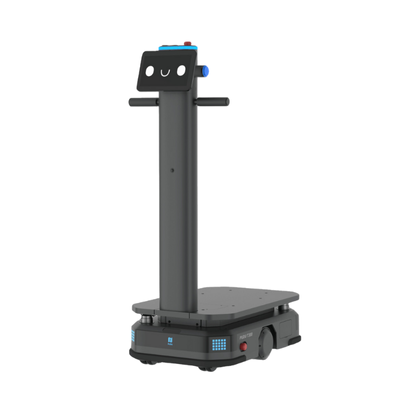
Robotics platforms for research, automation, and system development
Modern robotic systems are rarely standalone devices. In practice, they are part of a larger ecosystem that can include sensors, embedded computing, communication interfaces, motion control, and application-specific software. That is why many engineering teams evaluate robots not only by form factor, but also by how well they support development, testing, and deployment.
Within this category, the range spans compact educational and development robots through to heavier unmanned ground vehicles designed for payload handling, rugged movement, or field operation. For buyers comparing options, the most useful approach is to match the robot architecture to the intended environment: indoor floors, mixed industrial spaces, outdoor terrain, or laboratory research settings.
Key robotics types covered in this category
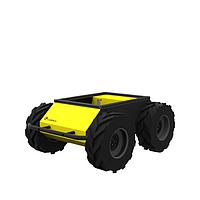
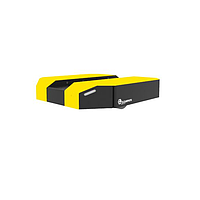
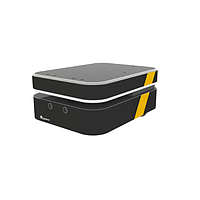
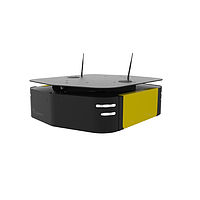
One major group is the mobile robotic platform. These systems are commonly used for navigation research, autonomous transport development, SLAM, obstacle avoidance, and perception testing. Examples from Clearpath include compact indoor platforms such as the Dingo Indoor Robotic Platform, larger indoor transport-oriented systems like the Boxer Indoor Robotic Platform, and omnidirectional configurations such as the Ridgeback platform for maneuvering in tighter spaces.
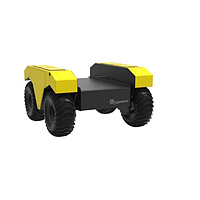
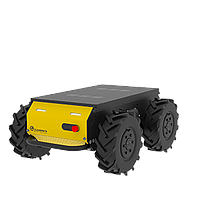
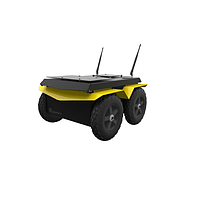
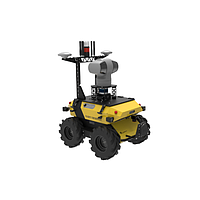
Another important group is the unmanned ground vehicle segment for more demanding mobility and payload requirements. Platforms such as the Clearpath Jackal, HUSKY A200, HUSKY A300, Husky Observer, and WARTHOG support applications ranging from outdoor autonomy experiments to inspection and sensor integration. For manipulator-based automation, the Tân Hưng Hà RS013N Robot offers a robotic lifting arm format suited to tasks where arm motion and payload handling are central.
Representative manufacturers and product examples
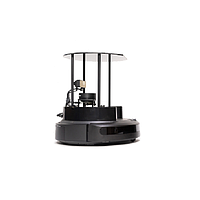
Clearpath is especially relevant in this category because its portfolio covers several practical robotics use cases. The TurtleBot 4 Lite and TurtleBot 4 Standard are learning and development platforms that support ROS 2-based work, making them useful for education, algorithm validation, and entry-level autonomous robot development. At the other end of the range, systems such as Husky, Jackal, Boxer, and WARTHOG address heavier-duty mobility, payload integration, and more advanced research scenarios.
Tân Hưng Hà adds a different perspective with the RS013N Robot, a robotic arm platform with a stated lifting capacity of 13 kg. This makes it relevant where users are evaluating manipulation-oriented projects rather than purely mobile robotics. For many integrators, the distinction between a mobile base and a robot arm matters early in the selection process because it affects workspace design, safety considerations, and the downstream control architecture.
How to choose the right robot for your application
A useful starting point is to define the operating environment. Indoor robots usually prioritize compact dimensions, stable navigation on smooth floors, and straightforward integration with development tools. Outdoor or mixed-environment robots typically need higher ground clearance, stronger drivetrains, and a structure that can support additional sensing for navigation and inspection.
The second factor is payload and mounting flexibility. A lightweight platform may be ideal for learning, mapping, and software validation, but less suitable for carrying larger sensors or custom assemblies. Heavier systems such as the HUSKY A300 or WARTHOG are more aligned with demanding payload scenarios, while smaller platforms like Dingo or Jackal may be better for agile testing and rapid deployment. For arm-based tasks, payload rating and motion envelope become more critical than travel capability.
It is also worth reviewing the software environment. Several featured products in this category reference ROS, ROS 2, or related development frameworks. For engineering teams, software compatibility can be just as important as mechanical design because it influences simulation, integration speed, driver availability, and long-term maintainability.
Typical use cases across industries
In research and development, robotics platforms are often used to test localization, path planning, machine vision, and autonomous behavior. TurtleBot systems are well suited to structured learning, prototyping, and academic environments, while platforms such as Jackal and Husky are commonly evaluated for more advanced field robotics, sensor fusion, and autonomous navigation research.
In industrial settings, robots may be selected for internal transport, inspection support, or subsystem integration. Omnidirectional or indoor mobile platforms can be useful where maneuverability matters, while larger unmanned vehicles may be preferred for carrying instruments, cameras, or inspection payloads. Robotic arms such as the RS013N are more applicable where repetitive handling, movement of parts, or controlled lifting actions are needed.
What matters beyond the headline specifications
Datasheet values are important, but they rarely tell the full story. When comparing robotics solutions, buyers should also consider battery runtime in relation to the actual duty cycle, available power interfaces for accessories, physical mounting options, communication methods, and the availability of development support. These factors strongly affect whether a robot can move from pilot phase to stable operation.
Sensor configuration is another practical consideration. Some platforms in this category include integrated camera and LiDAR-related capabilities that make them more suitable for perception-heavy development. Others are better viewed as robust bases for custom sensor stacks. Understanding whether the goal is a ready-to-use learning platform or a configurable mobility base can simplify product selection considerably.
Building a robotics ecosystem that can scale
Many organizations do not buy a robot just for one isolated task. They are building a repeatable development environment for teaching, prototyping, validation, or long-term automation planning. In that context, a scalable robotics portfolio is valuable because teams can start with smaller platforms and expand toward higher payload, more rugged operation, or more specialized manipulation systems as project demands evolve.
This is one reason the mix of products in this category is useful: it supports different stages of adoption. A compact learning platform can help teams establish ROS workflows and navigation concepts, while larger ground vehicles or robotic arms can support more advanced deployment paths. The result is a more coherent approach to robotics selection, especially for technical buyers who need flexibility rather than a one-size-fits-all solution.
Finding the right fit for your robotics project
The best choice depends on how the robot will actually be used: learning and experimentation, autonomous mobility development, payload transport, inspection, or manipulation. Reviewing platform type, payload, mobility, software environment, and sensing options together will usually lead to a better decision than focusing on a single specification.
This Robotics category brings together platforms from established names such as Clearpath and Tân Hưng Hà to support a wide range of engineering and industrial needs. Whether you are evaluating a compact development robot, a rugged unmanned ground vehicle, or a robotic lifting arm, the most effective selection process starts with application requirements and system integration goals.
Get exclusive volume discounts, bulk pricing updates, and new product alerts delivered directly to your inbox.
By subscribing, you agree to our Terms of Service and Privacy Policy.
Direct access to our certified experts