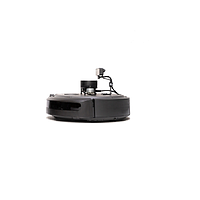
Research and development Robotics
Developing and validating robotic systems often starts long before a machine reaches production. Engineers, researchers, and academic labs need platforms that are practical to test on, flexible enough for rapid iteration, and supported by software tools that make integration easier. Research and development Robotics focuses on that stage of the workflow, where mobility, sensing, payload capacity, and software compatibility matter as much as the final application itself.
In this category, the emphasis is on robotic platforms that help teams prototype navigation, autonomy, perception, manipulation, and human-robot interaction concepts in realistic environments. From lightweight learning platforms to larger mobile bases for advanced experiments, the goal is to provide hardware that supports repeatable testing and scalable development.
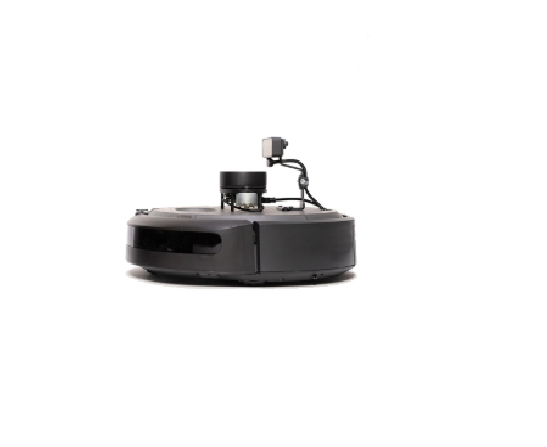
Built for experimentation, learning, and system integration
R&D robotics platforms are typically chosen for their openness and adaptability rather than for one fixed task. That makes them suitable for university research, robotics startups, automation proof-of-concepts, and internal innovation teams that need a base platform for algorithm development, sensor fusion, mapping, or autonomy testing.
Many projects in this area depend on established robotics software ecosystems, especially ROS and ROS 2, because they simplify communication between sensors, compute hardware, and control layers. This is one reason platforms from Clearpath are commonly used in technical environments where developers need a reliable hardware foundation for custom software stacks.
Typical platform types in this category
This category covers more than one level of robotics development. Some systems are designed as compact learning and prototyping tools, while others are intended for heavier payloads, larger test spaces, or more demanding navigation experiments. Choosing the right type depends on whether the priority is education, algorithm validation, component integration, or full mobile robotics research.
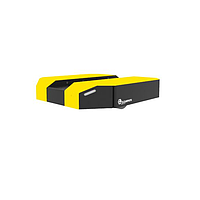
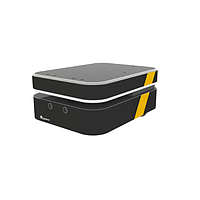
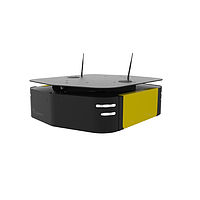
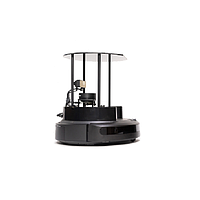
For example, the Clearpath TurtleBot 4 Lite Robotics Learning Platform and Clearpath TurtleBot 4 Standard Robotics Learning Platform are well suited to classroom, lab, and entry-level research work. They combine mobile autonomy concepts with onboard sensing and ROS 2 support, making them useful for SLAM, basic navigation, and perception workflows. At a larger scale, platforms such as the Clearpath Dingo Indoor Robotic Platform, Clearpath Boxer Indoor Robotic Platform, and Clearpath Ridgeback Omnidirectional Platform support more advanced research involving higher payloads, longer operating times, or more complex integration tasks.
How to choose a research robotics platform
A good selection process starts with the real testing environment. Indoor robotics work often depends on floor conditions, turning radius, obstacle clearance, and available workspace. In compact labs, a smaller platform may be easier to deploy repeatedly, while larger development spaces can support heavier mobile bases with more onboard equipment.
It is also important to look at payload, runtime, and sensing in relation to the project scope. A platform used for vision-based navigation or AI experiments may benefit from integrated camera and LiDAR capability, while a system meant for carrying additional computers, manipulators, or instruments may require a stronger chassis and more mounting flexibility. Software support should be considered early as well, especially if the team plans to work with ROS packages, simulation environments, or custom autonomy stacks.
Examples of use across R&D workflows
Smaller robotics platforms are often used for teaching and early-stage development, where teams validate motion control, localization, obstacle detection, and fleet behavior before moving to larger systems. A compact unit can reduce setup complexity and make it easier to repeat experiments many times under controlled conditions.
Larger mobile platforms support more demanding use cases such as autonomous transport concepts, sensor benchmarking, mobile manipulation development, and integrated robotics research. In some projects, the same core development principles can later be extended toward adjacent application areas such as delivery robots or exploration robots, depending on mobility, sensing, and mission requirements.
Why software ecosystem matters as much as hardware
In research settings, hardware rarely works alone. Teams usually need access to drivers, APIs, simulation compatibility, and development tools that fit into existing workflows. That is why platform support for ROS 1 or ROS 2 is often a deciding factor, especially when multiple developers are collaborating across perception, controls, and autonomy.
The products highlighted in this category reflect that reality. TurtleBot 4 variants are aligned with ROS 2-based learning and development, while platforms such as Ridgeback, Boxer, and Dingo provide a base for broader mobile robotics work. This kind of software alignment helps reduce integration time and lets teams focus on testing algorithms and system behavior instead of building every hardware interface from scratch.
From learning platform to advanced mobile research base
One of the main strengths of this category is the range of scale it supports. A lightweight platform can be the right starting point for robotics education, lab demonstrations, and early prototype validation. As requirements grow, developers may move toward systems with greater payload capacity, longer operating time, or a chassis better suited to carrying custom assemblies.
That progression is common in real projects. A team may begin by proving a navigation stack on a smaller robot, then transition to a larger indoor platform to evaluate reliability under load, integrate additional sensors, or test application-specific subsystems. In environments where user interaction is part of the research goal, related solution areas such as assistant robots can also provide useful context for future development paths.
What buyers and technical teams usually compare
When comparing research robotics options, technical teams usually look beyond headline dimensions. They assess how easily the platform can be deployed, how well it supports onboard computation, and how practical it is to integrate cameras, LiDAR, or custom electronics. Physical access to power, mounting provisions, and available interfaces can strongly affect how quickly a prototype moves from concept to testable system.
Performance should also be judged in context. Maximum speed, payload, and operating duration are important, but they only matter if they match the target experiment. A balanced platform is often more valuable than an oversized one if it fits the workspace, software environment, and iteration speed required by the project. For teams exploring adjacent service applications, categories such as cleaning robots may also help frame application-specific requirements.
Supporting long-term robotics development
Research and development Robotics is ultimately about enabling faster learning cycles. Whether the goal is academic experimentation, proof-of-concept automation, or pre-commercial robotics design, the right platform helps teams validate ideas with less friction and more confidence. That includes the ability to test mobility, sensing, and autonomy on hardware that can evolve with the project.
By combining scalable mobile platforms, practical sensing options, and established software compatibility, this category supports a wide range of robotics programs. If you are selecting a system for prototyping or advanced lab work, focus on the fit between platform size, integration needs, and development workflow so the hardware remains useful as the project matures.
Get exclusive volume discounts, bulk pricing updates, and new product alerts delivered directly to your inbox.
By subscribing, you agree to our Terms of Service and Privacy Policy.
Direct access to our certified experts