EC/TDS Sensors
Stable conductivity and total dissolved solids measurements are essential in water treatment, process control, environmental monitoring, and laboratory analysis. When the application demands reliable feedback on ionic concentration, EC/TDS Sensors help convert that requirement into practical, repeatable data for monitoring, control, and quality checks.
This category brings together sensors, probes, cells, electrodes, and related conductivity measurement components used across different installation styles and measurement ranges. Whether you are selecting a compact probe for routine testing, a submersion sensor for continuous monitoring, or a transmitter-and-sensor combination for industrial integration, the right choice depends on medium, range, mounting method, and temperature conditions.

Where EC/TDS sensors are used
Electrical conductivity is widely used as a fast indicator of dissolved ions in water and process liquids. In practice, this makes EC and TDS measurement useful for applications such as boiler and cooling water control, rinse water monitoring, wastewater treatment, chemical dosing, groundwater studies, and general water quality verification.
In broader environmental and water analysis systems, conductivity data is often interpreted alongside other parameters. For example, projects that also require dissolved oxygen monitoring may benefit from reviewing DO sensors, while water clarity assessment is commonly paired with turbidity sensors for a more complete view of process or field conditions.
Understanding the main device types in this category
This category is not limited to one sensor format. It includes conductivity cells for direct measurement, submersible probes for field or tank installation, reference electrodes used in suitable analytical setups, and transmitters that convert sensor signals into outputs ready for control systems or local indication.
For example, the HORIBA 3574-10C Conductivity Cell represents a dedicated measurement cell format suited to conductivity testing, while the Hanna HI76312 EC / TDS Probe with temperature sensor combines conductivity and temperature sensing in a practical probe design. For permanent installation or immersion duty, models such as the Hanna HI7638/10 and HI-7638 submersion conductivity sensors are relevant where cable length, temperature compensation, and process exposure matter.
Selection factors that matter in real applications
The first selection point is the measurement range. Low-conductivity water, general industrial water, and high-conductivity chemical or process streams place very different demands on the sensor. This is why specifications such as cell constant, conductivity span, and media compatibility should be checked carefully before choosing a model.
Temperature is equally important because conductivity changes with temperature. Some products in this category include temperature sensing or automatic compensation support, while others do not. A probe like the Hanna HI76312 includes temperature sensing, whereas a conductivity cell such as the HORIBA 3574-10C is listed without an integrated temperature sensor, which may affect how the overall measurement loop is configured.
Installation conditions also influence sensor life and measurement stability. Buyers should consider immersion depth, cable length, pressure, process connection, wetted materials, and maintenance access. In more demanding industrial environments, a solution such as the Chemtrol High Temperature Conductivity Sensor may be better aligned with applications involving elevated temperature and pressure than a general-purpose laboratory-style sensor.
Examples of instruments and components available
Several well-known manufacturers are represented in this category, including HORIBA, HANNA, Jumo, IN-SITU, and Chemtrol. The product mix reflects the fact that conductivity measurement can range from simple spot checks to integrated process monitoring with analog or digital outputs.
For laboratory or analytical use, HORIBA reference electrode models such as the 2565A-10T and 2060A-10T show that conductivity-related measurement systems may include supporting electrochemical components, not only the primary sensing element. On the process side, the Jumo ecoTRANS Lf 01/02 and ecoTRANS Lf 03 transmitter and switching devices are relevant when conductivity values need to be transmitted to PLC, indicator, or control systems. The Jumo ecoLine CR-PVC conductive 2-electrode conductivity sensor is another example for fixed installation where process connection and body material are important selection criteria.
Solutions for submersion, field, and multi-parameter monitoring
Not every conductivity application is a closed industrial line. Surface water, groundwater, tanks, wells, and environmental monitoring points often require submersible or multi-parameter devices that can operate continuously in the field. In these cases, rugged housing materials, long cable options, and stable output formats become more important than bench-top convenience.
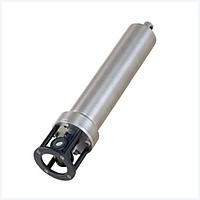
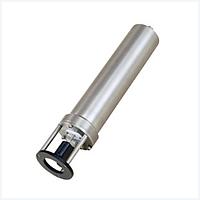
The IN-SITU Aqua Troll 200 Multi-Parameter Sensor illustrates this broader use case by combining conductivity measurement with additional parameters such as temperature and level. This type of approach is valuable where site access is limited and a single deployed sensor needs to support a wider monitoring strategy. In similar water quality programs, users may also evaluate chlorine sensors or SS and MLSS sensors depending on treatment stage and compliance needs.
How to choose between sensor-only and transmitter-based setups
A common buying decision is whether to purchase only the sensing element or a more complete measurement chain. A standalone probe or conductivity cell may be suitable when you already have a compatible meter, analyzer, or controller. This can be a practical route for replacement, expansion, or standardization within an existing installed base.
A transmitter-based setup is often more suitable when conductivity needs to be integrated into automation, local alarm logic, or analog output architecture. Devices such as the Jumo ecoTRANS series are useful in this context because they bridge the sensing point and the control environment. For industrial users, this distinction is important: the best hardware choice is often the one that fits the signal path, maintenance routine, and process connection requirements already present on site.
Practical considerations for long-term performance
Material compatibility, fouling tendency, and calibration practice have a major impact on sensor performance over time. Applications with scaling, suspended solids, aggressive chemistry, or wide temperature variation may require a more durable sensor construction and a more disciplined maintenance schedule. Reviewing the body materials, electrode materials, and pressure-temperature limits can help reduce premature replacement and unstable readings.
It is also useful to think in terms of the full measurement ecosystem rather than only the initial sensor price. Cable length, connector type, sample volume requirements, mounting style, and available outputs all affect installation effort and long-term usability. For teams sourcing equipment across laboratory, pilot, and industrial environments, selecting the right EC/TDS sensor often means balancing sensitivity, robustness, and ease of service rather than chasing one specification in isolation.
Finding the right EC/TDS sensor for your application
Choosing from this category becomes easier once the application is clearly defined: water type, conductivity range, temperature profile, mounting method, and required outputs should all be known before narrowing down models. From compact probes and conductivity cells to submersion sensors and transmitter-based solutions, the range here supports both routine measurement tasks and more demanding process or environmental installations.
If you are comparing options, focus on how each sensor will operate in the actual process rather than only on headline specifications. A well-matched EC/TDS measurement setup can improve monitoring consistency, simplify maintenance, and provide more useful data for control and decision-making over the long term.
Get exclusive volume discounts, bulk pricing updates, and new product alerts delivered directly to your inbox.
By subscribing, you agree to our Terms of Service and Privacy Policy.
Direct access to our certified experts