Main Applications of CNC Lathes
CNC lathes are widely used in mechanical workshops thanks to their flexibility in machining rotating parts such as shafts, threads, tapered surfaces, or other complex geometries. These machines operate based on the coordination between the rotation of the workpiece and the linear movement of the cutting tool, with two primary directions: the tool moves transversely (radially) and longitudinally (along the axis of the workpiece). This principle allows the creation of a wide range of part shapes.
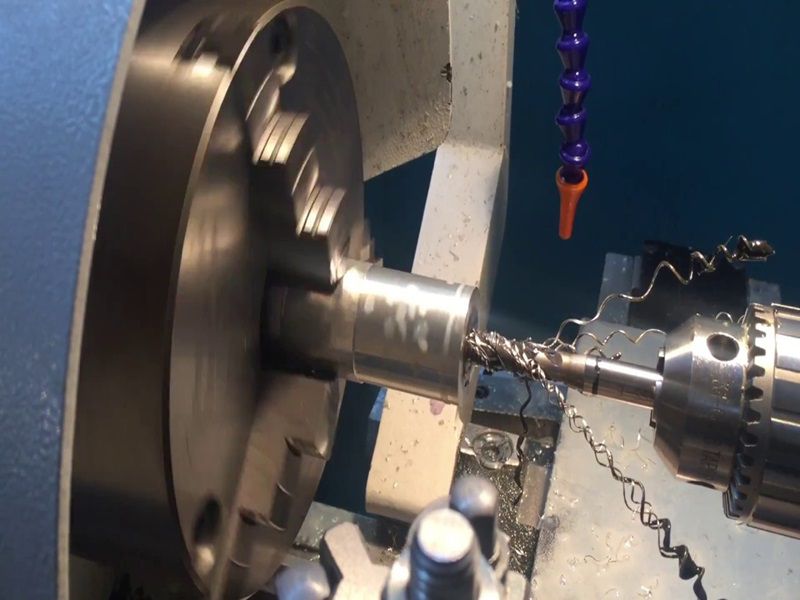
With capabilities such as external turning, boring, taper turning, threading, and grooving, CNC lathes are well-suited for precision machining in various production environments. Their strength lies in optimizing machining time while maintaining stable and consistent product dimensions.
Depending on the configuration and the number of axes, each CNC lathe model offers specific capabilities when handling different types of workpieces. The more axes integrated, the more complex the geometries the machine can handle. In practice, CNC lathes with 2 to 6 axes are commonly used, with each model catering to a specific level of part complexity—from simple to highly intricate and precise.
CNC Lathe Advantages You May Not Know
From the perspective of professionals in the mechanical industry, CNC lathes are always a highly considered option because their value extends far beyond productivity. There are at least seven significant strengths that make this type of machine especially suitable for modern production lines, particularly for enterprises focused on high-precision and large-volume manufacturing.
The first and most important factor is machining accuracy. CNC control systems significantly reduce human error during the process. The resulting products are consistent and meet technical specifications without requiring extensive post-processing. This saves time on inspection and rework.
Another major advantage is high processing speed. With automatic tool changers and powerful spindles, CNC lathes enable continuous and smooth cutting operations. Unlike traditional methods, there's no need to stop the machine for manual adjustments. Operators only need to set up the initial parameters and let the program run automatically.
Thanks to this feature, CNC lathes ensure high uniformity in product quality across production runs. This is especially critical in mass production, where identical products are required. Eliminating the need for manual adjustments for each part also helps save costs and labor.
In terms of labor efficiency, CNC lathes allow companies to streamline their workforce. With reliable and precise operation, only one skilled technician familiar with programming and system operation is needed to oversee the entire process. This reduces the need for manual labor, minimizes risks, and enhances productivity.
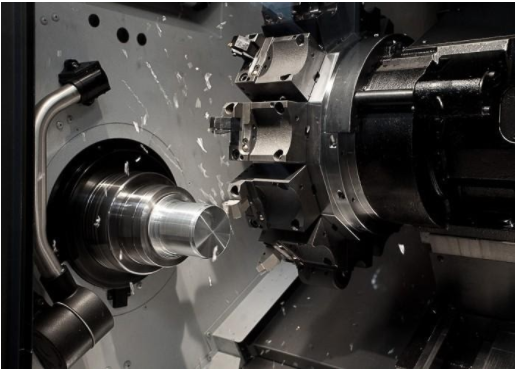
When the machine runs stably with minimal errors, the rate of defective products is significantly reduced. This not only saves raw materials but also increases the yield of acceptable products. For companies that prioritize quality control and resource optimization, CNC lathes are an excellent solution.
Finally, from an investment perspective, CNC lathes shorten the payback period considerably. Faster production speeds, fewer errors, lower material waste, and reduced labor costs all contribute directly to improved profit margins. Therefore, although the initial cost may be high, CNC lathes are still a worthwhile investment for manufacturers aiming for sustainable growth.
Conclusion
These are the seven key advantages of CNC lathes that many mechanical workshops have appreciated in their production processes. Depending on the type of parts being machined, production volume, and workshop space, each business will choose a lathe model with the appropriate number of axes and size for optimal performance. If you're considering investing in new equipment, understanding the practical uses and benefits of CNC lathes will help you make a more informed and effective decision.