So what is a tachometer? How are they classified and work? This is the key to understanding the speed measuring device. EMIN will provide you with useful knowledge surrounding the tachometer in the article below
Concept of tachometer?
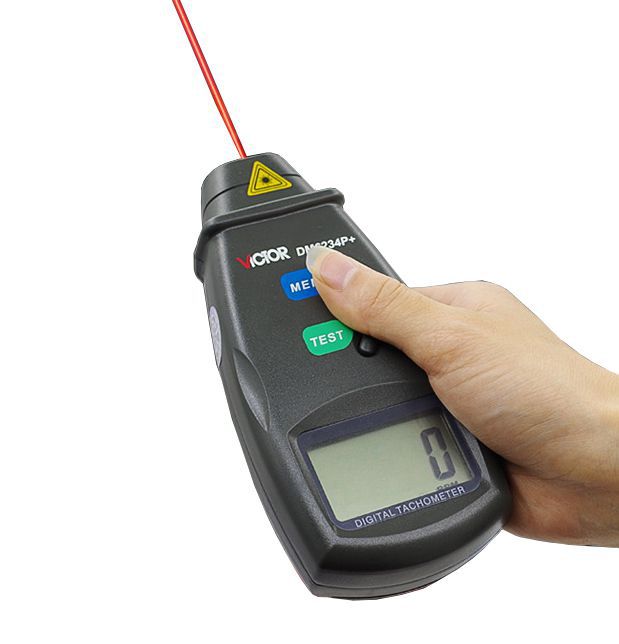
Speedometer
A tachometer, commonly known as a tachometer or RPM meter, is an important tool for measuring the rotation speed of a motor, shaft, or even the rotation speed of bearings. Designed as handheld, these meters ensure measurement capabilities on many types of engines and machinery equipment.
Tachometer checks and evaluates the quality of machinery through measuring rotation speed. Thanks to that, you can easily identify points that need to be adjusted to improve product quality or improve the repair process of machinery and engine equipment. A simple yet effective way to browse the performance of key components in your machine system.
Measurement unit
Nowadays, rotation speed is measured in RPM (Revolutions Per Minute), or revolutions per minute, which is becoming a popular concept. The RPM measurement unit is calculated by the number of rotations or revolutions of an object in a period of one minute. This is often expressed using the rpm formula.
1 RPM = 16.67 mHz, this unit is used to measure circular movements or how fast an object moves over a period of one minute.
The higher the RPM, the faster the engine operates, increasing the engine's performance. Checking the rpm is an effective way to evaluate and control the operating condition of equipment, especially important for monitoring engine performance..
How many tachometers are there?
On today's market, rotation speed meters are diverse with many different product lines, classified mainly based on the method of measuring rotation speed. Popular product lines include:
1. Contact tachometer:
- This type of device uses a sensor probe that directly contacts the surface of the device or motor to simply and quickly measure rotation speed.
- Popular in measuring the speed of devices with rotation from 20 rpm to 20,000 rpm.
2. Non-contact tachometer:
- This type of machine uses reflective stickers placed on the shaft or blade of the device to measure rotation speed.
- Suitable for applications where direct contact with the surface of the device is not desired.
3. Flash frequency tachometer:
- This device allows measuring rotation speed without direct contact or using reflective stickers.
- Provides accurate measurement capabilities, durability, and saves time and costs during the process of testing and evaluating equipment performance.
Choosing between these types of tachometers depends on the specific requirements of the application, while providing optimal convenience and performance during measurement.
Operating principle:
The operating principle of the tachometer varies depending on each product line on the market. Below is an explanation of the operating principles of two popular types of tachometers:
Contact tachometer
This type of machine operates simply by having the sensor probe come into direct contact with the surface of the device or machine. The sensor head detects fluctuations and converts them into electrical signals. This signal is transferred to the camera body for data analysis, and the measurement results are displayed directly on the screen, making it easy for users to monitor.
Flash frequency tachometer:
This machine operates on the principle of lightning frequency, which is considered a superior method. The machine is equipped with an LED light source that shines on the rotating device, and the sensor measuring head performs measurements based on the number of flash frequency counts on the device. The measurement signals are converted into electrical signals and sent to the processor to process the data and display measurement results directly on the screen. The machine is capable of measuring rotation speeds up to 99,999 rpm.
Non-contact tachometer
The non-contact tachometer operates on the principle of using a reflective piece placed on the surface of the device. This process is described as follows:
Attaching Reflective Pads:
The meter is equipped to use a reflective pad, which is placed on the surface of the device to be measured. The sensor measuring head has an infrared light source to shine on the reflective piece, and measure the time the beam is reflected from the object to be measured.
Measuring Reflex Time:
As soon as the light source shines on the reflective piece, the machine begins to measure the reflection time from the object to be measured. The sensor probe continues to calculate the reflection time and convert it into an electrical signal.
Data Processing and Results Display:
The electrical signal is transferred to the processor at the main body to process measured data. Measured results are displayed directly on the screen, giving users accurate and easy-to-read information.
Below are a few speedometers you can refer to:
Máy đo tốc độ vòng quay TESTO 460
Máy đo tốc độ vòng quay UNI-T UT371
Máy đo tốc độ vòng quay EXTECH 461895
Structure of the tachometer
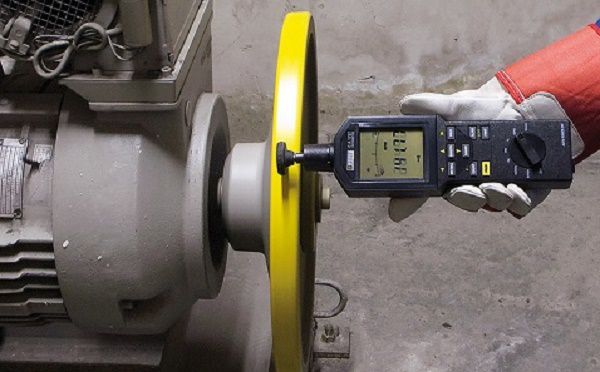
The tachometer is constructed with many diverse parts, and each model has its own unique structure. Below is a description of the basic structure of the measuring device:
1. Sensor Probe:
- Used to collect vibrations from the device or motor before sending it to the processor in the main body.
- In the case of a non-contact tachometer, the probe is designed with a light source to shine on the reflective sticker, helping to measure vibrations accurately.
2. Main Body:
- Where the data processor is located to analyze the signal from the sensor into an electrical signal.
- The processor then transfers the measurement results to the display screen so users can easily follow.
3. Screen:
- Display measurement results clearly and easily for users.
- There are two popular types of screens: LED screens and LCD screens, both with high resolution.
- The buttons are designed to be soft to set measurement modes and quickly convert measurement units, facilitating convenient use.
How to use the tachometer:
Instructions for using a tachometer requires understanding of each specific type of machine. Below are general instructions for use, depending on the specific machine type:
Step 1: Start the Machine and Choose Mode:
- Press the On/Off button to start the machine.
- Select the measurement mode appropriate to the device or material to be measured. If it is an optical tachometer, make sure to attach a reflective patch to the surface of the device.
Step 2: Place and Measure:
- Place the meter in direct contact with the surface to be measured.
- Press the measurement button to start the measurement process.
Step 3: Read and Record Results:
- When the result appears on the screen, read and record the measurement value.
Step 4: Preserve Value (If Needed):
- If you want to keep the measurement value for a long time, press the "Hold" button.
Step 5: Continue measuring in another location:
- If you need to measure in different positions, press the "HOLD" button to continue the measurement process.
Please contact us today to receive dedicated advice and own the right product for your intended use.