For full functionality of this site it is necessary to enable JavaScript.
EMIN.COM.MM
0

Take note when learning about Hybrid Mixtures

06/04/2025 13:47:03

Working with RF systems, sometimes it doesn't need to be too complicated, just a splitter with the right parameters, a directional splitter that does the right job, is enough to ensure the signal goes the right way and the measurement data is not distorted. But because they are so basic, many people easily choose the wrong one. Hybrid coupler and directional coupler are two devices that are often misunderstood, although each type serves a very different purpose.

If you've ever wondered which one to use for a reflection test, or struggled with splitting the output signal from an amplifier, this is an article worth taking a few minutes to read.

Why do many people still confuse hybrid coupler and directional coupler?

If you’ve ever searched for “RF signal splitter” and come up with a bunch of results with the names hybrid coupler and directional coupler, you’re not the only one who’s confused. They both look very similar, have multiple signal ports, and fall into the category of passive devices that split or route signals. The problem is: they’re designed to do two completely different things. But in practice, many young engineers or people who aren’t RF experts use them interchangeably, thinking that as long as they can get the signal out of multiple ports, it’s good enough.
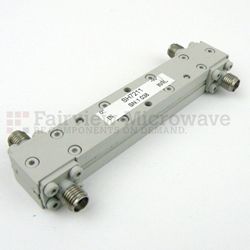
This confusion often comes from the way the devices are named and described on the market. Many places simply state "power splitter" or "for signal measurement", but do not clearly state the specific role of each type. Meanwhile, the nature of a directional coupler is to separate the reflected signal from the main transmission line to serve measurements such as VSWR or Return Loss. A hybrid coupler, on the other hand, is designed to split the input signal into two signals with a phase difference of 90 or 180 degrees, a specific requirement in antenna systems or RF mixers.

Can the directional couple also be used when measuring reflected signals?

This is also a question we have received a lot recently. Directional couplers are commonly used to measure reflected signals, but not all types can be used for that purpose. The problem lies in the directivity parameter and the suitability of the frequency range with the measuring device such as VNA. If you choose a coupler with low directivity or not optimized for the working frequency, the reflected signal will be mixed with noise from the incoming signal, causing the measurement data to be significantly distorted. In other words, not all directional couplers can be used for reflection measurement by default, but the coupler must be good enough and of the right type for the measurement system you are operating.

Application of Hybrid Coupler in phased array antenna system

If you are looking into designing a phased array antenna system and wondering how to control the phase between antenna elements accurately and consistently, then a hybrid coupler is a good fit. 

Unlike conventional splitters, hybrid couplers split the power evenly, creating a precise phase shift between the output ports, usually 90° or 180°, depending on the coupler type. This makes them extremely useful in phased array antenna systems, where controlling the phase between antenna elements is key to beam steering and beam optimization.

In a phased array system, hybrid couplers are used to:

Create a fixed phase difference between transmission channels, ensuring phase synchronization or anti-phase according to design requirements.

Combine signals from multiple antennas without causing reflections back to the source, thanks to the ability to isolate between ports.

Increase the directionality of the antenna through phase control - helping the system to transmit strong signals in the desired direction and eliminate signals in unnecessary directions.

Related News

Which Vacuum Pump Should You Choose for a Microbiology Lab to Avoid Affecting Samples?
07/15/2026 14:45:07

Vacuum pumps are utilized in a wide range of microbiology laboratory procedures, from membrane filtration and the aspiration of supernatants following centrifugation to sample concentration and the support of negative-pressure systems. Selecting the appropriate pump not only ensures more stable operational processes but also minimizes the risk of sample contamination, reduces maintenance costs, and extends the equipment's lifespan

QCVN 25:2025/BKHCN Takes Effect: Do Businesses Need to Prepare Electrical Safety Testing Equipment?
07/15/2026 09:15:04

Electrical safety is consistently one of the primary criteria evaluated before electrical or electronic equipment—or industrial components—are released to the market. A product may operate reliably yet still fail to meet requirements if its insulation lacks sufficient durability, its grounding resistance exceeds permissible limits, or leakage current occurs during operation.

Why Is Associated Research Considered an Icon of Hipot Technology?
07/14/2026 09:05:30

When it comes to electrical safety testing equipment specifically Hipot testers—many QA/QC and testing engineers are familiar with the globally renowned brand Associated Research. A subsidiary of the parent company IKONIX, Associated Research (ARI) invented the world's first commercial Hipot tester.

What Is the Standard 3-Phase Voltage? How to Read Cabinet-Mounted Meters Without Errors
07/13/2026 15:09:18

Voltmeters are almost invariably found on the panels of electrical cabinets in factories, power stations, or generator systems. A glance lasting just a few seconds allows an operator to determine whether the power supply is stable or showing signs of abnormality. However, not everyone understands the significance of the displayed readings, particularly regarding three-phase electrical systems.

Distinguishing between ARI’s Hypot, HypotUltra, and HypotMax: Which device is right for your factory?
07/13/2026 09:48:30

Few people realize that the concept of the "Hipot Test"—or electrical safety testing—has long existed within the electrical equipment manufacturing industry. Driven by the growing need to verify the voltage withstand capabilities of conductors, motors, and electrical devices, the industry required a robust and virtually fail-safe method to detect insulation weaknesses before products reached the market.

Stay Updated with Offers

Get exclusive volume discounts, bulk pricing updates, and new product alerts delivered directly to your inbox.

By subscribing, you agree to our Terms of Service and Privacy Policy.

Quick Support

Direct access to our certified experts