Temperature Meters & Indicators
Accurate temperature readout is a basic requirement in maintenance, process control, storage monitoring, laboratories, and industrial production. When operators need a quick visual value, a continuous panel display, or a simple local indicator for ambient conditions, Temperature Meters & Indicators provide a practical way to monitor thermal conditions without unnecessary complexity.
This category brings together instruments used to display and check temperature in different environments, from compact hygro-thermometers for room or cabinet monitoring to larger display units and analog pyrometers for higher-temperature applications. The right choice depends on how the value will be viewed, the expected measuring range, the installation environment, and whether humidity indication is also useful in the same point of measurement.
Where temperature meters and indicators are commonly used
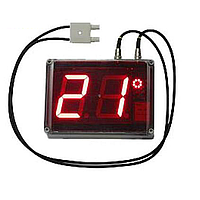
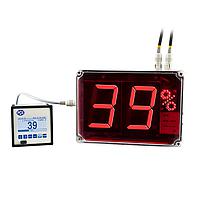
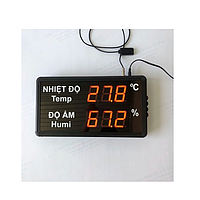
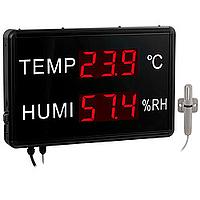
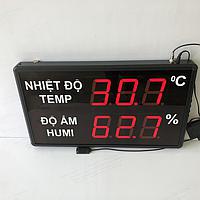
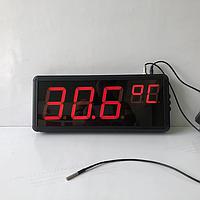
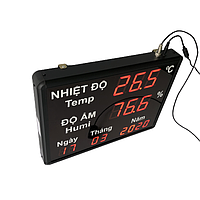
In many facilities, the goal is not only to measure temperature but to make it visible in the right place and in the right format. A wall-mounted LED display can help staff monitor workshop or warehouse conditions at a distance, while a compact desktop or portable indicator is better suited to labs, offices, clean areas, equipment rooms, or inspection points.
These devices are often selected for HVAC checks, environmental monitoring, production areas, storage spaces, calibration support, and high-temperature process observation. In applications where non-contact inspection is preferred, users may also review options such as thermal imaging cameras to complement fixed or local readout devices.
Main product types in this category
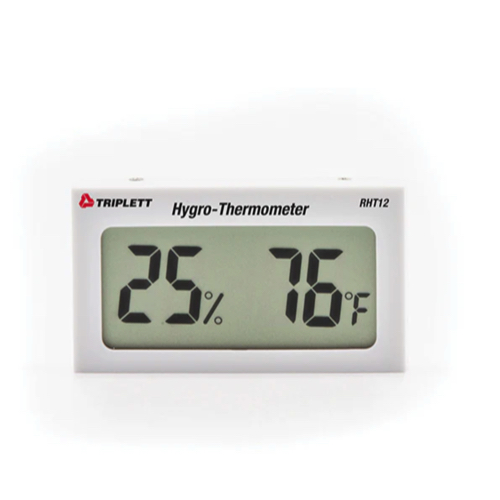
This category covers several practical instrument formats. One group is ambient temperature and humidity indicators, designed for indoor environmental monitoring with a direct digital display. Examples include the Triplett RHT12 Hygro-Thermometer and Triplett RHT22 Temperature & Humidity Indicator, both intended for straightforward local indication of temperature and relative humidity.
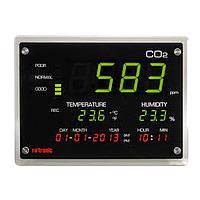
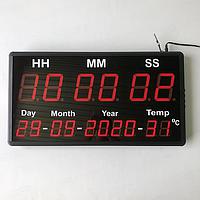
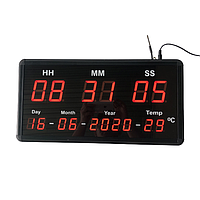
Another group is larger visual displays for shared spaces. The ATPRO AT-THMT-D-T-S LED Display Thermometer Hygrometer is an example of a display-oriented solution that combines time, date, temperature, and humidity in a single unit, making it suitable for workplaces where visibility from a distance matters. For elevated process temperatures, analog pyrometers such as the OMEGA 7055 series provide direct indication for thermocouple-based high-temperature monitoring.
How to choose the right instrument
A useful starting point is the measurement range. Ambient monitoring devices typically focus on room or storage conditions, while pyrometers are intended for much higher temperatures. Choosing too narrow a range can limit usability, but selecting an unnecessarily broad range may also reduce practical relevance for the actual process.
The next consideration is display style and installation. Portable or small-format units are convenient for spot checks and local observation, whereas larger indicators are better where multiple staff need to read values quickly. If the application also depends on environmental control, a combined temperature-humidity unit may be more efficient than using separate devices.
Accuracy, readability, and power source also matter. Some instruments are battery-powered for flexible placement, while others are designed for fixed powered installation. In production or quality-related environments, buyers may also look for versions supplied with traceability documentation, such as selected Triplett models with certificate references.
Examples of devices available in this range
For general indoor monitoring, the Triplett RHT12 and RHT22 families are relevant options when users need simple visual indication of temperature and humidity. The RHT12 format is compact, while the RHT22 style offers a larger viewing area for room-based monitoring. NIST-traceable variants can also be suitable where documentation and controlled measurement practices are important.
Where long-distance visibility is more important than portability, the ATPRO AT-THMT-D-T-S provides a larger LED-based display with separate readouts for time, date, temperature, and humidity. This type of device is often considered for workshops, offices, waiting areas, and industrial spaces where a central environmental display is useful.
For furnace or process applications, OMEGA 7055 series self-powered analog pyrometers illustrate the high-temperature end of the category. The available models differ by thermocouple type and maximum operating temperature, which is an important part of matching the indicator to the process conditions.
Understanding digital indicators versus pyrometers
Digital indicators are typically preferred when clear numeric readout, compact form, and ambient monitoring are the main priorities. They are easy to read, often support both temperature and humidity, and fit well in building services, storage areas, and routine workplace monitoring.
Analog pyrometers, by contrast, are associated with process temperature indication in harsher or higher-temperature environments. In these cases, the user usually focuses on direct panel observation, thermocouple compatibility, and operating temperature limits rather than environmental convenience features.
This difference is important because products in the same category may serve very different needs. A room monitor and a high-temperature pyrometer are both indicators, but they belong to different operating contexts and should be selected with that context in mind.
Related components and complementary categories
In many installations, the indicator itself is only one part of the measurement chain. Depending on the setup, users may also need suitable sensing and connection components, especially in thermocouple-based systems. For that reason, related categories such as temperature wire and cable and temperature accessories can be relevant when building or maintaining a complete measurement point.
For quick irreversible surface checks, some applications may also use temperature indicating labels alongside standard indicators. These products do not replace a continuous meter, but they can be helpful for transport, maintenance checks, or overheating verification in selected processes.
What buyers typically compare before ordering
Most B2B buyers compare the same core points before final selection: viewing distance, measuring range, need for humidity display, mounting style, power supply, and documentation requirements. In regulated or quality-controlled environments, traceability can influence the purchasing decision just as much as the display format itself.
Brand preference may also play a role, especially where users already standardize around manufacturers such as OMEGA, Triplett, ATPRO, Emko, PCE, Rotronic, skSATO, or Comet. Even so, the best fit usually comes from matching the instrument type to the use case rather than choosing by brand name alone.
Final considerations
A well-chosen temperature indicator helps teams react faster, monitor conditions more consistently, and reduce guesswork in daily operation. Whether the requirement is a compact thermo-hygrometer for local checks, a large LED display for shared visibility, or a pyrometer for elevated process temperatures, the key is to align the instrument with the actual environment and reading method.
By comparing range, display format, installation needs, and supporting documentation, buyers can narrow this category to the instruments that are genuinely suitable for their process. That approach leads to more reliable monitoring and a more practical long-term measurement setup.
Get exclusive volume discounts, bulk pricing updates, and new product alerts delivered directly to your inbox.
By subscribing, you agree to our Terms of Service and Privacy Policy.
Direct access to our certified experts