When energy from these wavelengths impacts the retina, nerve impulses activate the brain to register brightness and color.
The largest natural source of this radiation range is the sun. In addition, artificial lights are also manufactured to emit a similar wavelength range for everyday use. Importantly, the ability to perceive light is not fixed but changes with age. As the eyes age, the lens gradually becomes less transparent, reducing sensitivity to short wavelengths such as blue light.
Correlation between wavelength and spectral color
The colors we see are the brain's way of classifying different wavelengths. White light is actually a combination of many colors that, when passing through a prism, are dispersed into distinct color bands.
Short wavelength range (380 - 450 nm): Corresponds to the violet and blue regions. This is a region with high energy levels.
Medium wavelength range (490 - 585 nm): Commonly associated with green and yellow. The human eye is usually most sensitive to wavelengths in this central region.
Long wavelength range (650 - 750 nm): Gradually transitions to the red region before reaching the infrared boundary.
The boundaries between color bands are a continuous transition, without absolute interruptions. Identifying colors based on specific nanometer values helps scientists and technicians unify information without being misled by subjective names.
Units used in evaluating light intensity
To quantify visible light, the SI system of units is divided into two main groups based on physical energy and the perception of the human eye.
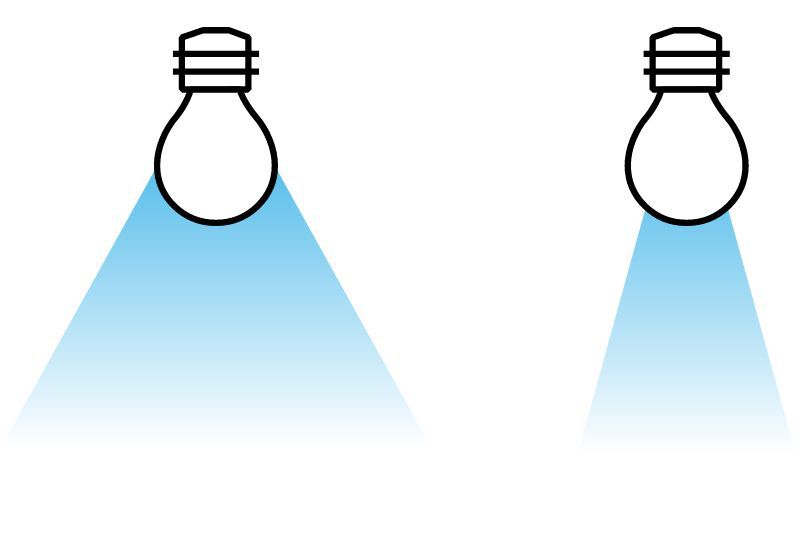
- Lumen (lm): A quantity indicating the total amount of light emitted from a source in all directions.
- Lux (lx): A quantity indicating the density of light on a specific surface area. One lux is equivalent to one lumen illuminating per square meter.
- Candela (cd): Đơn vị đo cường độ phát sáng theo một hướng nhất định.
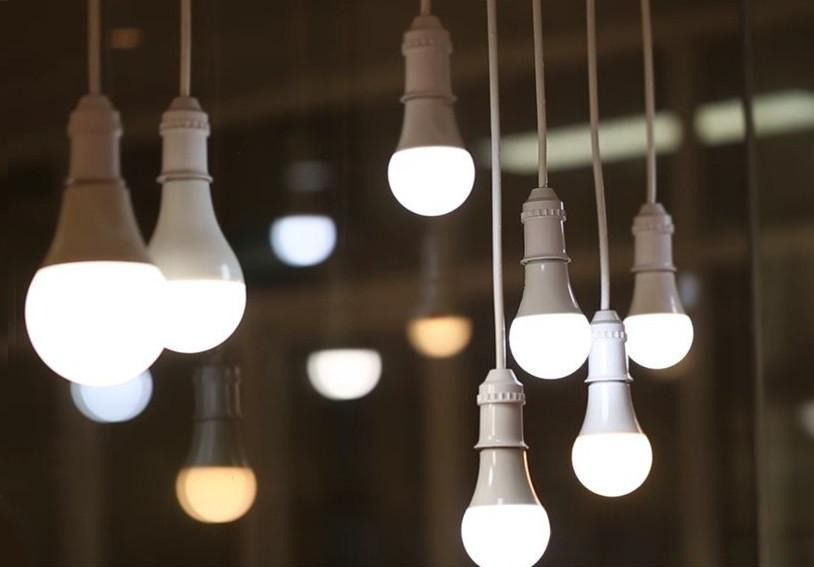
These metrics appear on most field optical inspection equipment. Monitoring these parameters helps assess lighting efficiency in production areas or laboratories.
See also:
Tips to save battery life on your light intensity meter
What is light intensity? The "key" to your living space
Biological effects and practical applications
Light is not simply for observing the environment; it also directly impacts the circadian rhythm. Blue light has the ability to regulate the circadian clock, affecting wakefulness and sleep patterns.
In engineering and medicine, laser and flash devices operate based on the precise selection of wavelengths. For example, light therapy devices often utilize the blue wavelength range to treat psychological states during winter. However, if the radiation intensity exceeds the permissible limit, the light still poses a risk of damage to the retina or the dermis. Therefore, controlling the spectrum using specialized measuring equipment is mandatory in environments with high-intensity light sources.
Answering common questions about visible light
Can the human eye see ultraviolet or infrared rays? Normally, the cornea and lens filter out these rays to protect the retinal cells. However, in some cases, after artificial lens replacement surgery, some ultraviolet rays may still be felt. In the infrared range, if the radiation energy is too low, the retinal molecular structure will not be able to activate the signals sent to the brain.
Tại sao dải bước sóng nhìn thấy lại nằm trong khoảng 380 - 750 nm? This is the result of evolution to adapt to solar radiation. The human eye evolved to receive the most abundant range of energy from the sun that penetrates the Earth's atmosphere.
Is blue light from phone screens within the visible spectrum? Yes, blue light is in the shorter wavelength range of the visible spectrum. Due to its high energy, excessive exposure to this source at night can easily suppress melatonin, disrupting sleep.