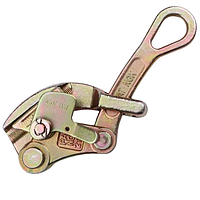
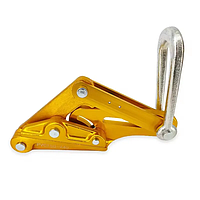
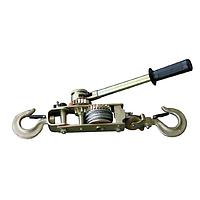
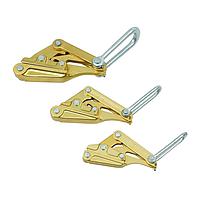
Cable Clamp
Secure holding and controlled tension are critical when working with conductors, messenger wires, and overhead line components. In line construction, installation, and maintenance tasks, the right gripping tool helps crews pull, position, or temporarily hold cable without introducing unnecessary slip or handling risk. That is where Cable Clamp products play an important role in the broader assembly tool workflow.
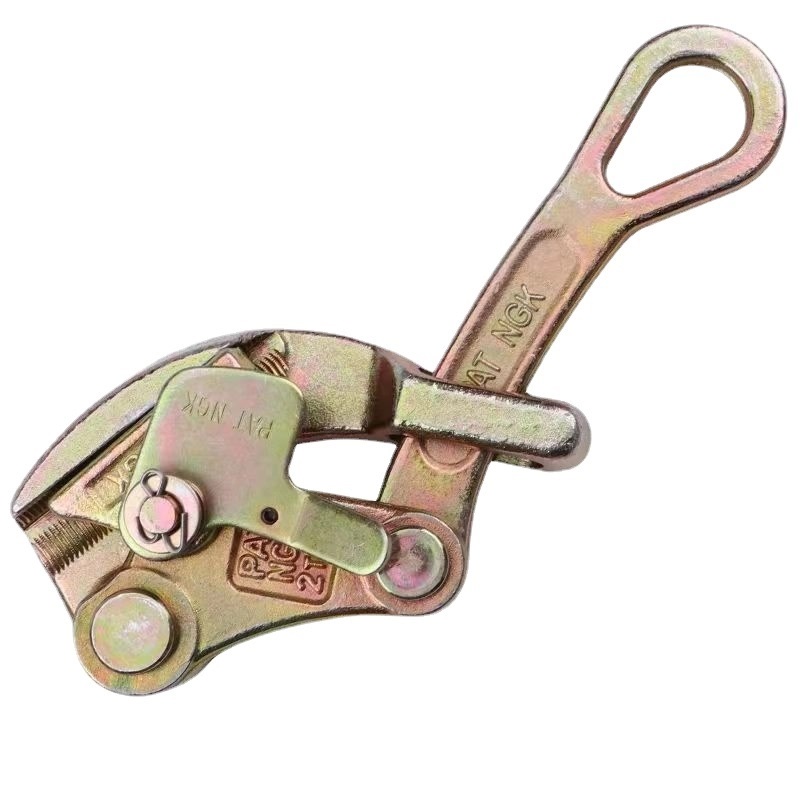
Where cable clamps are used in practical field work
A cable clamp is commonly selected for jobs that involve pulling, tensioning, or securing cable and wire during installation. These tools are widely relevant in utility, electrical, and general line work where the conductor must be held firmly while crews perform alignment, fastening, or related assembly steps.
Unlike general hand tools, these products are intended for direct contact with the cable or conductor itself. The correct clamp helps maintain grip across a defined conductor range, supports safer handling under load, and improves consistency during repetitive tasks. In a broader tool setup, they are often used alongside service items from other assembly tools depending on the jobsite method and cable type.
Typical products available in this category
This category includes several models from BILO, covering different conductor sizes and load capacities. The range includes cable wire grip come along clamps such as the BILO KXLM1-1 and KXLM2-1 for smaller conductor sections, moving up through mid-range options like the BILO KXLM1-3, KXLM2-3, and larger-capacity models such as the BILO KXLM1-5, KXLM1-6, and KXLM2-4.
There are also cable clamp variants such as the BILO KXRS-20 and BILO KXRS-30, which are suited to defined steel or copper wire diameter ranges. This makes the category relevant not only for conductor gripping by cross-sectional area, but also for applications where the selection is based on wire diameter and expected working load.
How to choose the right cable clamp
The first point to check is the applicable conductor size or suitable wire diameter. A clamp should match the actual cable range used in the field. Choosing too small a grip can prevent correct seating, while an oversized option may reduce holding effectiveness and make positioning less stable during pulling or holding operations.
The second factor is rated load or load capacity. Different models in this category range from lighter-duty options around 10 kN up to heavier-duty versions reaching 70 kN. Selection should reflect the expected working conditions, installation method, and the type of conductor being handled rather than simply choosing the highest value available.
Weight is also worth considering, especially for repeated use in field conditions or elevated work areas. Lighter models can support easier manual handling, while higher-capacity units may naturally be heavier due to their construction and intended load range.
Understanding the difference between KXLM and KXRS style models
The BILO KXLM series shown in this category is presented with conductor ranges in mm2, along with rated load, maximum opening, and tool weight. That makes these models suitable for selection when the installation is specified by conductor cross-section and gripping geometry. For example, smaller jobs may align with models covering 25-70 mm2, while larger conductors may require versions that support 300-400 mm2, 500-630 mm2, or even 720-800 mm2.
The BILO KXRS series is listed by suitable wire diameter, such as 4-22 mm or 16-32 mm, and is described for steel or copper wire. This is useful when the field requirement is driven more directly by wire diameter than by conductor area. In both cases, the goal is the same: achieve a reliable mechanical grip without guesswork during cable handling.
Examples of selection by application range
For lighter conductor work, models such as the BILO KXLM1-1 or BILO KXLM2-1 cover 25-70 mm2 with a 10 kN rated load. These are more appropriate where the conductor range and pulling conditions are relatively moderate. For mid-range needs, the BILO KXLM1-3 and KXLM2-3 support 150-240 mm2 with a 25 kN rating, making them a practical fit for larger conductors and more demanding site conditions.
When handling heavier cable sections, models such as the BILO KXLM1-5, KXLM1-6, or KXLM2-4 provide higher load capacity and larger opening ranges. For wire-based applications, the BILO KXRS-20 and KXRS-30 offer an alternative path based on steel or copper wire diameter. The best choice depends on the cable format, expected load, and the physical opening needed for secure engagement.
Why proper clamp selection matters for workflow and safety
In cable installation work, poor tool matching can slow down the job and create unnecessary rework. A clamp that fits the conductor correctly supports more stable handling during setup, pulling, and temporary holding, which in turn helps crews work more efficiently and with better control.
Correct selection also improves compatibility with the rest of the tool kit. For example, line or site teams may pair cable gripping tools with support equipment and general-purpose service items such as a repair kit for maintenance readiness, or with a socket wrench set when related fastening tasks are part of the installation sequence.
What to review before ordering
Before choosing a model, compare the conductor range or wire diameter against the actual cable in use, then verify the rated load and opening dimensions. These are the most important baseline checks for narrowing the range. If the tool will be used frequently in the field, weight and handling convenience should also be considered.
It is also useful to think in terms of the complete task rather than the clamp alone. If the job involves conductor gripping, tensioning, and mechanical assembly in one workflow, related support tools may be relevant, including a hex wrench set for adjustment and setup tasks. A more complete review at the ordering stage can help reduce mismatch and improve readiness on site.
Choosing a cable clamp for your working range
This category is built around practical gripping tools for cable and wire handling, with BILO models covering a broad span of conductor sizes, wire diameters, load capacities, and opening ranges. Whether the requirement is a compact clamp for smaller conductors or a higher-capacity option for heavier line work, the key is to match the tool to the cable specification and operating conditions.
By focusing on conductor range, load rating, and tool form, buyers can select a cable clamp that fits the real task instead of relying on broad assumptions. That approach leads to better handling, smoother installation work, and a more dependable tool setup across day-to-day field operations.
Get exclusive volume discounts, bulk pricing updates, and new product alerts delivered directly to your inbox.
By subscribing, you agree to our Terms of Service and Privacy Policy.
Direct access to our certified experts