For full functionality of this site it is necessary to enable JavaScript.
EMIN.COM.MM
0

What is a hydraulic press used for? Applications in modern manufacturing

08/19/2025 15:01:39

When it comes to hydraulic presses, many people immediately imagine giant blocks of steel being compressed neatly in just a few seconds. In fact, behind it is a familiar physical principle: Pascal's law. A small force when acting on a closed liquid can multiply many times at the output. It is this simple sounding principle that has turned the hydraulic press into one of the most important devices in modern industry today.

Do you know what a hydraulic press is used for?

In metalworking, few machines are as powerful as a hydraulic press. Imagine the process of manufacturing a car: the body, hood, or brake parts all require enormous pressure to shape. Even in small mechanical workshops, hydraulic presses are a great help for removing bearings, straightening bent iron bars, or pressing rusty parts. A medium-sized machine like the KOCU TY12001 with a pressing force of 12 tons can handle seemingly impossible workloads.

When hydraulic presses are applied in the recycling field

When it comes to the environment, hydraulic presses have another role: turning bulky materials into neat blocks. End-of-life cars, aluminum cans, scrap iron and steel… can all be compressed to save space and reduce transportation costs. 
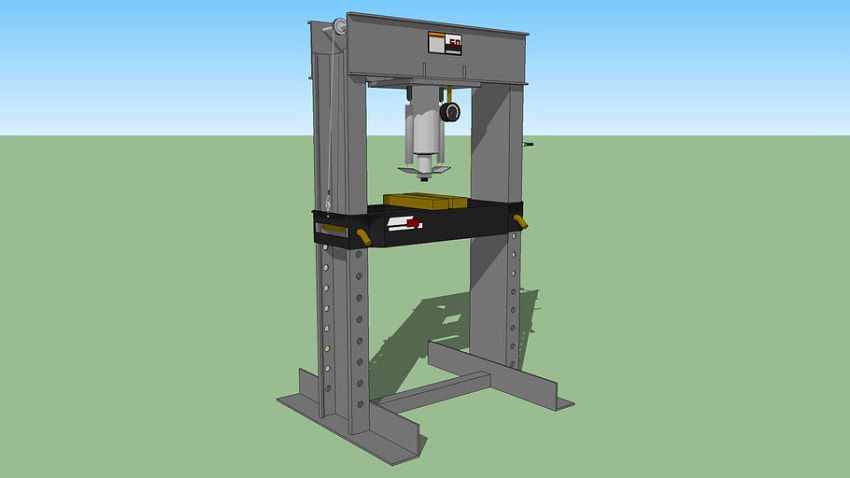
Thanks to this, the recycling process becomes more efficient. Not stopping at scrap, in many manufacturing plants, powdered materials such as pharmaceuticals or cosmetics are also compressed into tablets with high compactness and uniformity, thanks to hydraulic technology.

Applications in laboratory, production line?

In research labs, you’re probably familiar with its role: testing the strength of materials, compressing pellets for chemical analysis, or creating prototypes for the construction industry. Thanks to its stability and repeatability, hydraulic presses help researchers obtain reliable data, leading to the development of new, stronger, lighter materials.

Is it really safe to use a hydraulic press?

One of the common concerns is whether using a hydraulic press is dangerous. The truth is, with tens of tons of pressing force, this equipment is potentially risky if operated incorrectly. However, modern machines have been integrated with many protective features such as safety valves, emergency stop buttons and protective frames. When following the correct procedures, operators can use it with complete peace of mind. In places such as laboratories or small mechanical workshops, choosing the right machine capacity and regular maintenance are also important factors to ensure absolute safety.


Related News

What is the required TDS level for shrimp ponds?
06/12/2026 14:26:27

What is the ideal TDS level for a shrimp tank? Many people spend a lot of time monitoring pH, temperature, and filtration systems but overlook TDS. Only when shrimp grow slowly, their colors fade, they have difficulty molting, or die off sporadically do they start checking their water source and discover that this indicator has long been out of the right range

Signs that the electrodes in your TDS meter are degraded and need replacing
06/12/2026 11:43:51

TDS meters can operate reliably for many years, but the electrodes are the most subject to wear and tear. Each time a measurement is taken, the sensor surface comes into direct contact with water, dissolved minerals, and various other chemical components. This continuous process means the electrode's responsiveness gradually decreases over time.

Can metal detectors locate underground pipes and cables?
06/10/2026 19:17:37

Metal detectors operate on the principle of passive electromagnetic induction and can only detect isolated metal objects such as gold, copper, and iron. These devices cannot trace utility paths because they cannot differentiate the direction or depth of long, buried continuous pipes. For insulated electrical cables or plastic pipes, metal detectors are completely ineffective as there is no AC current to generate a magnetic field. Furthermore, the detection depth of standard consumer metal detectors is typically limited to 1 - 2 meters for small objects, whereas underground utility lines are often buried 3 - 5 meters deep or even more.

Stay Updated with Offers

Get exclusive volume discounts, bulk pricing updates, and new product alerts delivered directly to your inbox.

By subscribing, you agree to our Terms of Service and Privacy Policy.

Quick Support

Direct access to our certified experts