Stick, TIG, and MIG welding serve different job conditions. Stick welding is suited to portable work and applications where shielding gas is not used; TIG is chosen for controlled, clean welds on thin or nonferrous materials; MIG is suited to continuous welds and production-oriented work.
The practical choice depends on the material, weld appearance required, working location, productivity target, and the operator skill available. No single process is the best fit for every repair, fabrication, or assembly task.
Summary: Stick welding uses a coated electrode and does not require shielding gas. TIG uses a non-consumable electrode with shielding gas for clean, precise work. MIG uses continuously fed consumable wire and is easier to automate.
What is stick welding and when is it the practical choice?
Stick welding machine, listed as SMAW, is an arc-welding process that uses a coated consumable electrode without external shielding gas. The welder manually starts and controls the arc, moves the electrode, and replaces it when consumed.
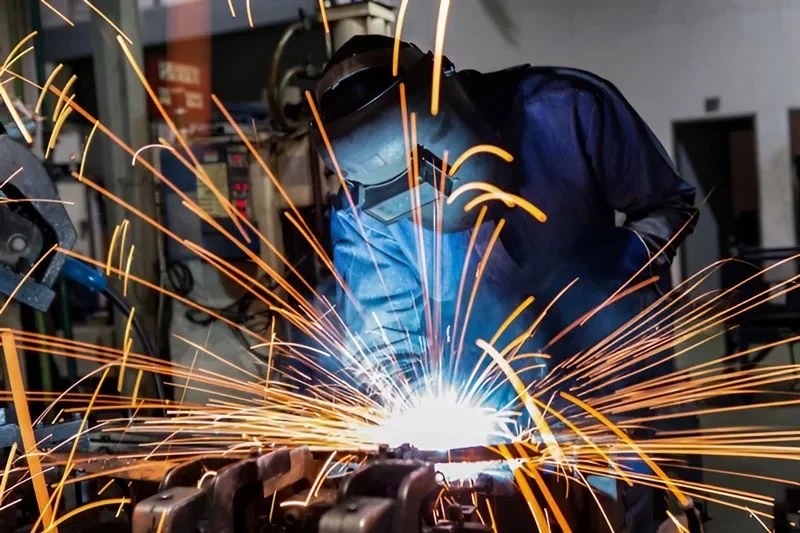
This process is a practical option for portable work, outdoor work where wind can affect shielding gas, and general repair or restoration tasks. The source also identifies construction, steel structures, industrial fabrication, and maintenance as common applications.
- The electrode coating provides protection during welding.
- It can be used in different welding positions and for thin to medium material thicknesses.
- It is commonly used for carbon steel, alloy steels, stainless steel, and cast iron.
Its limitations include lower productivity because electrodes must be replaced, material consumption, and slag that must be cleaned after welding. The source also notes that it is not commonly used for nonferrous metals such as nickel, copper, aluminum, and their alloys.
When should TIG welding be selected instead?
TIG welding machine, also called GTAW, uses a non-consumable tungsten electrode in a shielding-gas environment. It is the appropriate choice when weld cleanliness, precision, and control are more important than output speed.
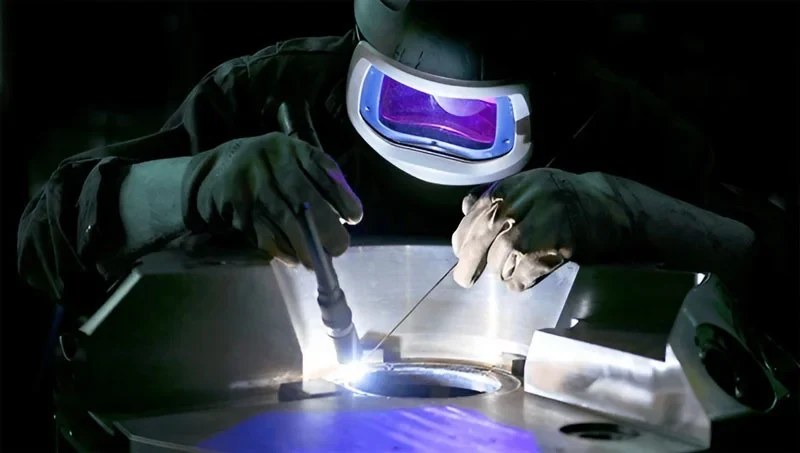
TIG welding does not create slag and can produce a clean weld with little spatter. The source describes it as suitable for aluminum, magnesium, stainless steel, copper and copper alloys, nickel and nickel alloys, and low-carbon steel.
It is especially associated with thin sheet, thin-wall tubing, high-alloy steel, nonferrous metals, and repair of aluminum or magnesium components. TIG can be performed in all positions, but it requires a higher level of welder skill and has lower productivity than MIG in the source comparison.
Note: TIG requires shielding gas and specialized equipment, so the source characterizes its equipment and consumable costs as relatively high.
When is MIG welding better for production work?
MIG welding machine, or GMAW, creates an arc between a consumable wire electrode and the workpiece while shielding gas or a gas mixture protects the arc and molten metal. Continuous wire feeding makes it better suited to long, uninterrupted welds and higher-output work.
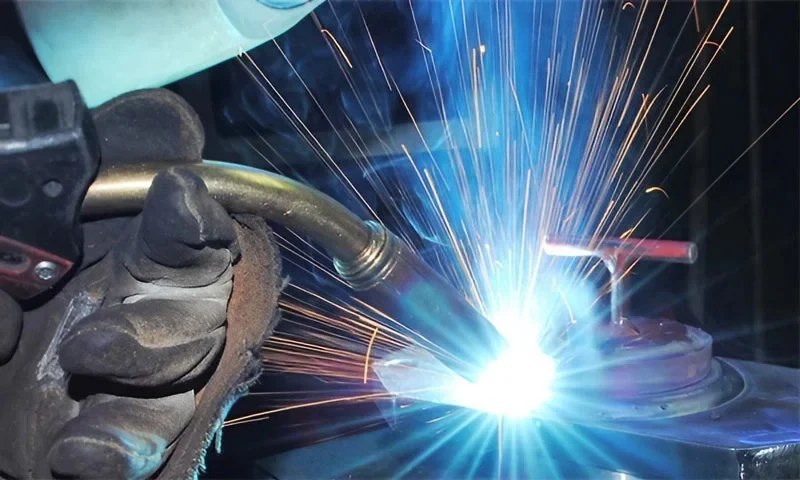
The source identifies MIG as a high-productivity process with relatively low welding energy and reduced thermal distortion. It can weld many metals and is easier to automate than stick or TIG welding.
MIG is commonly used for furniture, bicycle frames, motorcycle-related work, general mechanical fabrication, and automated or robotic welding systems. It generally requires less operator skill than TIG according to the source, making it relevant to routine fabrication where consistent, continuous welding is needed.
However, MIG equipment is described as larger and heavier than TIG equipment, and it relies on gas. Its weld appearance is considered less refined than TIG in the source, and it is less suitable for small welding details.
How do stick, TIG, and MIG welding differ at a glance?
The main difference is the electrode and shielding method: stick uses a coated electrode without external gas, TIG uses a non-consumable electrode with shielding gas, and MIG uses continuously fed consumable wire with shielding gas.
| Selection factor | Stick welding (SMAW) | TIG welding (GTAW) | MIG welding (GMAW) |
|---|---|---|---|
| Electrode | Coated consumable electrode | Non-consumable tungsten electrode | Continuously fed consumable wire |
| Shielding gas | Not used | Used | Used |
| Weld result | Produces slag that requires cleaning | Clean weld with no slag | Continuous, even weld; appearance is less refined than TIG |
| Productivity | Lower due to electrode changes | Lower and skill-intensive | Higher with continuous wire feeding |
| Typical fit | Construction, repairs, restoration, portable work | Thin materials, precision work, nonferrous metals | Fabrication, long welds, automation, robotic systems |
How should you choose among the three welding processes?
Choose stick welding when mobility, outdoor suitability, repairs, or steel-structure work are central to the job. Choose TIG welding when the material or joint needs careful control, a slag-free finish, or work on thin and nonferrous materials.
Choose MIG welding when continuous welds, productivity, and automation are the priorities. Before selecting a process, match the method to the material, required weld finish, workspace, equipment arrangement, and available operator skill.