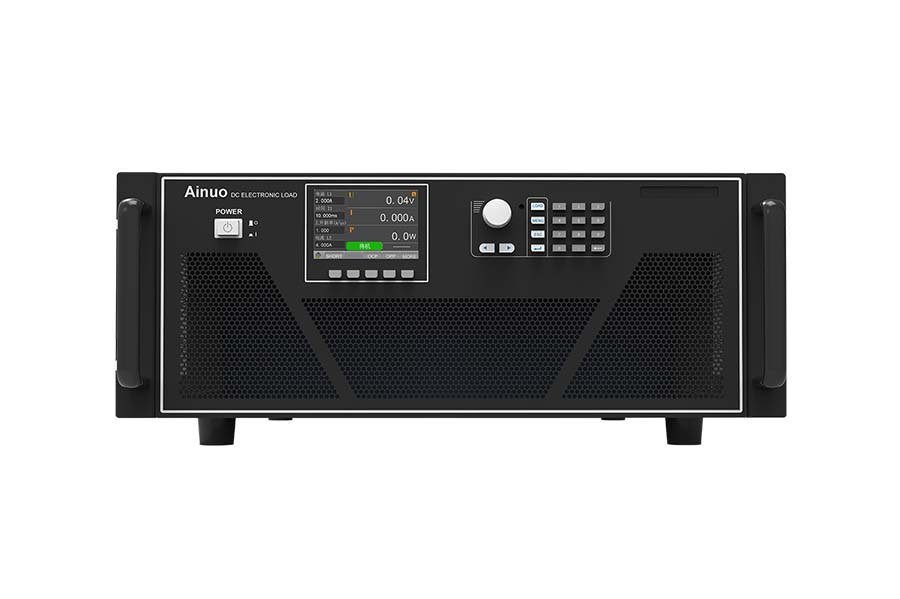
A high-power DC electronic load should be evaluated for five core safeguards: overvoltage, overcurrent, overtemperature, reverse-polarity, and short-circuit or general fault protection. These functions help limit the consequences of abnormal electrical, thermal, and wiring conditions during DC source testing.
This matters when testing batteries, fuel cells, power supplies, solar panels, and electric-vehicle charging systems, where excessive voltage, current, or heat may damage equipment and compromise test results.
Summary: Check for OVP to address excessive input voltage, OCP to control excessive current, and OTP to respond to overheating. Reverse-polarity and short-circuit/fault protection add safeguards for wiring errors and unexpected system behavior.
Why are five protection functions important for a high-power DC electronic load?
High-power DC loads absorb energy from the source under test and dissipate it during operation, so abnormal conditions can escalate quickly. A layered protection approach addresses the main risks identified in high-power testing: unstable voltage, excess current, overheating, incorrect polarity, and faults.
| Protection function | Condition addressed | Possible protective response |
|---|---|---|
| Overvoltage protection (OVP) | Input voltage exceeds a defined threshold | Disconnect, shut down, warn, or record the fault |
| Overcurrent protection (OCP) | Current exceeds a preset limit | Limit demand, enter protection mode, or disconnect |
| Overtemperature protection (OTP) | Critical temperature becomes excessive | Reduce power or current, warn, or shut down |
| Reverse-polarity protection | Positive and negative connections are reversed | Block current flow and alert the operator |
| Short-circuit and fault protection | Abnormal electrical or system behavior is detected | Disconnect input or enter a safe operating state |
What does overvoltage protection (OVP) do during DC load testing?
OVP monitors input voltage and acts when voltage rises above a predefined threshold. It is intended to prevent excessive voltage caused by incorrect settings, transient spikes, unexpected operating conditions, or source malfunctions from reaching the load’s internal circuitry.
Depending on the design, the load may disconnect its input, shut down its load circuit, issue an alarm, or record a fault condition. OVP is particularly relevant for battery charge/discharge tests, solar-panel characterization, fuel-cell testing, powertrain development, and industrial power-supply verification.
How does overcurrent protection (OCP) reduce test risk?
OCP continuously measures current and intervenes when current exceeds the configured limit. Excess current may result from incorrect test parameters, software configuration errors, sudden source changes, short-circuit conditions, or operator mistakes.
Protective behavior can include limiting current draw, reducing load demand, entering a protection state, disconnecting the input path, or generating a fault notification. This is important where batteries, power converters, and sensitive components have defined current limits.
Note: Programmable current limits and protection response characteristics should be checked against the requirements of the source and test procedure.
Why is overtemperature protection (OTP) needed in continuous high-power operation?
OTP helps prevent excessive internal temperature from causing inaccurate measurements, reduced component life, or permanent hardware failure. High-power loads generate heat during operation, while blocked vents, fan failures, dust, inadequate ventilation, high ambient temperature, and extended operation can impair cooling.
Temperature sensors can monitor areas such as heat sinks, power semiconductors, circuit boards, and cooling systems. If a limit is exceeded, the unit may reduce power consumption, limit current, increase cooling activity, provide a warning, or shut down.
When is reverse-polarity protection especially useful?
Reverse-polarity protection is useful whenever connection changes are frequent because it addresses accidental reversal of positive and negative terminals. It is relevant in battery test laboratories, prototype work, educational labs, and multi-user facilities, where setup errors can occur despite careful procedures.
Depending on the design, diodes, MOSFET-based circuits, disconnect relays, or electronic switching mechanisms may detect the incorrect polarity before significant current flows. The protection blocks current and alerts the operator, helping limit damage from a wiring mistake.
How does short-circuit and fault protection support safer testing?
Short-circuit and fault protection detects abnormal behavior that can develop too quickly for manual intervention. A short circuit can cause very high current, rapid heat generation, arcing, component damage, and hazards for personnel.
A load may monitor for sudden voltage collapse, current spikes, internal component failures, temperature increases, or communication errors. When a fault is detected, it can disconnect the input, shut down power stages, move to a safe state, log diagnostic information, or alert the operator.
How should these safety features be checked before selecting a DC electronic load?
Confirm that the electronic load provides protection functions appropriate to the planned test conditions rather than selecting only by power rating. In particular, review how the unit handles voltage, current, temperature, polarity, and fault events that can arise from the source, cabling, configuration, or test environment.
For a high-power test setup, these five protections form complementary layers: OVP addresses excessive voltage, OCP addresses excessive current, OTP addresses thermal stress, reverse-polarity protection addresses connection errors, and fault protection responds to unexpected abnormal conditions.