When cutting iron, the friction generated makes the machine overloaded, easily hot and damaged. In addition, the possibility of the cutting line being washed out and the surface being uneven is also high, affecting the quality of the product.
That is why in production and construction, people clearly divide between wood sawswood saws and iron saws. The right machine, the right data not only helps the work faster but also ensures safety for the user.
Can a jigsaw cut iron?
Jigsaws can still cut some thin metals such as iron, corrugated iron or aluminum. However, the quality of the cut will not be as good and the efficiency will not be as high as when using the right iron saw such as a saber saw.
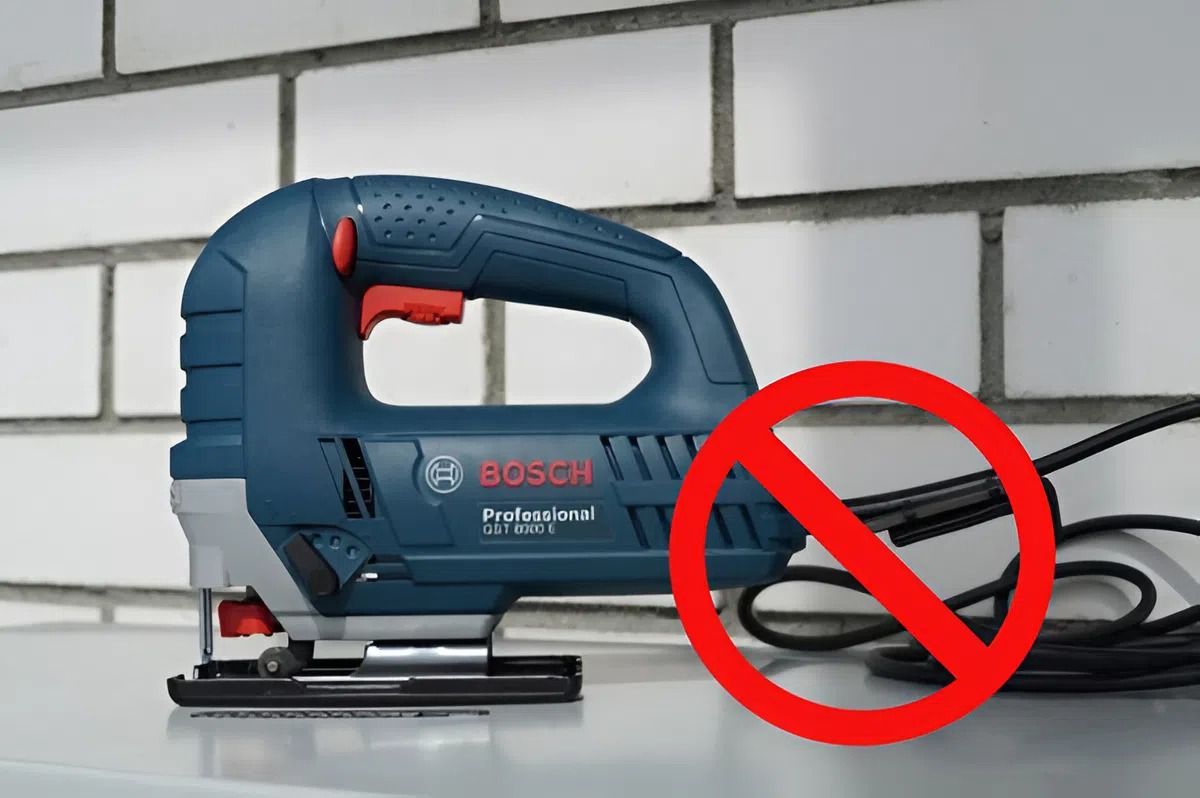
In case you do not have an iron saw available, you can still use a jigsaw instead. The important thing is to choose the right type of saw blade.
Jigsaw blades for metal are usually made from high-grade steel alloy, have high durability, good impact resistance and stable operation in harsh working conditions. The saw teeth are designed to be sharp and hard, helping to cut faster and neater, while limiting the impact on the surrounding area.
Here's how to choose a jigsaw blade for cutting iron:
- Prefer blades with large, progressive tooth pitches from 4 to 5.2 mm for high efficiency.
- Use for metal sheets from 1.5 mm to 10 mm thick and hollow metal pipes with a diameter of about 2 to 3 cm.
- Choose a single-shank (T-shank) type to fit most popular jigsaw models such as Bosch, Makita and many other brands.
Should I use a jigsaw to cut iron?
Handheld jigsaws can still cut iron and support daily work. However, due to their compact structure, average capacity and limited cutting speed, the efficiency when cutting iron will not be as high as that of specialized machines.
Experts often advise against using jigsaws to cut thick iron because the job will be difficult to complete. If you want to take advantage of it, you should only cut on thin, soft and not too thick iron bars. When using the right specialized saw blade, the cut will be faster and cleaner.
In fact, jigsaws can cut hollow iron pipes with a thickness of about 2 cm. With curves or bends, the machine is only suitable for thin iron sheets from 2 to 3 mm.
For solid iron, thick iron or large pipes, you should use a saw or a specialized iron cutter for the best results. Although not as professional as handheld iron cutters, a jigsaw is still a convenient choice if you only need to handle thin iron and do not want to carry bulky equipment.
Two popular jigsaw models to support iron cutting in 2025
Bosch GST 8000E
This is one of Bosch's most outstanding jigsaws, highly appreciated by many users for its flexible cutting ability in both straight and curved lines. The machine has a capacity of 710W, no-load speed of 3,100 rpm, meeting many cutting needs on wood, aluminum and steel with depths of 80mm, 20mm and 10mm respectively.
The convenience of the GST 8000E lies in the 3-level blade adjustment mode, allowing you to choose the most suitable operation for each type of material.
Bosch GST 700
Compared to the GST 8000E, the GST 700 model has a 500W motor but is still popular thanks to its compactness and versatility. The machine can cut 70mm thick wood, 10mm aluminum and 4mm metal, providing stable working ability in many situations.
With a simple, easy-to-grip design, the Bosch GST 700 is suitable for those who want a compact device that still ensures quality cuts on many different materials.
The above information will help you better understand the use of a jigsaw to cut iron as well as some suitable options. In addition to specialized table saws for heavy work, owning a handheld jigsaw is also very necessary. Thanks to its compactness and flexibility, a jigsaw can accompany you in many different projects, supporting faster cutting operations and saving more time.