IC Development Tools
From early proof-of-concept work to board-level validation, the right development platform can shorten design cycles and make component evaluation far more practical. IC Development Tools support engineers, embedded developers, and technical buyers who need a structured way to test integrated circuits, verify interfaces, and explore device behavior before moving into a final design.
In a broad engineering workflow, this category covers more than simple demo boards. It may include starter kits, breakout boards, sensor boards, evaluation hardware, and supporting tools used to assess microcontrollers, communication devices, power-related circuits, and specialized IC functions in a repeatable way.
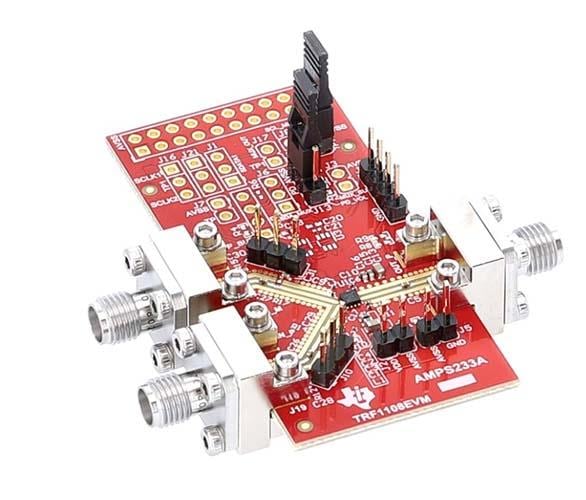
Where IC development tools fit in the design process
Integrated circuits are often selected based on electrical performance, interface compatibility, software support, and ease of integration. In practice, development tools help teams answer these questions earlier by providing a working platform for experimentation, measurement, and firmware development.
These tools are especially useful when comparing architectures, validating pin functions, testing signal paths, or building an initial application prototype. For teams working across adjacent areas such as communication development tools or memory-related evaluation workflows, they also provide a bridge between standalone IC testing and broader system integration.
Typical product formats in this category
The category includes a wide range of hardware styles because IC evaluation needs differ by device type. Some products are built as compact breakout or sensor boards intended for quick bench testing, while others are full starter kits designed to support firmware development, peripheral access, and hands-on learning.
For example, the Adafruit MENTA Arduino-compatible kit built around the ATMega328P is a good illustration of a starter kit approach: it gives users a practical environment for code development and basic hardware interaction. By contrast, products such as the Adafruit Flora UV Index Sensor board or the Adafruit nRF8001 Bluetooth breakout board show how a focused board can simplify access to a specific sensor or communication function without requiring a complete custom PCB at the earliest stage.
Examples of tools engineers commonly evaluate
Within this category, some products are designed for microcontroller exploration, while others serve as interface, sensing, or application-specific evaluation hardware. The Adafruit 20 ATtiny2313V-10PU Microcontroller Development Kit is relevant when the goal is to explore a small MCU platform and verify development flow across common desktop operating systems.
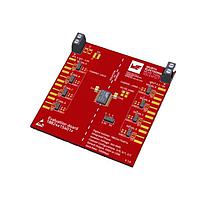
Other solutions serve more specialized use cases. The Allegro MicroSystems ASEK711KLC-60AB-T-DK, for instance, belongs to the kind of development hardware engineers may use when assessing sensing or signal-monitoring behavior in a controlled setup. Similarly, the Advantech PCM-3644-08A1E development tool reflects how some evaluation products are aligned with embedded computing or expansion-oriented environments rather than hobby-style prototyping alone.
How to choose the right IC development tool
A useful selection process starts with the target IC function. If the project centers on microcontroller code development, a starter kit with software compatibility and accessible headers may be more helpful than a minimal evaluation board. If the objective is to validate one function such as wireless connectivity, light sensing, or signal conversion, a focused breakout or application board can be the faster path.
It is also important to look at the intended development environment, physical interface style, and the level of integration needed for the test setup. Teams may prefer modular hardware when they need quick experiments, while more structured evaluation platforms are often better when repeatable testing, firmware iteration, or cross-team collaboration matters.
When projects expand toward image capture, embedded vision, or optical validation, related categories such as cameras and camera modules may also become relevant alongside core IC evaluation hardware.
Manufacturer ecosystem and product availability
This category brings together tools from recognized suppliers active in prototyping, embedded development, and component evaluation. Adafruit appears prominently with accessible development boards, starter kits, and breakout-style hardware that can help accelerate early experimentation. For more industrial or embedded computing contexts, Advantech adds another perspective with development tools tied to broader system-level design needs.
Additional manufacturers in the wider ecosystem include Allegro MicroSystems, American Power Conversion, and others listed across the catalog. The practical value for buyers is not simply brand variety, but the ability to compare different development approaches depending on whether the priority is rapid prototyping, sensor evaluation, communication testing, or embedded hardware integration.
Using these tools in prototyping and validation workflows
Development hardware is often most effective when used as part of a staged engineering process. A team might begin with a proof-of-concept using a breakout or starter board, then move to interface testing, software refinement, and finally custom hardware design. This reduces uncertainty before committing engineering effort to schematic capture and PCB layout.
IC evaluation tools can also support education, lab work, and feasibility studies where building a custom test fixture would be unnecessary or too slow. In many cases, they help clarify whether a device family is appropriate for the application before the project advances into production-oriented design reviews.
Related categories worth exploring
Because integrated circuit development rarely happens in isolation, some buyers also review adjacent tool groups during selection. For projects involving peripheral connectivity or protocol testing, communication-focused platforms may complement this category. For designs that depend on data handling and storage behavior, memory IC development tools can provide more specific evaluation options.
Likewise, assortment-oriented kits may be useful in educational labs or exploratory bench work where multiple small components or modules are needed to support fast iteration. The best choice depends on whether the immediate need is device-specific evaluation or broader prototype assembly.
Choosing with confidence
A well-matched development tool helps turn datasheet assumptions into real test results. Whether the requirement is a compact breakout board, a sensor evaluation platform, or a fuller microcontroller starter kit, this category is designed to support practical engineering decisions with hardware that can be used directly in development and validation tasks.
By focusing on device function, software workflow, and the stage of your project, it becomes easier to narrow the options and select tools that fit your technical objectives without adding unnecessary complexity.
Get exclusive volume discounts, bulk pricing updates, and new product alerts delivered directly to your inbox.
By subscribing, you agree to our Terms of Service and Privacy Policy.
Direct access to our certified experts