Optoelectronic Development Tools
When you are prototyping a sensing, imaging, or light-based electronic system, the development platform matters almost as much as the component itself. The right board or evaluation kit helps engineers validate signal quality, test interfaces, shorten bench time, and move from proof of concept to integration with fewer unknowns. That is exactly where Optoelectronic Development Tools fit into the workflow.
Within this category, you will find hardware intended to evaluate devices used in optical sensing, ambient light measurement, proximity detection, imaging, turbidity measurement, laser-driven optical modules, and encoder feedback. These tools are especially useful for engineering teams working on industrial automation, smart devices, instrumentation, embedded vision, and application-specific sensor design.

Built for evaluation, validation, and faster design decisions
Optoelectronic platforms are typically used early in development, when the goal is to understand how a device behaves under real conditions rather than relying only on datasheet assumptions. An evaluation board can simplify power, interface access, and signal observation, making it easier to characterize performance and confirm whether a device is suitable for the target design.
In practice, this category supports several common engineering tasks: comparing sensor response in different lighting conditions, testing imaging pipelines, verifying optical front-end behavior, and exploring motion or position feedback based on reflective encoding. For projects that also involve embedded imaging hardware, it can be helpful to review related options such as camera modules and camera platforms alongside the evaluation tools themselves.
Typical device types covered in this category
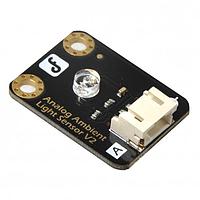
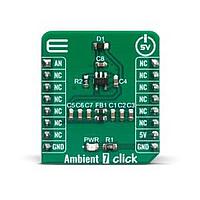
The scope of optoelectronic development is broad because light-based electronics serve many different functions. Some tools focus on ambient light sensing and lux-related measurement, which are relevant in display control, building automation, portable devices, and energy-aware systems. Others are intended for proximity sensing, object detection, or reflective optical feedback.
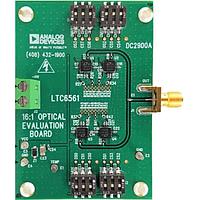
There are also kits aimed at image sensors and camera interfaces, helping engineers assess basic image acquisition, connectivity, and host compatibility. On the optical source side, certain evaluation boards support laser diode driver investigation for optical modules. This makes the category relevant not only to sensor teams but also to developers working on complete electro-optical subsystems.
Representative evaluation platforms and where they fit
Several examples from this category illustrate the range of use cases. The Analog Devices EVAL-CN0409-ARDZ photometric front end for turbidity measurement is aligned with optical liquid analysis and photometric sensing tasks, where the signal chain around the detector is just as important as the sensor element. Another example, the EVAL-CN0397-ARDZ ambient light sensor platform, is more focused on environmental light measurement and front-end evaluation in embedded applications. For broader supplier context, you can also browse Analog Devices solutions.
On the imaging side, the ams OSRAM CMV50000_MONO_EK evaluation kit supports work around monochrome image sensing, while the EVALBOARD_DRAGSTER is relevant for camera interface evaluation. The HM01B0-UPD-EVN from Lattice Semiconductor is another useful example for engineers exploring image sensor integration with programmable logic or shield-based development flows. If optics selection is part of the project, camera lenses may also become part of the broader validation setup.
Manufacturers commonly used in optoelectronic development
This category includes evaluation hardware from well-known semiconductor and sensing suppliers such as ams OSRAM, Analog Devices, Broadcom, Intersil, Lattice Semiconductor, Monolithic Power Systems (MPS), and Murata Electronics. Each of these names is associated with a different part of the optoelectronic ecosystem, from light and image sensing to signal conditioning, optical interface evaluation, and motion-related optical detection.
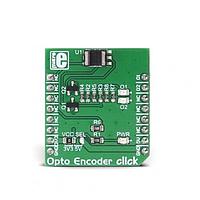
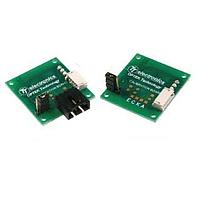
For example, Broadcom evaluation boards in this selection are tied to reflective incremental encoder applications, which are relevant in industrial motion systems and position feedback. Murata Electronics appears here with an AMR sensor evaluation board, illustrating how magnetic and optical-oriented development workflows can sometimes intersect at the system level, especially in sensing and control architectures.
How to choose the right development tool
A practical starting point is to match the board to the evaluation objective. If the priority is environmental light measurement, focus on ambient light sensor kits such as the ams OSRAM TSL2591X EVM or the Intersil ISL76671EVAL1Z. If the task is object presence or near-field detection, a proximity platform like the ams OSRAM TMD2672EVM is more appropriate. For motion feedback or code-wheel testing, a reflective encoder evaluation board will make more sense than a general optical sensor kit.
It is also important to review interface and system constraints. Some tools are designed around shield-style development, while others are intended for standalone lab evaluation. Power requirements, host compatibility, communication method, and mechanical setup all affect how quickly a team can begin testing. In many projects, developers also combine these boards with communication development tools to verify data transfer, control paths, or host-side integration during early validation.
Application areas across industrial and embedded design
Optoelectronic development tools are used in far more than consumer prototypes. In industrial environments, they support work on machine sensing, inspection, encoder feedback, fluid analysis, and process instrumentation. In embedded electronics, they are commonly used to evaluate sensor response, improve optical path design, and test how firmware handles changing input conditions.
They also help reduce risk before custom PCB design begins. By using an evaluation board first, engineers can observe signal behavior, identify integration challenges, and decide whether a given device family aligns with the application. This is especially useful when the final product depends on stable optical performance, reliable signal conditioning, or repeatable measurement under variable real-world conditions.
What this category helps you compare
Rather than treating all boards as interchangeable, it is better to compare them based on function: sensing, imaging, optical drive, or positional feedback. A turbidity measurement shield serves a very different development purpose than a monochrome image sensor kit or a reflective encoder board. Looking at the intended device under evaluation is often the fastest way to narrow the selection.
You may also want to consider whether your project is centered on proof-of-concept learning, detailed characterization, or pre-production integration. Some teams need a quick route to functional testing, while others need a platform suitable for repeatable measurements and firmware experimentation. This category is designed to support those different stages without forcing a one-size-fits-all approach.
Final considerations before ordering
Choosing the right optoelectronic development platform usually comes down to a clear understanding of the target device, the measurement goal, and the surrounding system architecture. Whether you are evaluating ambient light response, proximity behavior, camera interfaces, image sensing, laser-related optical modules, or encoder feedback, a suitable development tool can save substantial time during validation.
Used thoughtfully, these platforms help engineering teams move from component evaluation to system design with better data and fewer assumptions. Explore the category based on sensing function, interface needs, and application context to find the most relevant board or kit for your next optical or imaging project.
Get exclusive volume discounts, bulk pricing updates, and new product alerts delivered directly to your inbox.
By subscribing, you agree to our Terms of Service and Privacy Policy.
Direct access to our certified experts