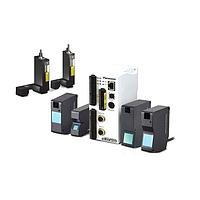
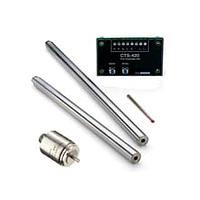
Sensors
Reliable measurement starts at the point where the physical world meets electronics. In modern equipment, Sensors provide that interface by turning motion, current, vibration, temperature, pressure, and other real-world conditions into usable signals for monitoring, control, protection, and analytics.
This category brings together a broad sensor ecosystem for design engineers, maintenance teams, panel builders, and industrial buyers who need components for embedded systems, factory equipment, energy systems, and connected devices. Whether the goal is precise detection, condition monitoring, or safer machine operation, choosing the right sensing technology has a direct impact on system performance and long-term reliability.
Where sensors fit in industrial and electronic systems
Sensor selection is rarely an isolated decision. In practical applications, the sensing layer works alongside signal conditioning, control electronics, communications, and mechanical integration. A current sensor may support power conversion and fault detection, while a magnetic sensor may handle position feedback, speed detection, or contactless switching in compact assemblies.
In many builds, sensors also depend on surrounding component choices such as connectors for secure signal transmission and circuit protection for safeguarding inputs and downstream electronics. Looking at the sensor as part of the full system helps reduce integration issues later in prototyping or production.
Key sensor types covered in this category
This category spans multiple sensing principles used across industrial electronics and embedded design. Depending on the application, buyers may be evaluating solutions for temperature, pressure, environmental monitoring, flow, level, motion, displacement, optical detection, proximity, or electrical measurement.
Several sub-groups are especially common in automation and electronics projects. Current sensors are widely used for energy monitoring, motor control, inverter feedback, and overcurrent detection. Magnetic sensors support contactless position and speed sensing, while vibration sensing plays an important role in machine condition monitoring, predictive maintenance, and rotating equipment diagnostics.
Examples from leading manufacturers
Among the brands represented in this space, Allegro MicroSystems is well known for semiconductor-based sensing solutions used in compact electronic designs. Parts such as the ACS773LCB-050B-PFF-T and ACS760ELF-20B-T illustrate the role of current sensing in power and control circuits, while devices including the A1180ELHLT, A1383ELHLT-T, A3240ELTTR-T, A1172ECGLT, and A1366LKTTG-10-T show how Hall-effect and magnetic sensing can be applied where non-contact detection is preferred.
Amphenol also appears in this category with vibration-focused products such as the PC420VR-30-DA, PC420VR-10, PC420VR-10-DV, and PC420VR-10-EX. These examples are relevant for applications where equipment health, imbalance, wear, or abnormal mechanical behavior must be tracked before a failure causes downtime.
How to choose the right sensor for your application
The best starting point is the physical variable you need to detect and the decision your system must make from that data. If the output is used for protection, switching thresholds and response behavior may matter most. If the output feeds diagnostics or control loops, signal stability, repeatability, and integration with the rest of the electronics become more important.
It is also useful to define environmental and installation constraints early. Consider the electrical interface, available supply voltage, mounting method, target range, expected noise sources, and whether the measurement is continuous or event-based. For embedded projects, board-level integration may drive the choice toward compact semiconductor sensors; for machine monitoring, ruggedized sensing formats may be more suitable.
Hall-effect, current, and vibration sensing in real use cases
Hall-effect sensors are often selected when designers need contactless detection of position, rotation, or magnetic field changes. This makes them suitable for applications where mechanical wear, contamination, or limited space would make traditional contact-based sensing less attractive. They are commonly used in consumer electronics, automotive-related electronics, industrial controls, and smart devices.
Current sensing helps systems monitor electrical load without relying only on indirect estimates. In power supplies, battery-connected systems, motor drives, and energy management hardware, this data can be used for efficiency tracking, fault detection, and closed-loop control. Vibration sensors, by contrast, are tied more closely to machine behavior and can support maintenance strategies by identifying unusual movement patterns in motors, pumps, fans, and other rotating assets.
Integration considerations for engineering and procurement teams
From a sourcing perspective, it is helpful to evaluate not only the sensor itself but also the surrounding implementation effort. That includes mechanical fit, cabling or board connection, compatibility with processing hardware, and the availability of tools needed during assembly or test. For some projects, related resources in kits and tools can simplify prototyping, validation, or maintenance workflows.
Procurement teams may also need to balance technical suitability with lifecycle planning, approved manufacturer lists, and production scalability. A sensor that works in a lab setup is not always the ideal choice for volume purchasing or long-term field deployment. Reviewing the category through both engineering and supply-chain requirements usually leads to more durable decisions.
Why this category matters for broader system design
Sensors influence more than one function inside a product. The same measurement point can support safety logic, user feedback, data logging, preventive maintenance, and process optimization. As systems become more connected and data-driven, the sensing layer becomes increasingly important to overall product quality and operational visibility.
This is also why sensor choice often affects adjacent component decisions. In battery-powered or energy-aware systems, sensing and power architecture need to align with the broader design approach, including considerations around battery technologies where applicable. The goal is not just to detect a variable, but to build a dependable measurement chain from the sensor to the final control or monitoring function.
Finding the right fit in the sensors category
This category is designed for buyers who need practical options across multiple sensing principles rather than a narrow single-product view. From Hall-effect and current sensing to vibration monitoring and other industrial measurement needs, the range supports both board-level electronics and broader equipment applications.
If you are comparing products, start with the sensing principle, installation environment, and signal requirements, then narrow the shortlist by integration needs and manufacturer preference. A well-matched sensor improves accuracy, simplifies system design, and supports more reliable operation across the full lifecycle of the equipment.
Get exclusive volume discounts, bulk pricing updates, and new product alerts delivered directly to your inbox.
By subscribing, you agree to our Terms of Service and Privacy Policy.
Direct access to our certified experts