Digital Multimeters (NI)
Accurate electrical measurement is a core requirement in validation labs, automated test systems, production lines, and maintenance environments. When repeatability, integration, and data quality matter as much as basic voltage and current readings, Digital Multimeters (NI) are often selected for test setups that need to scale from bench evaluation to automated measurement architecture.
This category brings together NI digital multimeters in USB, PCI, PCIe, PXI, and PXIe form factors. That makes it easier to choose a platform that fits both the measurement task and the system design, whether you need a standalone PC-connected device or a modular instrument for high-channel-count and rack-based test environments.
Built for measurement accuracy and system integration
NI multimeters are commonly used where engineers need more than occasional spot checks. In automated test and instrumentation systems, a DMM is expected to deliver stable readings, support software control, and fit cleanly into a broader workflow that may include switching, waveform analysis, and device characterization.
Within this range, you will find instruments with 6.5-digit and 7.5-digit resolution, options for different DC voltage and current ranges, and models designed for varying throughput requirements. For teams already building around NI platforms, these multimeters align naturally with established test ecosystems and controller environments.
Available form factors for different test architectures
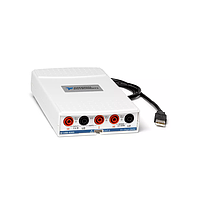
One of the main strengths of this category is platform flexibility. USB models are suitable when a direct PC connection is preferred for lab use, troubleshooting, or compact automated stations. A model such as the NI USB-4065 offers a practical path when portability and straightforward integration are important.
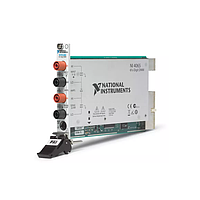
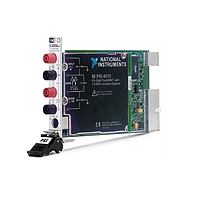
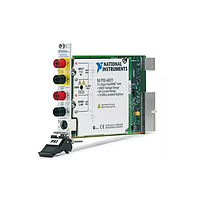
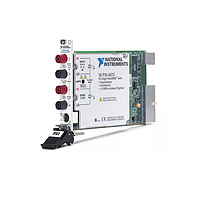
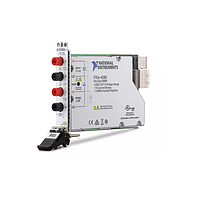
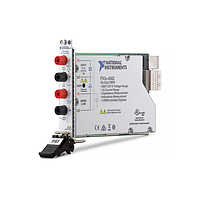
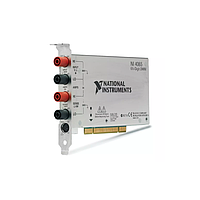
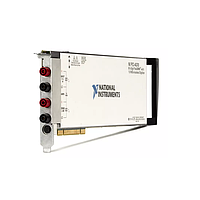
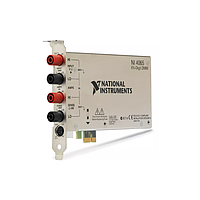
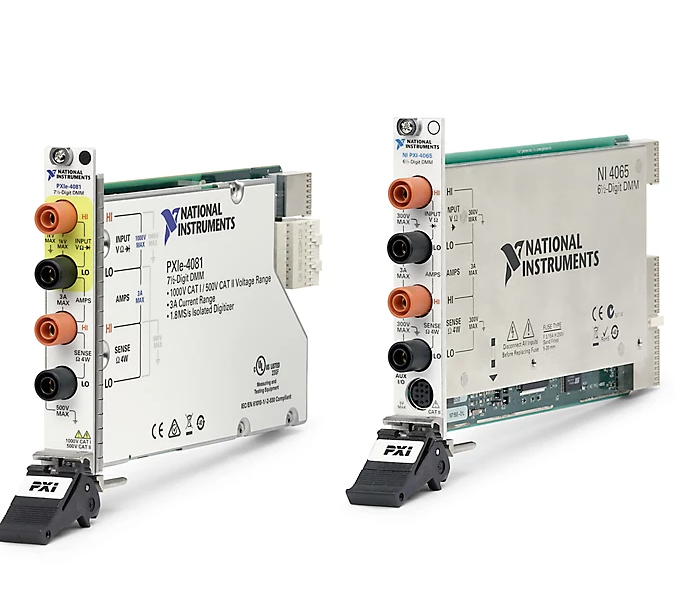
PCI and PCIe devices, including the NI PCI-4065, NI PCIe-4065, and NI PCI-4070, are more suitable for computer-based systems where internal bus connectivity is part of the overall design. For modular automated test, PXI and PXIe options such as the NI PXI-4065, PXI-4070, PXI-4071, PXI-4072, PXIe-4080, PXIe-4081, and PXIe-4082 support denser integration in chassis-based platforms.
If your application also includes signal observation or synchronized switching paths, it can be useful to review related oscilloscope solutions or NI switching hardware as part of the same test strategy.
Where NI digital multimeters are commonly used
These instruments are relevant across many electrical and electronic test scenarios. Common use cases include DC voltage and current verification, board-level testing, power rail validation, component characterization, manufacturing test, and service diagnostics. In modular systems, they are especially useful when measurements must be repeated consistently across many units or test sequences.
Higher-performance models in this category are also suited to environments where sampling speed and measurement precision both influence test time and confidence in results. For example, some NI PXI and PXIe multimeters in this selection support much faster measurement throughput than basic bus-powered devices, which can matter in automated validation or production applications.
How to choose the right model
The most effective starting point is not the model name but the measurement requirement. Consider the expected voltage and current range, the required resolution, and whether your process values higher accuracy or faster acquisition. A system checking broad pass/fail limits may not need the same performance as one doing calibration support, design verification, or low-level signal analysis.
Bus interface is equally important. USB is usually the most direct option for a compact setup, while PCI and PCIe make sense in PC-based installations. PXI and PXIe are typically chosen when the goal is a modular automated test system that can combine measurement, switching, and control inside one platform.
It is also worth checking whether you need added measurement capability beyond standard DMM functions. For example, models such as the NI PXI-4072 and NI PXIe-4082 include L&C measurement support, which can be useful in workflows that extend beyond basic voltage and current verification.
Examples from the NI DMM range
Several products in this category illustrate how the lineup addresses different requirements. The NI USB-4065 and NI PCIe-4065 provide 6.5-digit measurement capability with DC ranges up to ±300 V and current measurement up to ±3 A, making them suitable for many general-purpose automated measurement tasks.
For applications that demand stronger precision and broader voltage handling, the NI PXI-4071 and NI PXIe-4081 move into 7.5-digit class performance and support DC voltage ranges up to ±1000 V. Meanwhile, models such as the NI PXI-4070, NI PCI-4070, and NI PXIe-4080 offer a balance between precision-oriented measurement and modular integration.
Where test systems require coordinated routing of signals before measurement, pairing a DMM with NI switch modules can help streamline automated channel selection and reduce manual intervention.
Digital multimeters within a larger NI test platform
In many projects, a multimeter is only one element of a broader instrumentation chain. NI digital multimeters are often deployed alongside switching, communications interfaces, and source instruments to support characterization, validation, and production workflows. This is especially relevant when engineers need centralized software control and repeatable sequencing across multiple instruments.
For applications that involve both sourcing and measurement in one workflow, it may also be helpful to explore source measurement units. In contrast, when the requirement is pure electrical measurement with flexible platform choices, the DMM range in this category remains the more direct starting point.
What to review before ordering
Before selecting a unit, confirm the installation environment, host interface, expected signal levels, and whether the instrument will be used as a bench-connected device or inside a modular chassis. You should also review the needed resolution, update rate, and any requirement for additional functions such as L&C measurement.
Because this category includes several NI DMM families with different architectures, the right choice usually depends on how the instrument will be deployed rather than on a single specification alone. Looking at the test system as a whole often leads to a better long-term fit than choosing only by headline range or resolution.
Find the right NI digital multimeter for your application
This selection is designed for engineers and technical buyers who need reliable electrical measurement within PC-based or modular NI environments. Whether you are building a compact test station, expanding a PXI platform, or replacing an existing measurement device, this category provides a focused view of NI multimeters suited to professional test and instrumentation work.
Review the available models by bus type, resolution, and measurement range to narrow down the best option for your workflow. A well-matched DMM can improve data consistency, simplify automation, and fit more effectively into the broader measurement system you are building.
Get exclusive volume discounts, bulk pricing updates, and new product alerts delivered directly to your inbox.
By subscribing, you agree to our Terms of Service and Privacy Policy.
Direct access to our certified experts