Switches (NI)
Flexible signal routing is a core part of automated test systems, especially when multiple instruments need to connect to many test points without manual rewiring. In this environment, NI switch modules help engineers build scalable switching architectures for validation benches, production test stations, and measurement automation workflows.
This category focuses on NI switching solutions used to route, multiplex, and organize signals inside broader electronic test setups. Whether the goal is expanding channel count, reducing fixture complexity, or improving repeatability, the right switching matrix can simplify system design and make instrument utilization more efficient.
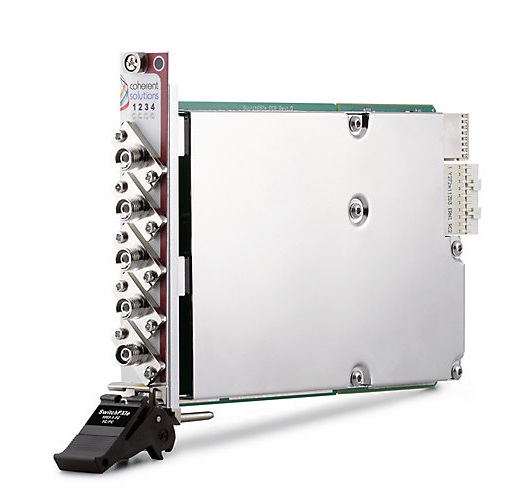
Where NI switching modules fit in an automated test system
Switching hardware is often the layer that connects instruments to devices under test. Instead of dedicating one instrument channel to one measurement point, a switch matrix allows a single instrument or a small instrument set to reach many nodes in a controlled sequence. This is especially useful in applications such as PCB validation, semiconductor test, component characterization, and functional test systems.
In practice, NI switching products are commonly used alongside measurement and control equipment from the same ecosystem. For example, a switch matrix may be paired with digital multimeters for sequential electrical checks or connected with source measurement units when sourcing and measuring across multiple channels is required.
Matrix switching for high-channel-count routing
A matrix module is designed to connect any row to any column within its topology, making it suitable for test scenarios where many signal paths must be created dynamically. This architecture is widely used when engineers need to scan multiple points, share instruments across channels, or configure different routing paths during one automated sequence.
Within this category, several NI SwitchBlock matrix modules illustrate different channel-density and signal-handling priorities. Options such as the NI SWB-2834 and NI SWB-2833 support 2-wire matrix configurations, while models like the NI SWB-2817, SWB-2816, and SWB-2815 address 1-wire matrix routing with different row and column counts. The NI SWB-2814 provides another 2-wire matrix option for applications that need a more compact matrix format.
How to choose between 1-wire and 2-wire matrix configurations
One of the first selection points is the switching mode. 1-wire matrices are typically considered when each signal path is routed independently and the application suits single-ended switching schemes. 2-wire matrices are often preferred when paired signal paths need to be switched together, which can be helpful in differential or floating measurement arrangements depending on the overall test architecture.
In the listed NI range, the SWB-2815, SWB-2816, and SWB-2817 are 1-wire matrix modules, while the SWB-2814, SWB-2833, and SWB-2834 are 2-wire variants. This distinction matters not only for wiring style but also for how efficiently the matrix aligns with the instrument and fixture design. Choosing the right topology early can reduce integration work and improve long-term maintainability.
Understanding relay type, voltage, and current considerations
Switch module selection should also reflect the electrical characteristics of the signals being routed. Different modules in this category use reed relays or electromechanical relays, and that difference can influence switching behavior, expected application fit, and channel strategy. The context of the DUT, signal level, and switching frequency all matter when narrowing down the appropriate module family.
For example, some listed models support up to 100 V DC with lower current handling, while others are designed for 100 V DC at higher current levels, and the NI SWB-2814 reaches 150 V DC at 1 A. These ratings should always be matched to the real operating conditions of the test system, with suitable design margin and attention to the full signal path rather than the module alone.
Row access and matrix density: what they mean for system design
Several products in this category are available in versions with or without row access. Row access can be valuable when a test engineer needs additional flexibility in how rows are used within the switching scheme, particularly in more complex routing or expansion strategies. It is not automatically required for every application, but it can provide useful design freedom in larger or evolving test platforms.
Matrix density is another important factor. A 4×86 configuration such as the NI SWB-2815 emphasizes high column count in a compact row structure, while an 8×46 SWB-2816 or 16×22 SWB-2817 may fit different channel mapping priorities. On the 2-wire side, the NI SWB-2833 offers a 4×71 format and the SWB-2834 provides an 8×34 arrangement, giving engineers multiple ways to balance channel reach, fixture layout, and routing logic.
Typical applications for NI switch modules
These switching products are relevant in many B2B test environments where repeatable, software-controlled signal routing is needed. Common examples include automated validation of electronic assemblies, multi-point resistance or voltage checks, device characterization, and production-line test cells where one instrument set must serve many DUT nodes.
They can also be part of a wider NI-based measurement platform that includes oscilloscopes for waveform analysis or communication hardware in GPIB, Serial, and Ethernet setups for instrument integration. In this role, the switch layer helps tie together acquisition, control, and measurement resources into a more automated workflow.
Representative NI switch modules in this category
The available selection highlights several useful matrix formats rather than one single universal option. For higher-current 2-wire DC switching, the NI SWB-2834 Matrix Module for SwitchBlock and NI SWB-2833 Matrix Module for SwitchBlock are notable examples. For lower-current, high-density 1-wire routing, the NI SWB-2815, NI SWB-2816, and NI SWB-2817 series provide multiple matrix sizes, each offered in row-access and non-row-access versions.
The NI SWB-2814 Matrix Module for SwitchBlock is also relevant when a smaller 2-wire matrix with reed relay architecture aligns better with the application. Reviewing matrix size, relay type, switching mode, and access options together is usually the most practical way to narrow the shortlist.
Choosing the right NI switching solution
Selecting a switch module is rarely just about channel count. A good choice depends on signal type, required voltage and current range, single-ended or paired routing needs, matrix flexibility, and how the module will interact with the rest of the automated test system. Engineers should also consider future expansion, maintenance strategy, and whether the switching architecture will need to support multiple test routines over time.
This category brings together NI switching options suited to structured, repeatable signal routing in electronic test environments. If you are building or expanding an automated measurement setup, comparing topology, relay technology, and access configuration will help identify the most suitable NI switch module for your application.
Get exclusive volume discounts, bulk pricing updates, and new product alerts delivered directly to your inbox.
By subscribing, you agree to our Terms of Service and Privacy Policy.
Direct access to our certified experts