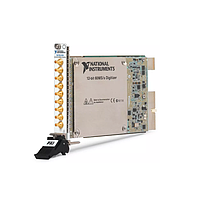
Electronic Test and Instrumentation
Modern test systems depend on more than a single instrument. In production, validation, and R&D environments, engineers often need a platform that can combine measurement, switching, timing, and control in one scalable setup. This is where Electronic Test and Instrumentation solutions become especially useful, helping teams build systems that match both present requirements and future expansion.
Within this category, the focus is on modular test hardware and related instrumentation used across automated measurement, verification, and industrial test applications. The range is particularly relevant for users building PXI-based platforms, rack-level test architectures, or integrated environments that need reliable signal handling, synchronization, and system-level flexibility.

Why modular test platforms matter
Unlike standalone bench instruments, a modular approach allows multiple functions to be combined in a shared chassis or test framework. That makes it easier to centralize control, improve repeatability, and scale channel count without redesigning the whole system. For many users, this is a practical path toward automated test, especially when different measurement tasks must work together under one software environment.
This category is closely associated with NI hardware, widely used in engineering labs and industrial test stations. It also includes supporting equipment that complements broader test workflows, such as specialized chassis and load-oriented platforms from manufacturers like Vitrek where those products fit the application.
Key equipment found in this category
A major part of the selection centers on PXI chassis, which provide the physical and electrical backbone for modular instrumentation systems. Chassis choice affects slot capacity, available bandwidth, cooling performance, clocking options, and the ability to support synchronized measurement across multiple modules. These factors become increasingly important in complex validation systems, high-channel-count test racks, and mixed-signal environments.
Representative examples include the NI PXIe-1095 in 18-slot configurations with up to 24 GB/s system bandwidth, the NI PXIe-1092 for more compact 10-slot systems, and the NI PXIe-1088 for applications that need a smaller 9-slot PXI Express platform. For larger systems that require broad hybrid-slot support, models such as the NI PXIe-1085, NI PXIe-1086, and NI PXIe-1086DC illustrate how chassis selection can vary by power input, bandwidth, redundancy options, and timing features.
Choosing the right chassis for your test architecture
The best fit usually depends on system size and how measurement modules will be deployed over time. Slot count is the first filter: a 9-slot or 10-slot chassis may be enough for a focused validation bench, while 18-slot models are often better suited to production test cells or long-term expansion. If your application will grow to include switching, DMM, controller, and timing resources together, planning extra capacity from the start can reduce later integration work.
Bandwidth and timing are also central selection criteria. Systems with high-speed data movement or tightly synchronized modules may benefit from higher-bandwidth PXI Express chassis and more advanced onboard clock options such as OCXO or VCXO depending on stability and application demands. In addition, cooling capacity, external clocking support, and redundant hardware options can matter in continuous-operation environments.
For users building a complete modular setup, it can also be helpful to review related platforms such as data acquisition and control solutions when the test system must capture, log, or respond to process signals in real time.
From lab validation to embedded and edge-based test
Not every test system follows a traditional rack-and-chassis layout. Some projects require a more compact or distributed architecture, especially in edge computing, machine monitoring, or deployed validation systems. In these cases, converged platforms such as the NI HPE Edgeline EL1000 and NI HPE Edgeline EL4000 show how PXI capability can be integrated into environments that combine modular instrumentation with compute resources closer to the point of use.
This type of platform is relevant when test, analytics, and connectivity need to operate together in one footprint. It can support use cases such as field-deployed measurement, industrial monitoring, or distributed validation where space, mounting orientation, and system integration are as important as raw instrument density.
Specialized load and switching support
Some applications extend beyond conventional measurement and require a platform for line, load, or conduction-angle related testing. In that context, the Vitrek 1500 Line/Load Chassis offers a different kind of value within the broader instrumentation ecosystem. Its multi-slot architecture is designed to accommodate combinations of line switches, resistance load cards, and conduction control elements, making it relevant for specialized electrical test setups.
This highlights an important point about the category as a whole: test instrumentation is not limited to signal acquisition alone. Depending on the application, a complete solution may include switching, loading, control, synchronization, and system infrastructure that supports repeatable electrical evaluation under defined conditions.
How this category fits into a broader NI test environment
Electronic test projects often involve more than one product family. A PXI chassis may serve as the foundation, while other modules and accessories determine how signals are generated, routed, measured, or synchronized. Users planning broader system development may also need to consider accessories for integration, expansion, and ongoing maintenance.
For teams working on RF-oriented projects, validation workflows may overlap with wireless design and test tools as well. Looking at these related categories can help clarify whether the requirement is primarily chassis infrastructure, mixed-measurement integration, or a more application-specific test architecture.
What to compare before purchasing
When evaluating products in this category, start with the structure of your system rather than the model name alone. Useful comparison points include slot count, PXI Express and hybrid slot distribution, AC or DC power input, cooling capability per slot, external clocking support, and whether the chassis includes features that simplify synchronization or redundancy planning.
It is also worth considering how the platform will be serviced and expanded. A chassis chosen for current needs only may become a constraint if future plans include additional modules, controller changes, or higher-throughput testing. In B2B environments, selecting around lifecycle, maintainability, and integration effort is often just as important as the initial specification set.
Supporting better long-term test system decisions
This category is intended for buyers and engineers who need a structured way to evaluate modular instrumentation platforms for real-world deployment. Whether the goal is a compact PXI bench, a high-slot-count automated test rack, or a specialized electrical load setup, the right foundation helps improve repeatability, simplify integration, and support future expansion.
By comparing chassis architecture, timing features, power options, and ecosystem fit, you can narrow the selection to equipment that aligns with your actual test workflow rather than just headline specifications. For many organizations, that is the most practical route to a reliable and scalable electronic test system.
Get exclusive volume discounts, bulk pricing updates, and new product alerts delivered directly to your inbox.
By subscribing, you agree to our Terms of Service and Privacy Policy.
Direct access to our certified experts