RF Signal Generators
Accurate RF generation is at the center of modern wireless validation, from component characterization and receiver testing to protocol development and production-oriented verification. When engineers need repeatable signal creation across wide frequency ranges and flexible modulation schemes, choosing the right RF Signal Generators category becomes an important first step in building an effective test setup.
This selection focuses on NI-based wireless design and test platforms used in PXI systems, covering applications that range from baseband waveform generation to wideband RF and mmWave signal generation. For teams working in R&D, validation, or automated test, the value of this category lies not only in output frequency range, but also in bandwidth, switching behavior, and how easily the generator integrates with a larger modular measurement system.
Where RF signal generators fit in wireless test
An RF signal generator provides controlled signals for stimulating devices under test, verifying receiver performance, and reproducing real-world wireless conditions in a laboratory environment. In B2B engineering workflows, that often means generating CW tones, modulated carriers, or complex waveforms for repeatable testing across development stages.
In modular PXI environments, signal generation is often part of a broader workflow that may also include analysis, synchronization, and automation software. If your application also requires combined transmit-and-measure capability in one instrument class, it may be useful to review vector signal transceiver platforms alongside standalone generation options.
Typical applications for this category
RF signal generators are commonly used in wireless chipset development, receiver sensitivity testing, interference simulation, and system integration work. They are also relevant in academic research labs and industrial environments where flexible waveform creation is needed for prototyping or regression testing.
Depending on the platform, users may target sub-6 GHz wireless signals, intermediate-frequency workflows, or higher-frequency scenarios in the microwave and mmWave domains. This makes the category relevant for teams working on evolving standards, custom radios, front-end modules, and high-frequency communications research.
Representative NI platforms in this range
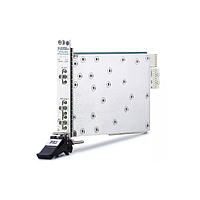
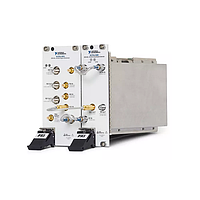
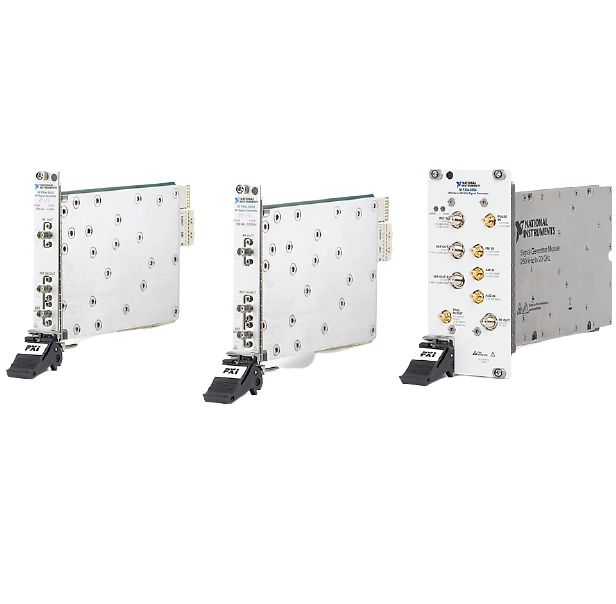
NI offers several PXI-based instruments that illustrate different signal generation needs. For example, the NI PXIe-5451 PXI Waveform Generator supports multi-channel waveform creation in a modular format, making it suitable where arbitrary waveform capability and scripted generation are important parts of the test flow.
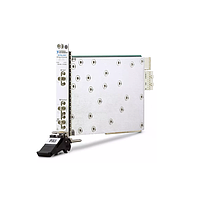
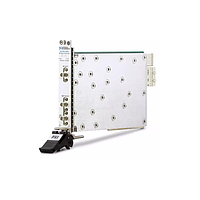
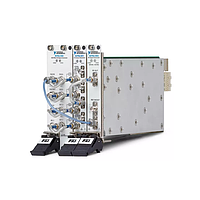
For wider RF-oriented applications, models such as the NI PXIe-5644, PXIe-5645, and PXIe-5646 provide integrated signal generation within broader RF test architectures. These platforms are often considered when users need RF coverage up to 6 GHz with varying instantaneous bandwidth and different performance trade-offs depending on the intended validation task.
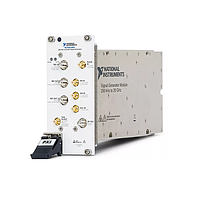
At the high-performance end, the NI PXIe-5840 and PXIe-5841 families extend wideband RF capability with 1 GHz instantaneous bandwidth, while the NI PXIe-5830, PXIe-5831, and PXIe-5832 address higher-frequency operation into microwave and mmWave ranges. For baseband-focused workflows, the NI PXIe-5820 provides an alternative centered on lower-frequency signal generation and analysis domains.
How to choose the right RF signal generator
The most practical starting point is frequency coverage. If your test plan is focused on sub-6 GHz wireless work, instruments covering up to 6 GHz may be appropriate. If your development roadmap includes microwave links or mmWave research, wider high-frequency coverage becomes more important than choosing a general-purpose platform.
The next factor is instantaneous bandwidth, which affects how much spectrum can be generated at one time and how well the instrument supports wideband modulation or advanced signal scenarios. Systems with 80 MHz, 200 MHz, or 1 GHz bandwidth serve very different needs, so matching bandwidth to the actual signal environment helps avoid over- or under-specifying the setup.
Engineers should also consider tuning time, waveform flexibility, and integration with automation software. In production or fast-switching validation environments, generator response and scriptability can materially affect throughput. In research settings, waveform customization and synchronization with other modular instruments may matter more.
Modular PXI advantages in automated test systems
One reason many organizations adopt PXI-based RF generation is the ability to build a scalable test architecture. Rather than treating the signal generator as an isolated box instrument, modular systems allow users to combine generation, acquisition, switching, timing, and control in one platform that can grow with changing project requirements.
This approach is especially useful in automated validation benches and multi-instrument wireless test racks. Teams that need adjacent radio prototyping capability may also want to compare available software defined radio options when defining the broader system architecture.
Comparing waveform generation and transceiver-based generation
Not every application requires the same instrument class. A PXI waveform generator such as the NI PXIe-5451 is generally relevant when users need precise arbitrary waveform output and flexible baseband or digitally upconverted signal creation within a modular environment. This can fit custom stimulus generation, mixed-signal workflows, or lab automation where RF is only part of the overall requirement.
By contrast, transceiver-oriented platforms combine generation and analysis functions in a unified RF instrument. That is often advantageous when the same setup must create signals, capture responses, and support iterative measurement workflows. If your main goal is specifically transmit-side stimulus, you can continue exploring the available RF signal generator solutions in this category and then compare them with transceiver-based systems as needed.
What matters in B2B purchasing and system planning
For technical buyers, selection is rarely based on frequency range alone. Compatibility with existing PXI chassis, software environment, test automation strategy, and long-term support considerations all influence whether a generator will fit successfully into a deployed engineering workflow.
It is also helpful to define the intended use case clearly: early-stage design validation, regulatory-style pre-compliance work, manufacturing test, or high-frequency research. That context helps narrow down whether a compact waveform generator, a conventional RF-capable platform, or a wideband/microwave-class instrument is the better fit for project scope and budget planning.
Finding the right platform for your RF test workflow
This category brings together modular instruments suited to a wide range of wireless design and test tasks, from lower-frequency waveform generation to wideband RF and mmWave signal creation. The right choice depends on the signals you need to generate, the measurement architecture you already use, and how much flexibility is required for future test expansion.
If you are comparing NI PXI solutions for wireless validation, use this category as a starting point to align frequency range, bandwidth, and integration needs with your application. A well-matched RF signal generator can simplify development, improve repeatability, and support a more efficient path from lab evaluation to automated test deployment.
Get exclusive volume discounts, bulk pricing updates, and new product alerts delivered directly to your inbox.
By subscribing, you agree to our Terms of Service and Privacy Policy.
Direct access to our certified experts