Wireless Design and Test
Modern RF development rarely follows a single path. Teams may be validating a wireless concept, building a research platform, teaching communication theory, or assembling a flexible test setup that can adapt as standards and project requirements change. In these cases, tools that combine programmable radio hardware with measurement and prototyping capability are especially valuable.
Wireless Design and Test products from NI support that need with a practical ecosystem for software-defined radio, RF experimentation, and lab-based validation. This category is relevant for engineering groups, universities, and integration teams that need configurable platforms for signal generation, capture, processing, and algorithm development without locking into a single fixed-function workflow.

Built for flexible RF development workflows
Wireless engineering often requires more than one instrument class. A project may start with simulation, move into waveform generation and reception, then expand into real-time processing, multi-channel experiments, and over-the-air validation. That is why this category sits naturally alongside broader electronic test and instrumentation solutions, where measurement accuracy and repeatability remain central.
Within this environment, programmable radio platforms help bridge the gap between concept and deployment. Instead of using separate tools for every iteration, teams can work with hardware that supports changing signal conditions, different frequency ranges, and varied channel requirements. This is especially useful in research labs, advanced teaching environments, and RF system prototyping.
Software-defined radio as a core platform
A major part of this category is the use of software-defined radio, where key radio functions are implemented in software and reconfigurable processing hardware rather than fixed circuitry alone. This approach gives users more freedom to evaluate modulation schemes, channel behavior, spectrum use, synchronization methods, and signal processing concepts on one platform.
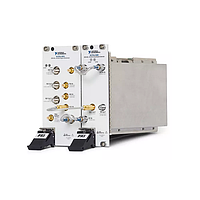
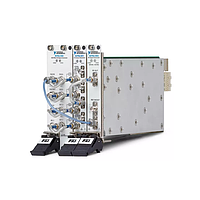
NI USRP platforms are a strong fit for these tasks because they support a range of educational, research, and embedded workflows. For example, the NI USRP-2974 stand-alone embedded SDR is suited to applications that need onboard processing together with wide frequency coverage and high instantaneous bandwidth. For multi-channel reception scenarios, the NI USRP-2955 provides a 4-channel architecture that can be relevant in direction finding, passive monitoring, or advanced MIMO-related experimentation.
Typical applications in research, validation, and education
Wireless design and test hardware is commonly used in university labs, defense and communications research, protocol experimentation, and proof-of-concept system development. Engineers may use it to study spectrum behavior, test custom waveforms, evaluate receiver performance, or prototype RF links before moving toward more specialized equipment.
Educational bundles are also important in this category because they shorten setup time and provide structured lab material for communication-system training. Examples include the NI USRP-2920 Teaching Bundle, the NI USRP-2901 Teaching Bundle for MIMO-oriented coursework, and the NI USRP-2900 Teaching Bundle for foundational communication-system exercises. These bundles are useful when an organization needs not just hardware, but a repeatable learning platform with supporting materials and accessories.
How to compare platforms in this category
Selection usually starts with a few practical questions: what frequency range is required, how much instantaneous bandwidth is needed, how many RF channels are necessary, and whether the project depends on embedded operation or host-connected deployment. These factors influence whether a compact teaching-oriented bundle is sufficient or whether a higher-performance USRP platform is more appropriate.
For instance, some applications prioritize broad coverage from low RF up to several gigahertz, while others care more about channel density or GPS-disciplined timing. The NI USRP-2954 and NI USRP-2953 families illustrate this difference well, offering options with different RF coverage and bandwidth characteristics for teams matching hardware to a target signal environment. If the project also touches adjacent measurement tasks, it can be useful to explore related data acquisition and control systems for synchronized test setups and hybrid RF-plus-sensor workflows.
From bench experimentation to larger test systems
One advantage of this category is that it supports both stand-alone experimentation and integration into broader test architectures. A lab may begin with a pair of radios for algorithm verification, then expand into synchronized, multi-device, or mixed-instrument environments as requirements mature. This makes the category relevant not only for researchers, but also for system integrators and industrial R&D teams.
Products such as the NI USRP-2950, NI USRP-2952, and NI USRP-2953 families provide different combinations of frequency coverage and transceiver bandwidth, which helps users scale a platform around the signals they actually need to generate or analyze. In many projects, that flexibility is more important than pursuing the highest specification in every dimension.
The role of accessories and supporting components
RF platforms rarely operate in isolation. Cables, antennas, synchronization elements, and other supporting items influence how easily a system can be deployed in a teaching lab, test bench, or field evaluation setup. That is particularly true for MIMO, timing-sensitive, or modular research environments where repeatability depends on the full signal chain, not only the radio itself.
For buyers planning a complete setup, related accessories can help round out the system and reduce integration effort. This is also why bundled solutions remain attractive: they simplify procurement, improve compatibility, and make it easier to standardize across multiple stations or classrooms.
Choosing the right fit for your workflow
The right wireless design and test solution depends on the balance between experimentation freedom, channel count, RF coverage, integration needs, and the skill level of the end users. A teaching lab may prioritize courseware and repeatable setup, while an advanced development team may focus on bandwidth, FPGA-based processing, embedded control, or synchronized multi-channel operation.
If your work centers on configurable RF prototyping, spectrum-related research, or communication-system development, this category offers a practical starting point. It brings together NI platforms that support learning, validation, and scalable test development, while leaving room to expand into adjacent RF and instrumentation workflows as the project grows.
For teams evaluating options, the most effective approach is to map the device choice to the actual signal environment, processing architecture, and deployment plan. That leads to a more efficient selection process and a wireless test platform that remains useful well beyond the first experiment.
Get exclusive volume discounts, bulk pricing updates, and new product alerts delivered directly to your inbox.
By subscribing, you agree to our Terms of Service and Privacy Policy.
Direct access to our certified experts