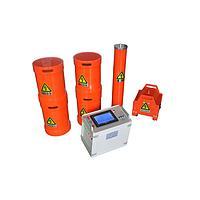
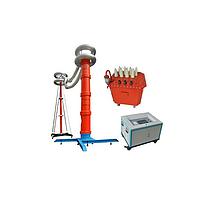
Power Frequency Resonant Test System
When high-voltage equipment needs reliable AC withstand testing, test engineers often look for a solution that can generate stable voltage with practical power efficiency and controlled waveform quality. That is where the Power Frequency Resonant Test System becomes relevant, especially in utility, commissioning, maintenance, and factory test environments where cables, transformers, switchgear, and other capacitive test objects must be verified under demanding conditions.
Compared with simpler high-voltage sources, resonant systems are typically selected when the application calls for higher test capacity, reduced input power demand, and a sinusoidal output suitable for insulation evaluation. For teams working on medium- and high-voltage assets, this category supports test setups that balance voltage capability, current handling, frequency adjustment, and field usability.
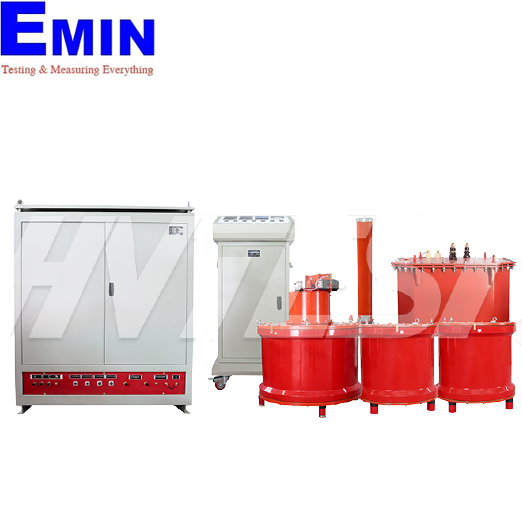
Where a power frequency resonant test system fits in practice
A resonant test system is commonly used for AC withstand testing of equipment with significant capacitance, where a conventional high-voltage source may become inefficient or impractical. By operating around the resonant point of the test circuit, the system can produce the required high voltage while reducing the burden on the input power side.
This makes the category relevant for users involved in insulation verification, routine maintenance, commissioning after installation, and fault-prevention programs. If your work also includes broader dielectric verification, it may be useful to review related solutions for withstand voltage testing as part of a complete electrical test workflow.
Typical characteristics buyers compare
Selection usually starts with the required output voltage, test object current, and overall test capacity. In this category, the available examples span systems with output levels such as 27 kV, 54 kV, 108 kV, and up to 40 kV in a higher-capacity configuration, with frequency adjustment in the 30 to 300 Hz range. That gives engineers flexibility when matching the source to different test objects and site conditions.
Another point to evaluate is waveform quality. For insulation testing, a sine-wave output with low distortion helps ensure the applied voltage is suitable for meaningful assessment. Working time, input supply requirements, and environmental operating range also matter, especially for field testing teams that need predictable performance over extended test periods.
Examples available in this category
The product range includes configurations from EPHIPOT and MultiTech, both represented here with resonant AC test systems intended for high-voltage applications. Rather than treating every model as identical, it is better to read them as different sizing options for different test loads and voltage targets.
For example, the MultiTech MTS-180 AC Resonance Test System (108 kVA) is positioned around a 108 kVA class with selectable output voltage arrangements. On the EPHIPOT side, models such as EPCZ-108kVA-27kV, EPCZ-108kVA-54kV, and EPCZ-108kVA-108kV show how the same general platform concept can be aligned with different voltage and current combinations. For larger power demand, the EPHIPOT EPCZ-560kVA/40kV AC Resonance Test System reflects a higher-capacity option for more demanding test scenarios.
How to choose the right configuration
The first step is to define the actual test object: cable, GIS-related component, transformer-related insulation structure, or another high-voltage asset. From there, engineers usually work backward from the required test voltage, capacitance, expected current, and test duration. A system that is oversized can increase cost and logistics demands, while an undersized system may not complete the intended procedure safely or efficiently.
It is also important to check the available site power. Some models in this category are suited to single-phase 220 V input, while others require three-phase 380 V input. That distinction can strongly influence field deployment. In projects where the resonant system is part of a larger test setup, users may also compare supporting equipment such as a high-voltage step-up transformer or complementary dielectric test instruments depending on the maintenance plan.
Why frequency range and resonant behavior matter
A useful resonant system is not defined by voltage alone. The adjustable output frequency range helps the operator tune the circuit to the connected test object and maintain resonance under controlled conditions. In practical terms, this supports more efficient voltage generation and can reduce unnecessary stress on the power supply side.
The quality factor and continuous operating capability are also worth attention. For longer test sequences, stable operation under full output matters just as much as headline voltage. This is particularly relevant in field acceptance testing, where repeatability, transportability, and time on site all affect the total cost of the job.
Related measurements in a broader insulation test program
A resonant AC test system is often only one part of the decision-making process. Many maintenance teams combine withstand testing with dielectric condition assessment to gain a fuller picture of insulation health. For example, capacitance and dissipation factor measurements are commonly used before or after high-voltage tests to support diagnosis and trending.
Where that broader workflow applies, a capacitance and tan δ meter can be relevant alongside the resonant source. In cable-focused maintenance, some users may also compare this category with VLF testers, depending on the asset class, test standards, and portability requirements.
What this category is designed to support
This category is suited to buyers who need a structured way to compare resonant high-voltage AC test equipment by voltage class, current capability, power capacity, frequency range, and input power conditions. The emphasis is not just on generating high voltage, but on doing so with a controlled sine-wave output that supports insulation testing in real industrial settings.
If you are evaluating options for a new test bench, a utility maintenance program, or mobile commissioning work, the models listed here provide a practical starting point. The right choice will depend on your target assets, site power availability, and the scale of the dielectric tests you need to perform. Reviewing those factors carefully will make it much easier to narrow the category to a system that fits both the application and the operating environment.
Get exclusive volume discounts, bulk pricing updates, and new product alerts delivered directly to your inbox.
By subscribing, you agree to our Terms of Service and Privacy Policy.
Direct access to our certified experts