Scales Calibration Service
Reliable weighing data is essential in manufacturing, warehousing, laboratories, food processing, logistics, and commercial transactions. When a scale drifts out of tolerance, even small measurement errors can affect inventory accuracy, batching consistency, quality control, and compliance records. This is why Scales Calibration Service plays a critical role in maintaining confidence in daily weighing operations.
This category brings together calibration services for a broad range of weighing instruments, from compact bench and counting scales to large truck scales and moisture analyzers. It is intended for technical buyers, maintenance teams, QA departments, and service coordinators who need a practical way to keep weighing equipment accurate, traceable, and fit for purpose.
Why scale calibration matters in real operations
A weighing system is often part of a larger process, not a standalone device. In production environments, scale accuracy influences formulation, yield, and waste control. In warehouses and shipping points, it supports quantity verification and transaction integrity. In laboratories and inspection workflows, stable measurement performance is closely tied to repeatability and audit readiness.
Regular calibration helps verify whether the instrument still performs within acceptable limits under actual working conditions. It also provides a documented basis for maintenance decisions, internal quality procedures, and scheduled service intervals. For companies managing multiple instruments, calibration is one of the most effective ways to reduce hidden measurement risk across the site.
Coverage across different types of weighing equipment
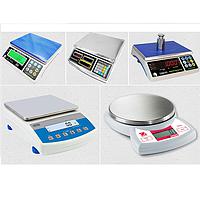
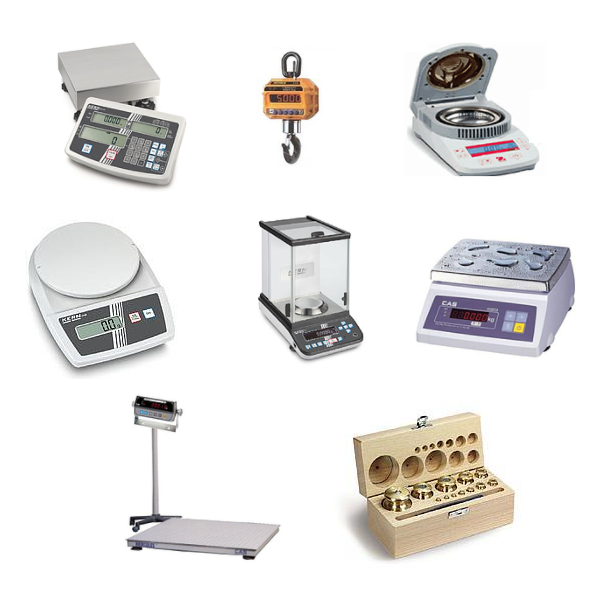
This category is relevant to a wide range of scale types used in industrial and technical environments. Typical examples include bench scales, counting scales, truck scales, and moisture analyzers, each with different operating ranges, structures, and calibration considerations. The required method may vary depending on capacity, readability, installation condition, and how the equipment is used in the process.
For example, a truck scale generally demands a different service approach from a benchtop unit due to platform size, load distribution, and site conditions. A moisture analyzer introduces another layer of attention because users depend not only on weight measurement but also on consistent analysis performance within a controlled testing workflow. Understanding the role of the instrument helps determine the right calibration scope and service frequency.
Representative services and supported manufacturers
Within this category, users can find service options for common weighing applications such as CAS Electronic Truck Scale Calibration Service, PCE Benchtop Scale Calibration Service, KERN Bench Scale Calibration Service, and OHAUS Bench Scale Calibration Service. For inventory and parts handling, counting-scale services are also represented by options such as AND Counting Scale Calibration Service, CAS Counting Scale Calibration Service, and Kern Counting Scale Calibration Service.
Moisture analysis applications are also covered through services such as Kett Infrared Moisture Analyzer Calibration Service and Mettler Toledo Halogen Moisture Analyzer Calibration Service. In terms of brand ecosystem, this category aligns naturally with widely used weighing equipment from CAS, KERN, OHAUS, PCE, AND, Kett, and Mettler Toledo. The goal is not simply to list brands, but to help buyers locate calibration support that matches the installed equipment already in use.
How to choose the right calibration service
The most important starting point is the type of scale and the way it is used. A bench scale used for routine shop-floor weighing does not face the same demands as a counting scale used for component verification or a truck scale used for incoming and outgoing load control. Service selection should reflect the application, expected accuracy level, and the consequences of measurement deviation.
It is also helpful to confirm the instrument manufacturer, model family, installation environment, and maintenance history before booking service. Where multiple weighing devices are managed together, grouping calibration by equipment function can make planning easier. For organizations that also maintain other test assets, related services such as mechanical measuring instruments calibration or electrical and electronic meter calibration may be relevant as part of a broader metrology program.
Typical applications for calibrated scales
Calibrated weighing equipment is used across many B2B environments. In manufacturing, scales support raw material dosing, in-process checks, packaging, and final inspection. In logistics and warehousing, they are used for receiving, dispatch, inventory control, and counting tasks. In laboratories and technical test areas, weighing accuracy supports repeatable procedures and reliable records.
Counting scales are especially important where part quantities must be verified quickly and consistently. Bench scales are common in production support, incoming inspection, and packaging stations. Truck scales are central to bulk material flow, while moisture analyzers are used where material condition and water content affect quality decisions. Each use case depends on measurements that remain stable over time, which is why scheduled verification and calibration are part of good equipment management.
What buyers should prepare before arranging service
Before requesting calibration, it is useful to gather basic equipment information such as brand, model, capacity range, installation location, and current operating issue if any. This helps the service team determine the appropriate calibration path and identify whether the equipment falls into a standard bench, counting, truck, or analyzer-related workflow.
Buyers should also consider how the scale is used day to day. Questions such as whether the unit is moved frequently, installed permanently, exposed to vibration, or used in critical quality checkpoints can influence service planning. Clear internal records make it easier to maintain continuity from one calibration cycle to the next and reduce downtime during scheduled maintenance windows.
Calibration as part of a wider equipment reliability strategy
Scale calibration should not be treated as an isolated event. In many facilities, weighing devices operate alongside power supplies, electronic test tools, imaging devices, and mechanical gauges. A structured calibration schedule helps standardize maintenance practices across departments and supports better control of measurement-related risk.
For organizations building a more complete service plan, related categories such as oscilloscopes and logic analyzers calibration may also be useful depending on the equipment installed on site. Taking a system-level view can improve audit preparation, reduce unexpected failures, and support more consistent operational decisions.
Finding the right service for your weighing equipment
This category is designed to help buyers navigate calibration needs across a diverse range of weighing instruments without forcing every application into the same template. Whether the requirement involves a bench scale, counting scale, truck scale, or moisture analyzer, the key is to match the service to the device role, the working environment, and the level of measurement confidence the process demands.
By reviewing applicable service options and supported manufacturers, teams can make more informed choices for maintenance planning and quality assurance. A well-chosen scale calibration program supports dependable measurement results, better process control, and a more organized approach to equipment lifecycle management.
Get exclusive volume discounts, bulk pricing updates, and new product alerts delivered directly to your inbox.
By subscribing, you agree to our Terms of Service and Privacy Policy.
Direct access to our certified experts