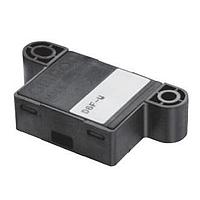
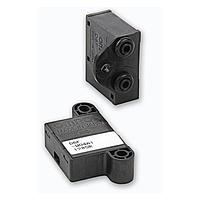
Flow sensors & pitot tubes
When airflow or liquid flow needs to be checked reliably inside ducts, pipes, or process lines, selecting the right sensing method matters as much as the reading itself. Flow sensors & pitot tubes are widely used where engineers need practical flow verification, differential pressure-based measurement, or a simple way to monitor system performance without adding unnecessary complexity.
In industrial ventilation, HVAC balancing, cleanroom monitoring, process utilities, and general plant maintenance, these devices support day-to-day measurement tasks with a straightforward operating principle. This category focuses on products suited to velocity and flow measurement applications where insertion style instruments, pressure pickup points, and compatible accessories play an important role in building a complete measurement setup.
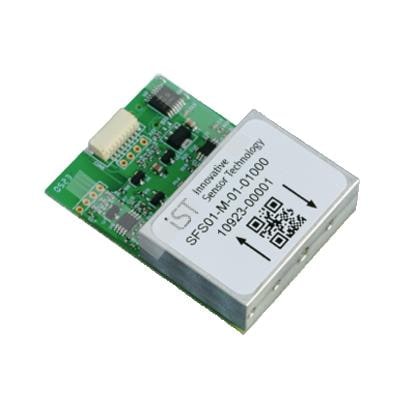
Where flow sensors and pitot tubes fit in flow measurement
A pitot tube is commonly used to sense the difference between total pressure and static pressure in a moving fluid. That differential pressure can then be used to calculate flow velocity, especially in air ducts and other gas flow applications. In practice, this makes pitot tubes a useful choice for troubleshooting, commissioning, and spot measurement where direct inline metering may not be necessary.
Within a broader measurement strategy, these devices often complement other technologies rather than replace them. For example, facilities may use insertion measurement for duct testing, while relying on electromagnetic flow meters for conductive liquid processes or fixed inline monitoring in production systems.
Common applications in ducts, air systems, and process lines
This category is especially relevant for airflow work in ventilation systems, exhaust lines, combustion air paths, and industrial ducts. Because a pitot tube can be inserted into the flow stream, it is well suited for taking measurements at different points across a duct profile, which helps technicians evaluate distribution, velocity consistency, and overall system behavior.
There are also process situations where differential pressure-based flow measurement is preferred for liquids or gases in piping. In those cases, the sensing element is only one part of the measurement chain, typically used together with tubing, valves, or supporting hardware from related flow measurement accessories categories to complete installation and signal pickup.
Typical product types in this category
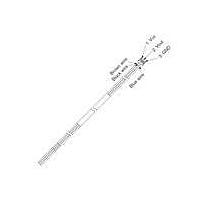
One important group here is the classic pitot tube for air velocity measurement. The Dwyer 160E series, including models such as the 160E-00, 160E-03, and 160E-06, illustrates how insertion length can be selected according to duct size and access requirements. These models are intended for duct use and provide a practical option when measurement points vary from compact sections to larger air handling systems.
Another useful example is the Dwyer 166T telescoping pitot tube. A telescoping design can be advantageous for technicians who need portability and flexibility across multiple measurement locations, especially during maintenance rounds or commissioning work. Stainless steel wetted materials also make this style appropriate for demanding industrial environments where durability matters.
This category may also support differential pressure-based flow elements used in pipe systems. Products such as the Dwyer PE-Q-1, PE-O-2, and PE-O-3 show how orifice plate style solutions can be part of a broader flow measurement approach for gases and liquids, particularly when installation conditions, line size, and pressure drop are key design considerations.
How to choose the right device
The most important starting point is the application environment. Air duct measurement, pipe flow measurement, and portable field testing each place different demands on instrument form factor, insertion length, and connection style. For duct work, the ability to reach the correct measurement depth is essential, while for process piping, compatibility with line conditions and installation geometry becomes more important.
Material selection should also match the media and operating conditions. Several products in this category use stainless steel wetted components, which are commonly preferred for robustness and corrosion resistance. In other cases, flow elements may use engineered materials selected for compatibility with air or water service, so checking the media, temperature range, and mechanical installation details remains an important part of selection.
It is also worth considering whether you need a temporary test instrument or a more permanent installation. A portable pitot tube can be ideal for balancing and verification tasks, while fixed systems may require complementary components such as manifolds, tubing, or flow valves to support isolation, calibration, or maintenance procedures.
Understanding pitot tube styles and insertion length
Not all pitot tubes are built for the same measurement scenario. Insertion length directly affects whether the sensing tip can reach the correct location within the duct or flow stream. Shorter versions are often suitable for compact systems, while longer models support larger ducts or deeper insertion requirements where accurate profile measurement is needed.
Shape and construction also influence how the instrument is used. The Dwyer 160E ellipsoidal tip models are intended for accurate air velocity measurement in ducts, while the 166T telescoping version offers adjustable reach for varied field conditions. In practical terms, the right style depends on how often the device is moved, how repeatable the measurement point must be, and whether the job is a one-time survey or part of routine maintenance.
Why manufacturer support and product ecosystem matter
For this category, Dwyer stands out in the current product selection because the listed models clearly address both pitot tube applications and differential pressure-based flow measurement needs. That makes it easier for buyers to source instruments with a consistent application focus, from duct velocity tools to related primary flow elements.
At the same time, choosing a product should not be based on brand name alone. Buyers should look at measurement method, installation constraints, expected accuracy, and maintenance requirements first. Where continuous visual indication is preferred instead of pressure-based calculation, it may also be worth comparing options in indicating flow meters for a different operating approach.
Practical considerations before ordering
Before selecting a model, confirm the duct or pipe dimensions, required insertion depth, port or connection style, and the media being measured. For differential pressure-based methods, it is also important to consider the supporting instrumentation that will convert pressure readings into usable velocity or flow values. A well-matched setup usually performs better than simply choosing the longest or most rugged probe available.
If the application involves system verification, balancing, or troubleshooting, portability and ease of handling may be priorities. If it is part of a fixed process installation, upstream and downstream straight-run requirements, pressure taps, and maintenance access can have a greater effect on performance over time. Thinking through the full installation context helps narrow down the most suitable product faster.
Find the right solution for your measurement task
This category brings together practical tools for engineers and technicians working with airflow and differential pressure-based flow measurement. Whether the need is a compact duct probe, a telescoping pitot tube for field work, or an orifice plate style element for broader flow applications, the key is matching the device to the measurement point, media, and installation conditions.
By comparing product construction, insertion length, and application fit, buyers can identify a solution that supports reliable readings without overcomplicating the system. For projects that involve a wider flow instrumentation setup, this category also serves as a useful starting point for building out a complete measurement approach across the plant or facility.
Get exclusive volume discounts, bulk pricing updates, and new product alerts delivered directly to your inbox.
By subscribing, you agree to our Terms of Service and Privacy Policy.
Direct access to our certified experts