For full functionality of this site it is necessary to enable JavaScript.
EMIN.COM.MM
0

The reason make a CAT IV Clamp Meter Still Burn Out?

05/04/2026 11:45:47

A CAT IV clamp meter does not guarantee absolute safety if the environment contains high transient voltage spikes or if the measurement procedure is not performed correctly. In many cases, the real danger is not the voltage displayed on the screen, but extremely short voltage surges capable of generating arc flash and destroying the instrument within microseconds.

CAT IV Does Not Mean Protection Against Every Electrical Fault

The CAT IV rating is designed to evaluate a measuring instrument’s ability to withstand transient overvoltage at power entry points or outdoor electrical systems. However, this standard only applies under limited testing conditions.

In modern industrial systems, especially those using variable frequency drives (VFDs), capacitor banks, or large inductive loads, voltage spikes often occur within extremely short periods of time. This is one of the most common reasons why a clamp meter’s insulation can fail even when the measured voltage remains within the permitted range.

Why Do Voltage Transients Easily Cause Arc Flash?

Unlike stable AC voltage, transient voltage surges rise extremely quickly and can reach several kilovolts within just a few microseconds. At that moment, the air between conductive gaps becomes ionized, forming an internal arc flash inside the measuring device.

This process happens faster than the response time of fuses or protection circuits. As a result, even a CAT IV clamp meter can still burn out before the current exceeds its rated limit.

Measurement Distance Directly Impacts Safety

In many electrical accidents, the issue is not the CAT rating itself but the measurement position. When the clamp jaw gets too close to busbars or areas exposed to high transient voltage, strong electromagnetic fields can trigger surface discharge and arc formation.

This becomes especially dangerous in environments with dust, moisture, or test probes that have deteriorated after long-term use.
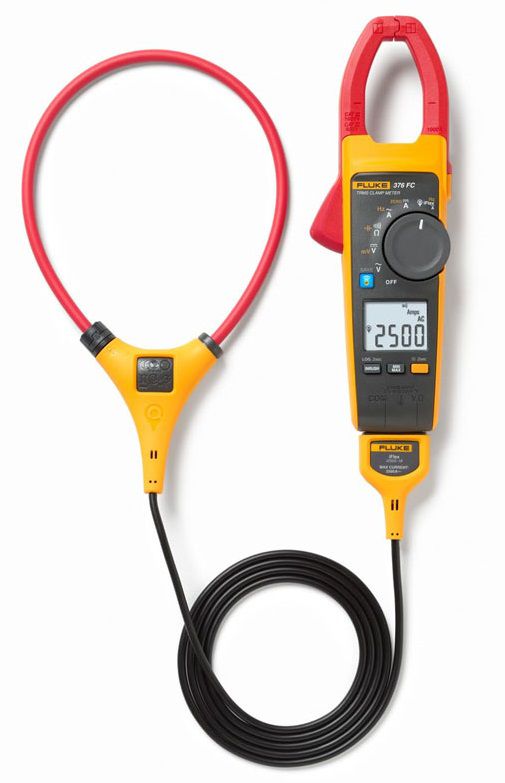
Not All CAT IV Clamp Meters Are the Same

Even when two clamp meters carry the same CAT IV rating, their actual design quality can vary significantly. Industrial-grade models such as Fluke 376 FC and Hioki CM4373-50 typically feature:

  • Larger insulation clearance distances

  • Better arc-resistant materials

  • Multi-stage overvoltage protection circuits

  • Higher resistance to repetitive surge events

Meanwhile, some general-purpose models such as Kyoritsu 2055 are mainly intended for standard building electrical work and routine maintenance. Their protective capability may degrade more quickly when used continuously in environments with heavy electrical noise and frequent transient surges.

A proper understanding of transient overvoltage, maintaining a safe working distance, and selecting equipment that matches the actual operating environment are the key factors in ensuring electrical safety during field measurements.

Related News

Which Vacuum Pump Should You Choose for a Microbiology Lab to Avoid Affecting Samples?
07/15/2026 14:45:07

Vacuum pumps are utilized in a wide range of microbiology laboratory procedures, from membrane filtration and the aspiration of supernatants following centrifugation to sample concentration and the support of negative-pressure systems. Selecting the appropriate pump not only ensures more stable operational processes but also minimizes the risk of sample contamination, reduces maintenance costs, and extends the equipment's lifespan

QCVN 25:2025/BKHCN Takes Effect: Do Businesses Need to Prepare Electrical Safety Testing Equipment?
07/15/2026 09:15:04

Electrical safety is consistently one of the primary criteria evaluated before electrical or electronic equipment—or industrial components—are released to the market. A product may operate reliably yet still fail to meet requirements if its insulation lacks sufficient durability, its grounding resistance exceeds permissible limits, or leakage current occurs during operation.

Why Is Associated Research Considered an Icon of Hipot Technology?
07/14/2026 09:05:30

When it comes to electrical safety testing equipment specifically Hipot testers—many QA/QC and testing engineers are familiar with the globally renowned brand Associated Research. A subsidiary of the parent company IKONIX, Associated Research (ARI) invented the world's first commercial Hipot tester.

What Is the Standard 3-Phase Voltage? How to Read Cabinet-Mounted Meters Without Errors
07/13/2026 15:09:18

Voltmeters are almost invariably found on the panels of electrical cabinets in factories, power stations, or generator systems. A glance lasting just a few seconds allows an operator to determine whether the power supply is stable or showing signs of abnormality. However, not everyone understands the significance of the displayed readings, particularly regarding three-phase electrical systems.

Distinguishing between ARI’s Hypot, HypotUltra, and HypotMax: Which device is right for your factory?
07/13/2026 09:48:30

Few people realize that the concept of the "Hipot Test"—or electrical safety testing—has long existed within the electrical equipment manufacturing industry. Driven by the growing need to verify the voltage withstand capabilities of conductors, motors, and electrical devices, the industry required a robust and virtually fail-safe method to detect insulation weaknesses before products reached the market.

Stay Updated with Offers

Get exclusive volume discounts, bulk pricing updates, and new product alerts delivered directly to your inbox.

By subscribing, you agree to our Terms of Service and Privacy Policy.

Quick Support

Direct access to our certified experts