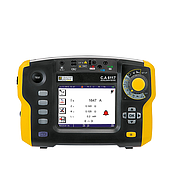
During the working process, equipment/machines are affected by the environment and the drift, which over time results in accuracy reduction, the measurement results’ reliability also suffer. The deviation cannot be completely eliminated, but it can be controlled through calibration. Calibration ensures that measurements are accurate and within the required measurement of the process equipment.
1. What is Calibration?

Pursuant to the Law on Measurement No. 04/2011/ QH13 dated November 11th, 2011:
- Adjustment Calibration is the use of standard measuring instruments to check the measurement error of the equipment according to a certain measuring standard, bringing the deviated equipment and machinery back to the permissible error limit of the manufacturer, or required by the quality control unit.
- Calibration refers to a process of determination and establishment of relation between measured values by measurement standard, measuring instrument and quantity.
- Measurement Standard refers to a technical reference for a system of weights and measures against which all other measuring devices are compared.
- Reference Material refers to a material which is sufficiently homogeneous and stable with respect to one or more specified properties. Reference materials are used in calibration and inspection of measuring instruments and methods or analysis of characteristics and constituents of other materials and substances.
2. Why do we need to calibrate the measuring equipment?
During the working process, measuring equipment/machines will be affected by the environment and the drift in the working process, which over time will result in accuracy reduction. Then, the reliability of the measurement results will be lost, and product quality will also suffer.
The deviation cannot be completely eliminated, but it can be controlled through calibration.
Calibration ensures that measurements are accurate and within the required specification of the process equipment.
3. The importance of calibration.
When do we need to calibrate measuring equipments?
Determining the measuring instrument calibration cycle is of paramount importance in ensuring the accuracy of the measurement. There are many factors that affect the calibration cycle, the most important ones include:
- Type of measuring device;
- Recommendations of the manufacturer;
- Results and data of the previous calibration;
- Condition of preservation and maintenance;
- Frequency and severity of use;
- Trend of deviation in specifications of measuring devices;
- Frequency of checking by other major standards;
- Frequency and quality of self-calibration and verification;
- Storage conditions (environment: temperature, humidity, vibration ...)
- The accuracy of the measurement to be achieved;
- Costs for calibration.
A newly imported measuring instrument, when put into practice after production, should have the first calibration interval defined and subsequent calibration intervals.
How frequent an instrument is calibrated depends on several factors. First of all, the instrument manufacturer will provide the reference calibration interval. Depending on the intended use of the device, this time period may vary. In addition, the quality standards can also determine the calibration frequency of the temperature or pressure sensor.
The importance of a calibrated instrument:
- Determining the level of unreliability of the measuring instrument.
- Establishing the reliability of the measuring equipment.
4. Costs and risks of not calibrating the measuring equipment.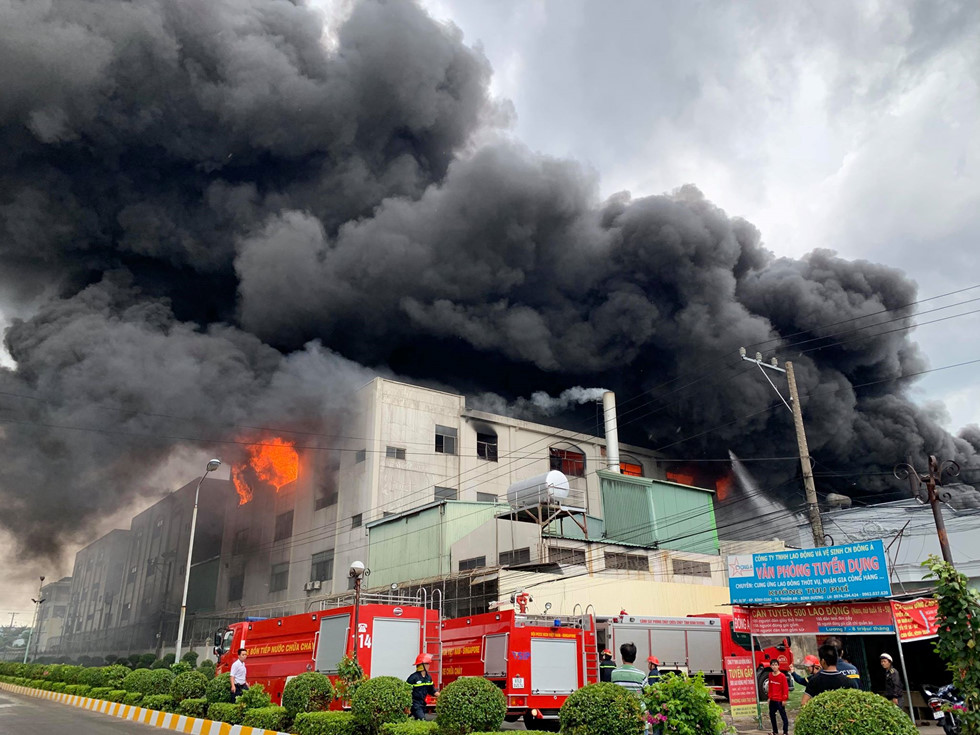
- Since measuring equipment calibration is often costly, in many cases, few people bring it to calibration; Or intervals between calibrating period are lengthened to cut costs, or simply due to a lack of methods and human resources. However, not-calibrated-periodically measuring equipments can result in consequences such as: production stalling and unexpected machine failures, and product quality and production process quality being severely compromised. especially large-scale product recall and re-production.
- Likewise, products manufactured via non-properly-calibrated measuring equipment in the factory could pose a danger to the consumer, environment and to the society. In specific cases, this even causes the enterprise to have its license revoked for failure to meet the requirements. This is especially true for the food and beverage industry and for pharmaceutical manufacturers.
EMIN Calibration ServiceEMIN Vietnam’s Calibration and Verification center has been established since 2020 to provide after-sales services. The Calibration and Verification center is thoroughly equipped with technical equipment, followed by the assistance from various equipment manufacturers around the globe. At the center, calibration of specialized equipment is successfully carried out by experienced engineers in EMIN Vietnam, ensuring fast, accurate, reliable procedure to meet the most demanding customers’ requirements). Such technical capacity can only be performed by very few technology businesses in Vietnam. Meanwhile, after tireless effort, the Calibration and Verification center of EMIN Vietnam is officially certified to be accredited by the ISO/IEC 17025:2017 standard (Jan, 2021).
- Calibration is carried out under controlled environment, ensuring the highest calibration and measurement accuracy.
- Engineers at the Center are trained professionally in the fields of: size, mechanics, mass, electricity, electronics, RF ...
- Fast rotation calibration process with a full staff from sales to service.
- Provide calibration on-site services upon customer requests.
For further information about the Calibration service, Please contact:
Equipment Verification - Calibration - Repair Service Center - EMIN Vietnam JSC
Address: No 203 Nguyen Ngoc Vu Street, Trung Hoa Ward, Cau Giay District, Ha Noi City
Email: services@emin.vn - Hotline: 0968.060.220
The EMIN Vietnam Calibration - Verification Center is pleased to serve you.