For full functionality of this site it is necessary to enable JavaScript.
EMIN.COM.MM
0

Why are the boiling points of organic substances, fats, and inorganic substances different?

03/17/2026 13:50:50

The boiling point of each substance is different, depending on its structure and the bonds within its molecule. Understanding this index will help you easily visualize the properties of each group of substances and be more proactive when comparing or using them in practice.

With different material samples, temperature can be monitored using a contact thermometer or an infrared thermometer when a quick surface check is needed.
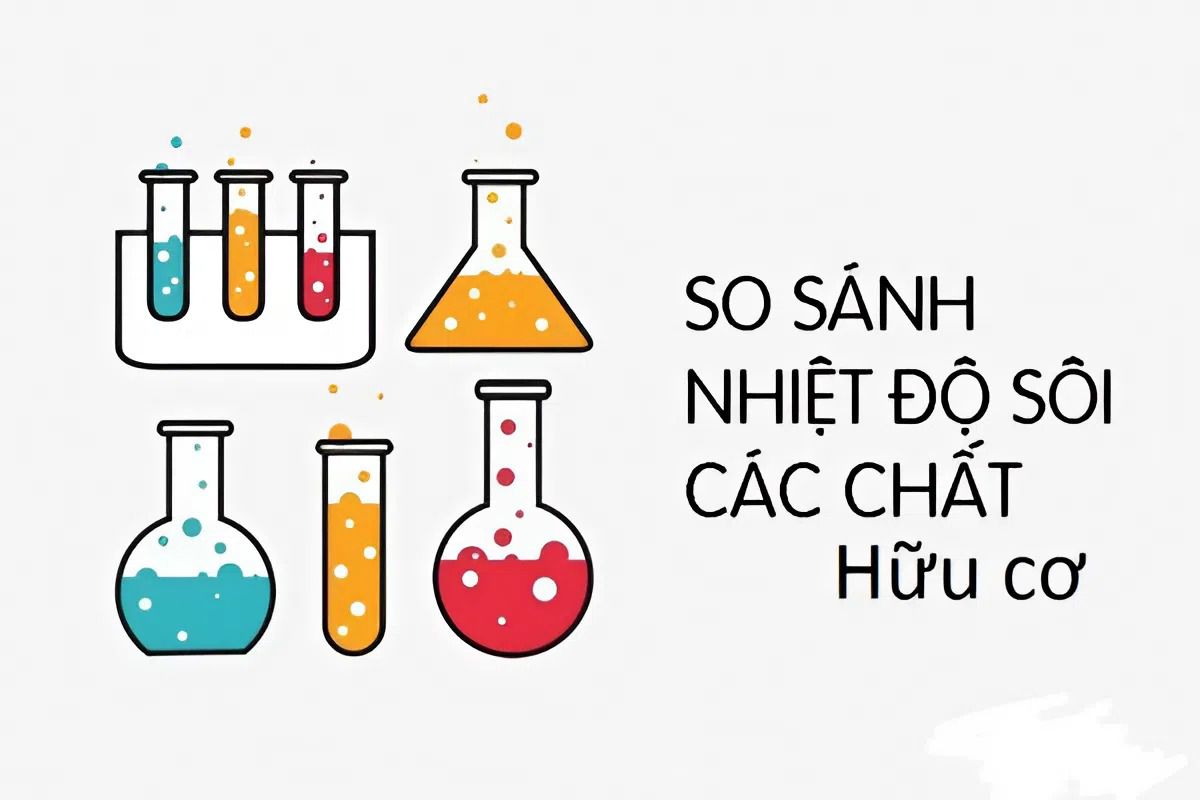
Boiling point of organic substances

Organic substances are usually of natural or synthetic origin, containing carbon-hydrogen bonds in their composition. This group is very common in everyday life, such as alcohols, sugars, and biological compounds.

In terms of boiling point, most organic substances do not have very high boiling points. However, each type still has its own threshold, depending on its molecular structure.

If we compare them by functional group, we can see the following trend:

COOH (acid) > OH (alcohol, phenol) > COO (ester) > CHO (aldehyde) > O (ether)

This difference stems from the ability to form hydrogen bonds and the polarity of each group.

In addition, the boiling point of organic compounds is also affected by several factors:

- The stronger the hydrogen bonds in a compound, the higher its boiling point.

- Intermolecular hydrogen bonds generally result in higher boiling points than intramolecular bonds.

- The larger the molecular mass, the higher the boiling point.

- More branched chains will have lower boiling points than straight chains.

For example, CH3COOH has a higher boiling point than HCOOH due to its larger molecular weight.

Boiling point of fats

Fats are also a type of organic compound, but they have a longer and more complex molecular structure, so their boiling points are usually higher.

The boiling point varies depending on the type of fat:

- Monounsaturated fats like olive oil and peanut oil usually boil above 100°C, and can reach around 240°C.

- Polyunsaturated fats like omega-3 and omega-6 usually boil above 120°C.

- Saturated fats, such as animal fat, typically boil above 130°C.

- Trans fats, such as margarine, can boil at around 150°C.

In general, fats have higher boiling points than water and much higher than many simple organic compounds. This is directly related to molecular size and the ability of molecules to bond together.

Boiling point of inorganic substances

Inorganic substances are compounds that do not contain carbon in their structure, except for some special cases such as CO, CO₂, or carbonate salts.

Compared to organic substances, inorganic substances generally have much higher boiling points. This is due to the strong ionic or covalent bonds, which require a large amount of energy to break.

The difference is clearly illustrated by a familiar example. Ethanol (C₂H₅OH) only boils at around 78.3°C, while an inorganic compound like CaCl₂ can reach thousands of degrees Celsius before turning into vapor.

The boiling points of organic substances, fats, and inorganic substances differ significantly, mainly due to their molecular structure and type of bonding. Organic substances generally have lower boiling points, fats have higher boiling points due to their larger molecules, while inorganic substances usually have very high boiling points.

Related News

Powder Coating Thickness Measurement: Methods and Tools
09/18/2026 10:12:11

A powder coating thickness gauge is a specialized instrument used to measure the thickness of powder coating on metal or non-metal surfaces, helping ensure coating quality and durability while minimizing material consumption. Measuring powder coating thickness at the right stage and using the appropriate measurement principle helps maintain coating quality, reduce rework, and optimize the finishing process.

Coating Adhesion Test Methods for Reliable Inspection
09/18/2026 10:10:46

A coating adhesion tester is an essential instrument for evaluating the quality of paints, varnishes, and protective coating systems. The coating must bond sufficiently well to the substrate or underlying coating layer to minimize peeling during use. Depending on the substrate material, coating system structure, test conditions, and evaluation objectives, operators can select from several adhesion test methods, including knife, tape, pull-off, and scratch tests.

Ultrasonic Coating Thickness Measurement on Wood
09/18/2026 10:06:58

A practical overview of ultrasonic coating thickness measurement for wood and wood products, including operating principles, measurement considerations, and process-control benefits.

Screen Printing Thickness Measurement Guide
09/18/2026 10:05:45

The PosiTector 6000 FS1 is a non-destructive coating thickness gauge that enables the monitoring of mesh, emulsion, stencil, and dried ink thicknesses in the screen printing process.

Reactive Power Compensation Capacitors Bulging or Exploding Before Their Design Lifespan
09/17/2026 16:10:45

The capacitor labels indicated a 10-year lifespan, yet after just two years of service, the casings began to bulge; some even exploded, accompanied by a popping sound and a burnt odor that permeated the electrical room. The maintenance team would install replacements, only for the exact same issue to recur a few months later. This cycle repeated multiple times before anyone finally questioned whether the failures were due to the capacitors reaching the end of their service life or because they were being subjected to conditions beyond their original design specifications.

Stay Updated with Offers

Get exclusive volume discounts, bulk pricing updates, and new product alerts delivered directly to your inbox.

By subscribing, you agree to our Terms of Service and Privacy Policy.

Quick Support

Direct access to our certified experts