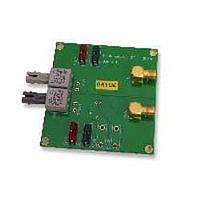
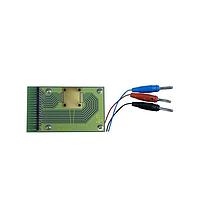
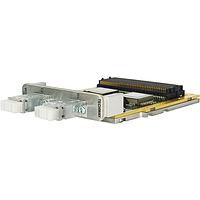
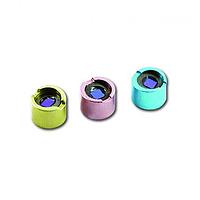
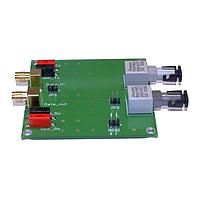
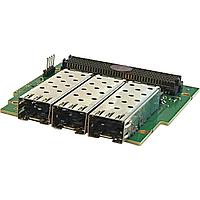
Fiber Optic Development Tools
Fast, stable optical links are critical in modern development environments, especially when engineers need to evaluate signal integrity, bandwidth, connector compatibility, and transmission reliability before moving into production. Whether the work involves data communications, sensing, embedded platforms, or industrial connectivity, Fiber Optic Development Tools help shorten the path from concept to functional prototype.
This category is intended for teams that need practical hardware for testing and validating fiber-based interfaces in real-world conditions. It is particularly relevant when electrical interconnects reach their limits in terms of distance, noise immunity, or speed, and optical solutions become the more suitable design approach.
Where fiber optic development tools fit in the design process
In engineering projects, optical development hardware is often used during early validation, interface testing, and subsystem integration. These tools can support evaluation of optical paths, connectors, transceivers, signal conversion, or board-level communication where fiber is part of the final architecture.
Compared with a finished production assembly, development tools are typically selected to make experimentation easier. They help engineers verify link behavior, understand physical-layer constraints, and reduce risk before committing to a larger design. In many workflows, they are used alongside related platforms such as communication development tools when the project includes broader interface and protocol testing.
Why engineers use optical development hardware
The main value of this category lies in enabling controlled evaluation of optical transmission in a development setting. Fiber-based links offer advantages such as strong resistance to electromagnetic interference, support for longer transmission distances, and suitability for high-speed data movement in demanding environments.
For developers, these tools are useful not only for checking whether a link works, but also for understanding integration details. Connector type, alignment, termination quality, mating compatibility, and the interaction between optical and electrical sections all affect system performance. Development-stage testing helps uncover these issues earlier, when changes are still easier to make.
Typical applications for fiber optic development
Fiber optic development tools can be relevant across a wide range of technical projects. They may be used in data communication prototypes, industrial communication nodes, embedded systems that require high-speed isolation from electrical noise, and optical sensing concepts where light is part of the measurement path.
They also fit naturally into machine vision and imaging ecosystems, where optical transmission may be part of the broader signal chain. In those cases, developers may also need supporting categories such as cameras and camera modules or camera lenses depending on how image capture, transmission, and processing are arranged in the prototype.
What to consider when selecting fiber optic development tools
Selection should start with the intended use case rather than with a single part number. Engineers typically review the communication method, expected data rate, transmission distance, connector style, and whether the application is meant for lab evaluation, field testing, or integration into a larger demonstrator.
It is also important to think about the complete development ecosystem. A fiber link rarely operates in isolation; it may connect to controller boards, interface modules, sensors, or test equipment. Mechanical fit, electrical compatibility, and available accessories can all influence how quickly a team can move from evaluation to repeatable testing.
Another practical factor is the level of documentation and supplier ecosystem available around the hardware. Established manufacturers can make sourcing and continuity easier, particularly when a prototype is expected to evolve into a long-term product platform.
Representative manufacturers in this category
This category may include development-oriented optical solutions and related technologies from recognized suppliers such as Broadcom, Coherent, Amphenol FCI, TE Connectivity, Radiall, and Stratos / Cinch Connectivity Solutions. Depending on the specific development task, these manufacturers may be relevant for optical interconnects, connectivity hardware, supporting components, or interface-related evaluation needs.
Other listed brands such as Analog Devices, Honeywell, Toshiba, and Everlight can also be relevant in adjacent parts of an optical development workflow, especially where sensing, signal conditioning, emitters, detectors, or supporting electronics are involved. The right choice depends less on brand recognition alone and more on the specific interface, test objective, and integration environment.
How this category supports faster prototyping
One of the practical benefits of using dedicated development tools is that they reduce uncertainty during prototype assembly. Instead of building every optical interface from scratch, teams can work with hardware intended for evaluation and proof-of-concept testing, which helps accelerate bench validation and troubleshooting.
This can be particularly useful when several disciplines are involved, such as hardware design, firmware development, communication testing, and mechanical integration. Having a clearer optical test path early in the project often helps avoid delays later, especially when the final system must meet reliability or performance expectations in industrial or embedded applications.
Related categories worth exploring
Projects that use fiber optics often intersect with other development areas. For example, communication-focused prototypes may require tools for interface bring-up and link analysis, while optical or imaging systems may depend on sensors, cameras, or lens selection as part of the same workflow.
If your application extends beyond optical link evaluation, it can be helpful to review adjacent engineering categories such as memory IC development tools for data handling architectures or other communication-focused platforms that support broader system validation.
Final thoughts
Choosing the right fiber optic development hardware is usually a matter of matching the tool to the stage of development, the target interface, and the level of integration required. A well-chosen set of tools can make optical testing more predictable, reveal design issues earlier, and support a smoother transition from evaluation to implementation.
For teams building systems where signal integrity, distance, and noise immunity matter, this category provides a useful starting point for exploring practical optical development options within a larger engineering workflow.
Get exclusive volume discounts, bulk pricing updates, and new product alerts delivered directly to your inbox.
By subscribing, you agree to our Terms of Service and Privacy Policy.
Direct access to our certified experts