Office Equipment
Efficient workplaces rely on more than desks, computers, and storage. In many business environments, everyday operations also depend on practical devices that support document handling, information control, security, and routine administrative tasks. This is where Office Equipment plays an important role, especially for companies that need reliable tools for finance rooms, front offices, archives, schools, retail counters, and internal support departments.
Within a B2B purchasing context, choosing office equipment is usually less about appearance and more about fit for purpose. Capacity, operating method, security level, installation space, and expected usage frequency all matter. A well-structured category helps buyers compare product types more efficiently and identify which equipment is suitable for daily work, controlled access, or document-related workflows.
What this category is designed to support
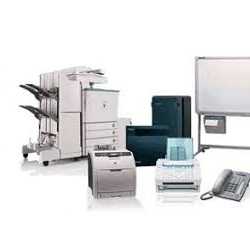
This category brings together equipment commonly used to improve office workflow, reduce manual handling, and protect important assets. Depending on the application, that may mean securing documents and valuables, managing paper output, processing cash, supporting presentations, or organizing day-to-day administrative work.
For business buyers, the value of office equipment is often tied to consistency and practicality. A paper shredder helps protect confidential information, a laminator preserves printed materials, and secure storage solutions reduce risk in offices that handle contracts, cash, records, or portable devices. In this broader ecosystem, related product areas such as kits and tools or connectors may also be relevant when offices require supporting accessories, maintenance items, or infrastructure components.
Secure storage is a key part of modern office operations
Among the most practical product groups in this category are safety boxes and security-oriented storage products. These are commonly used in reception areas, hotel rooms, executive offices, finance departments, and administrative spaces where controlled access to documents, cash, passports, portable electronics, or backup media is required.
Honeywell is one of the notable brands in this space, with several models that illustrate how office security needs can vary by size and installation style. Compact units such as the Honeywell 5110 Safety Box (14.4 L) or Honeywell 5113 Safety Box (14.1 L) are suitable where space is limited, while larger options like the Honeywell 2118 Safety Box (97.4 L) and Honeywell 2120 Safety Box (150.8 L) are more appropriate for storing larger volumes of sensitive materials.
How to choose office equipment for the actual task
A useful starting point is to define the operational need clearly. If the goal is secure storage, factors such as internal volume, lock type, mounting location, and whether the unit is intended for documents or mixed valuables become important. If the goal is document finishing or handling, the focus may shift to throughput, paper format, or user frequency.
It is also helpful to consider the installation environment. Horizontal safety boxes such as the Honeywell 5705 Safety Box (20.8 L), Honeywell 5706 Safety Box (29.1 L), or Honeywell 5105 Safety Box (32.2 L) may fit better in cabinets, counters, or under-desk locations. Vertical models such as the Honeywell 5911 Safety Box (29.9 L) or Honeywell 2901 Safety Box (20L) are often more suitable when floor-standing placement and easier front access are preferred.
Common selection criteria for business buyers
In B2B procurement, selection usually depends on a combination of usage volume, available space, and risk level. For secure storage products, buyers often compare capacity, construction material, locking method, and form factor before looking at shipping size or overall weight. These details affect not only user convenience but also transport, installation, and long-term placement.
For example, an electronic lock can simplify routine access management in offices with authorized staff turnover, while steel construction supports everyday durability. Some models in the listed range, such as the Honeywell 2605 Safety Box (25.4 L), Honeywell 2118 Safety Box (97.4 L), and Honeywell 2120 Safety Box (150.8 L), are described with waterproof and fireproof material characteristics, which may be relevant in applications where additional protection is part of the selection process.
- Volume and usable internal space for documents, cash trays, devices, or records
- Orientation based on counter installation, furniture integration, or floor placement
- Locking method for access control and day-to-day convenience
- Weight and outer dimensions for delivery planning and site installation
- Protection level based on the type of assets being stored
Brand and product examples within the category
This category includes products from brands that are familiar across office, commercial, and industrial purchasing channels. Depending on the specific product group, buyers may recognize names such as 3M, CASIO, HP, GBC, Proskit, Staedtler, and Honeywell. Each brand may be more relevant to certain use cases, from office supplies and support tools to secure storage and operational accessories.
Within the featured products currently available, Honeywell safety boxes are the clearest example set. The range includes smaller and mid-size models such as the Honeywell 5601 Safety Box, Honeywell 5115 Safety Box (32.2 L), and Honeywell 5113 Safety Box (14.1 L), as well as larger units for broader storage requirements. Rather than treating these models as interchangeable, buyers should compare them based on actual storage needs, room constraints, and whether the application calls for compact placement or higher storage volume.
Office equipment as part of a broader operations ecosystem
Although this is an office-focused category, it often connects to wider facility and operations requirements. Secure storage can sit alongside document control procedures, IT asset handling, and administrative workflows. In some business settings, supporting categories such as circuit protection or battery solutions may also be relevant where office devices, access systems, or supporting electronics need dependable power and electrical protection.
This broader view is especially useful for procurement teams managing mixed purchasing needs across administration, maintenance, and infrastructure. Instead of sourcing equipment in isolation, buyers can evaluate how each item contributes to safer handling, smoother workflow, and more consistent daily operation.
Choosing with long-term use in mind
Office equipment tends to deliver the most value when it matches real usage conditions over time. A unit that is too small may create operational inconvenience, while one that is oversized may take up unnecessary space and increase handling difficulty. The right choice usually balances present needs with a realistic margin for growth.
For safety boxes in particular, it is worth thinking about what will actually be stored, how often access is required, and where the unit will be placed. Compact models are practical for everyday valuables and basic records, while larger-capacity boxes can support departmental storage with higher volume demands. By comparing size, orientation, and protection features carefully, buyers can narrow the shortlist more effectively.
Final considerations
A well-chosen office equipment setup supports security, organization, and routine efficiency across many types of workplaces. Whether the priority is document handling, controlled storage, or support for administrative tasks, the best results usually come from selecting equipment based on actual workflow rather than generic specifications alone.
As you browse this category, focus on the intended application, available installation space, and day-to-day use pattern. That approach makes it easier to identify the right fit, from compact safety boxes for local access to larger secure storage units for more demanding office environments.
Get exclusive volume discounts, bulk pricing updates, and new product alerts delivered directly to your inbox.
By subscribing, you agree to our Terms of Service and Privacy Policy.
Direct access to our certified experts