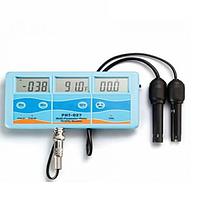
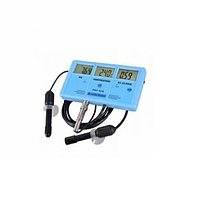
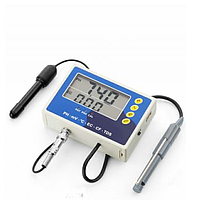
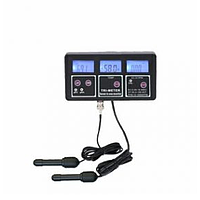
Water Quality Controllers & Monitors
Stable water treatment depends on more than a single sensor reading. In cooling towers, process water loops, and utility systems, operators often need continuous measurement, alarm handling, control logic, and communication with broader plant infrastructure. That is where Water Quality Controllers & Monitors become valuable: they help track key parameters in real time and support more consistent chemical dosing, water balance, and system performance.
On this category page, you can explore instruments used for monitoring and controlling pH, ORP, conductivity, sanitizer levels, temperature, and selected water quality indicators. The range also includes application-focused online analyzers for nutrients and organic content, making this category relevant for both routine control tasks and more specialized water monitoring requirements.
Where these controllers and monitors are typically used
Water quality instrumentation is commonly applied where operators must maintain repeatable conditions instead of relying on occasional manual checks. Typical examples include cooling tower treatment, recirculating water systems, filtration processes, and installations where water chemistry directly affects scaling, corrosion, microbial control, or discharge quality.
Depending on the application, the instrument may act as a monitor only, or it may function as an active control platform that drives pumps, alarms, timers, and feed sequences. For users comparing a broader selection of related devices, this category also connects naturally with other environmental controller solutions used in industrial and utility settings.
Key parameters commonly monitored
A practical water quality controller often combines several measurements in one unit. Common control points include pH for acid or base dosing, ORP for oxidizer or reducer control, conductivity or TDS for concentration management, and temperature for compensation or process visibility. In some systems, additional values such as sanitizer concentration or water balance indicators are also important.
For applications requiring deeper analysis, online monitoring may focus on specific contaminants or treatment indicators. Within this category, examples include analyzers for phosphate-phosphorus, nitrate-nitrogen, and total organic carbon. These types of measurements are useful where regulatory monitoring, wastewater process visibility, or advanced treatment optimization is part of the operating requirement.
Representative product types in this category
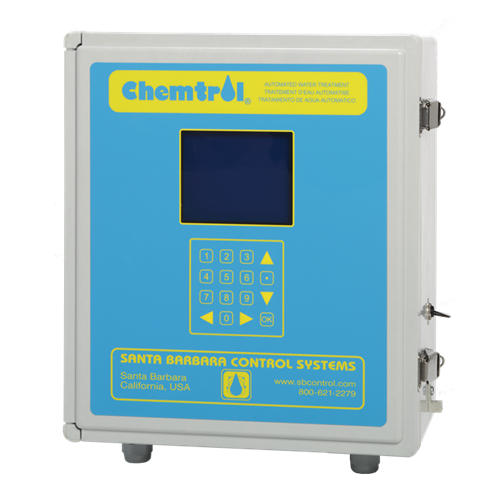
Several products here illustrate how different systems address different levels of control complexity. The Chemtrol CT6000 Cooling Tower Controller and Cosasco CT3000 Cooling Tower Controller are examples of application-oriented platforms designed for cooling tower water management, combining multiple measurement inputs with configurable control modes, alarms, and communication options.
For broader programmable control, models such as the Chemtrol PC3000, PC5000, PC6000, and PC7000 show how a single controller can support integrated monitoring for pH, ORP, conductivity, sanitizer, and temperature, while also offering data logging and building or plant communication features. The Chemtrol PC4000 Filter Controller highlights another side of the category, where control logic is centered more on filter operation and backwash management than on chemical feed alone.
On the analytical monitoring side, Wekotec systems such as the WEKO-PO, WEKO-NO3, and WEKO-TOC are geared toward continuous online measurement of specific water quality indicators. These are relevant when users need targeted process data rather than only general-purpose chemical control.
How to choose the right controller or monitor
The first step is to define whether the application needs monitoring only, closed-loop control, or a combination of both. A simple monitoring point may only need signal output and alarms, while a cooling tower or treatment skid often benefits from programmable control modes such as manual, automatic, timer-based, scheduled, or bleed-and-feed operation.
Next, review which parameters matter most to the process. If the priority is maintaining conductivity and chemical feed in a cooling tower, a dedicated controller may be more suitable than a highly specialized analyzer. If the process requires nutrient or organic load tracking, an online analyzer designed for phosphate, nitrate, or TOC will generally be the better fit.
It is also important to consider communication and integration requirements. Many users need outputs such as 4-20 mA or connectivity options for plant monitoring systems. If your application also requires adjacent instrumentation for related measurements, you may want to review options such as dissolved oxygen controllers or a water resistivity controller depending on the chemistry and process environment.
Manufacturer focus within this range
Chemtrol is strongly represented in this category with controllers aimed at cooling towers, integrated water treatment control, and filter automation. These products are relevant for users who need multiple measurement channels, configurable alarms, data logging, and structured control logic in one platform.
Cosasco appears here with cooling tower control solutions suited to applications where conductivity, pH, ORP, and temperature need to be managed together. Wekotec adds another dimension with online water quality monitoring systems focused on specific analytical values such as phosphate-phosphorus, nitrate-nitrogen, and total organic carbon.
What matters in day-to-day operation
In real installations, ease of calibration, alarm visibility, and data access can be just as important as the raw measurement range. Instruments that support one-point, two-point, or three-point calibration workflows can help maintain accuracy over time, while onboard memory and local or remote data access make it easier to review trends and troubleshoot process changes.
Operators also tend to look closely at relay capacity, enclosure style, mounting method, and ambient temperature suitability. These practical details influence how well a controller fits into an equipment room, panel, skid, or outdoor utility area. A good selection process balances measurement needs with maintenance realities and the level of automation expected from the system.
Related categories for broader water monitoring systems
Some projects involve more than one measurement family, especially in industrial water treatment, wastewater, or integrated utility monitoring. If your scope includes oxygen demand monitoring, it may be useful to explore COD and BOD controllers alongside this category to build a more complete instrumentation package.
Likewise, users working across multiple process streams may combine water quality controllers with other environmental control devices depending on treatment stage, water purity target, or process risk. The right setup is often not a single instrument, but a coordinated group of monitors and controllers selected around the actual operating objective.
Choosing with the application in mind
This category brings together equipment for both general-purpose water chemistry control and more specialized online water analysis. Whether the need is cooling tower control, filter automation, multi-parameter monitoring, or continuous measurement of selected water quality indicators, the most effective choice comes from matching the instrument to the process, control strategy, and integration requirements.
If you are comparing options, focus on the parameters to be measured, the required outputs, the control functions needed on site, and the level of visibility expected by operators or plant systems. That approach usually leads to a more reliable and maintainable water quality monitoring setup over time.
Get exclusive volume discounts, bulk pricing updates, and new product alerts delivered directly to your inbox.
By subscribing, you agree to our Terms of Service and Privacy Policy.
Direct access to our certified experts