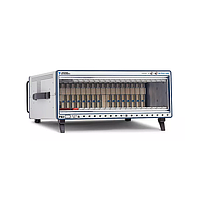
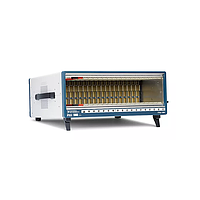
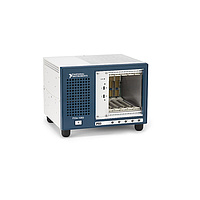
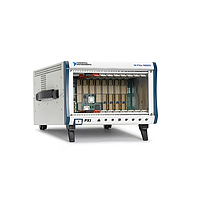
PXI Chassis
When building a modular test, measurement, or industrial control system, the chassis is more than a simple enclosure. It defines how instruments are powered, synchronized, cooled, and interconnected across the entire platform. For engineers working with PXI Chassis, the right choice has a direct impact on system bandwidth, timing accuracy, scalability, and long-term maintainability.
This category brings together chassis options used in PXI and PXI Express environments, with a strong focus on NI platforms and related modular instrumentation use cases. Whether the goal is automated validation, production test, data acquisition, or edge-deployed test systems, selecting the correct chassis helps create a more stable and better-matched solution from the start.
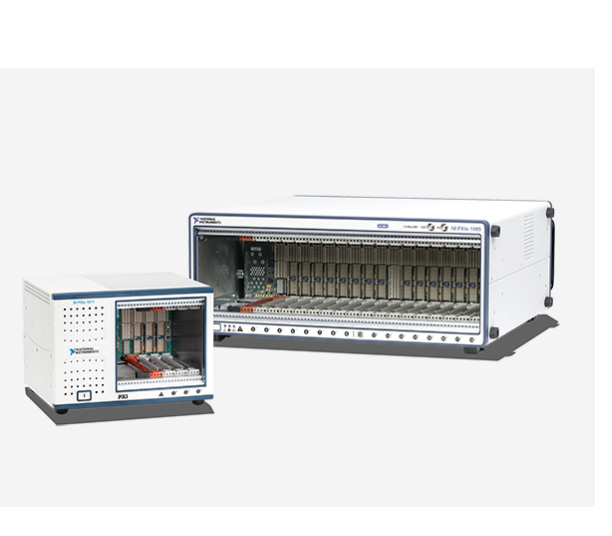
Why the chassis matters in a PXI-based system
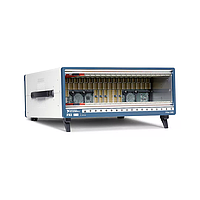
A PXI chassis acts as the central hardware backbone for modular instruments. It provides slot capacity for measurement and switching modules, distributes power, manages cooling, and supports timing and triggering across the system. In practice, these factors influence not only current performance but also how easily a setup can be expanded in the future.
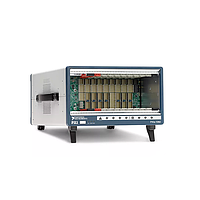
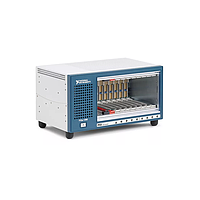
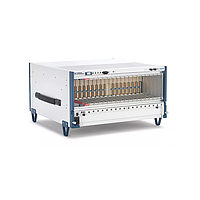
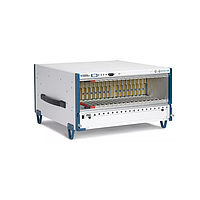
In high-channel-count or high-speed applications, the chassis often becomes a key selection point because it affects system bandwidth, synchronization features, and thermal headroom. For example, an 18-slot platform can support broader mixed-instrument configurations, while a more compact 9-slot or 10-slot option may be a better fit for lab benches, development stations, or space-constrained racks.
Common PXI chassis formats in this category
This category includes several NI chassis families covering different slot counts, clocking options, and power configurations. Models such as the NI PXIe-1095 and NI PXIe-1092 are suited to PXI Express deployments where high data throughput and modular flexibility are priorities. Depending on the version, they are available with different onboard clock approaches and external clocking support.
For larger systems that need 18-slot capacity, products such as the NI PXIe-1085 and NI PXIe-1086 series provide room for extensive hybrid module combinations. Where DC input is required for mobile, embedded, or industrial environments, the NI PXIe-1086DC offers an alternative to standard AC-powered chassis. Smaller configurations like the NI PXIe-1088 can be appropriate when moderate slot count is enough and a compact footprint is preferred.
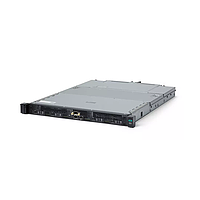
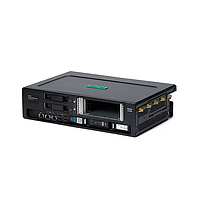
Beyond traditional rack or bench test environments, converged edge systems are also represented. The NI HPE Edgeline EL1000 and EL4000 combine PXI integration with edge-oriented deployment concepts, which can be useful when data processing and instrument access need to be closer to the machine, process, or field location.
Key selection criteria before you buy
The first factor is usually slot count. This should be aligned with both the number of modules needed today and the likelihood of future expansion. A system built too tightly around current requirements can become limiting once more channels, additional stimulus modules, or specialized timing hardware are added.
The second factor is bandwidth and bus architecture. In PXI Express systems, higher backplane bandwidth can be important for applications involving fast data movement, synchronized acquisition, or mixed workloads running across multiple instruments. If the system will host modules such as oscilloscopes, fast digitizers, or switching hardware, the chassis should be matched to the expected throughput and timing demands.
Cooling capacity and power delivery are equally important. Some modules generate more heat or draw more power than others, so the chassis must support reliable operation under real working conditions. This is particularly relevant in dense systems that combine measurement, switching, and control functions in one frame.
Clocking, triggering, and synchronization considerations
One of the major reasons engineers choose PXI platforms is the availability of integrated timing and synchronization features. Chassis with system timing slots, external clock access, and higher stability clock options can be advantageous in validation, characterization, and automated test sequences where repeatability matters.
For example, versions of the NI PXIe-1095 and NI PXIe-1092 are available with OCXO or VCXO clock configurations. In general terms, this affects how a system may be aligned with its timing requirements, environmental conditions, and external synchronization strategy. If your application involves coordinated measurements across multiple modules, chassis-level timing capabilities should be reviewed alongside the module specifications themselves.
Trigger routing also deserves attention when building integrated test platforms. Chassis are not selected in isolation; they are part of a complete architecture that may include switch modules, DMMs, and communication interfaces that need to operate as one synchronized system.
Examples of solutions in this range
NI is the primary manufacturer represented in this category, with chassis covering compact, mid-size, and full-capacity PXI Express requirements. The NI PXIe-1095 stands out for high slot count and high backplane bandwidth, while the NI PXIe-1092 offers a smaller 10-slot footprint for applications that still need strong PXI Express performance. The NI PXIe-1085 and PXIe-1086 families address larger modular systems where expansion room is a priority.
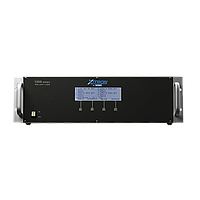
There is also a more application-specific chassis option from Vitrek. The Vitrek 1500 Line/Load Chassis is designed around configurable line and load card combinations rather than general-purpose PXI instrumentation. That makes it relevant in specialized electrical test setups where programmable line/load behavior is part of the solution architecture rather than a standard measurement backplane.
These examples illustrate that chassis selection depends heavily on system intent. Some platforms are optimized for broad PXI instrumentation ecosystems, while others support more focused test arrangements tied to a particular electrical or functional workflow.
How PXI chassis fit into a broader test ecosystem
A chassis is only one layer of the overall test platform, but it shapes how the rest of the system comes together. In many deployments, the chassis hosts measurement, switching, communications, and control modules that must exchange data efficiently and remain synchronized throughout the test sequence.
This is why buyers often evaluate chassis together with adjacent instrument categories such as digital multimeters or communication hardware for GPIB, serial, and Ethernet integration. The best fit depends on signal type, channel density, software environment, mechanical constraints, and whether the system is intended for R&D, production test, or embedded deployment.
For industrial and B2B environments, practical considerations such as serviceability, available rack space, input power type, and long-term platform consistency are often just as important as raw technical performance. A well-matched chassis helps reduce redesign work later when the system grows or operating requirements change.
Choosing the right chassis for your application
If you are comparing PXI chassis, it helps to begin with a short list of non-negotiable requirements: number of modules, required bandwidth, power type, timing needs, and deployment environment. From there, it becomes easier to decide whether a compact chassis, a high-bandwidth PXI Express platform, or a more specialized solution is the better fit.
This category is intended to support that selection process with chassis options from established manufacturers and a range of configurations suitable for modular electronic test systems. If your project also involves related instruments, reviewing the broader NI test ecosystem can help ensure the chassis, modules, and interface hardware are aligned from the beginning.
In the end, the right PXI chassis is the one that supports your instruments reliably, leaves room for system growth, and matches the timing, cooling, and integration demands of the application rather than simply meeting the minimum slot requirement.
Get exclusive volume discounts, bulk pricing updates, and new product alerts delivered directly to your inbox.
By subscribing, you agree to our Terms of Service and Privacy Policy.
Direct access to our certified experts