
10/15/2026 13:52:51
Power electronics and power integrity aim to deliver suitable voltages, currents, and noise characteristics, yet differences in tools, vocabulary, and figures of merit can hinder alignment.
Power electronics and power integrity aim to deliver suitable voltages, currents, and noise characteristics, yet differences in tools, vocabulary, and figures of merit can hinder alignment.
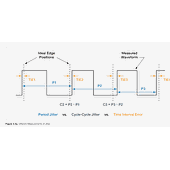
Clock jitter can interfere with digital circuits, including high-speed ADCs. High-speed clocks may be sensitive to power cleanliness, while quantifying that relationship takes careful effort.
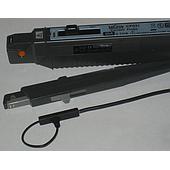
A Rogowski coil produces a voltage related to the rate of change of enclosed current. Integration converts that signal to one proportional to current, but the method does not operate at DC.
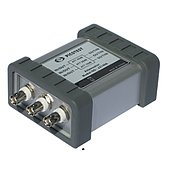
Output impedance testing connects a J2111A current injector and probe to an LM117 output; small-signal load steps use an AWG and no injector bias current.
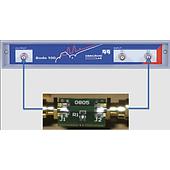
A 2-port shunt-through setup with the Bode 100 uses Gain/Phase mode, a 50 Ohm termination on Ch2, Thru calibration, and a logarithmic sweep to read impedance and estimate inductance.
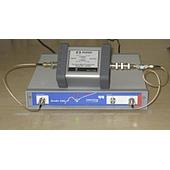
PDN measurement commonly relies on a vector network analyzer. The source distinguishes 1-port measurement for higher impedance from 2-port shunt-through measurement for very low impedance, while noting that instrument cost can affect the approach.
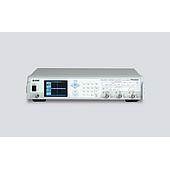
An FRA is commonly used for transfer functions and power-supply control loops. A VNA provides port-based S-parameter, reflection, and calibrated impedance measurements for more complex RF and interconnect work.
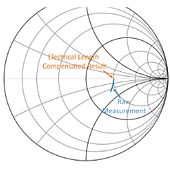
A vector network analyzer can help characterize passive components, but measurement accuracy depends on the impedance range and method used. A grounded-end approach with port extension and an R + jX marker may have significant error outside a narrow range.
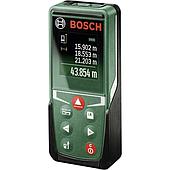
The Bosch GLM laser distance meter series has long been a staple on construction sites and in manufacturing workshops. Mastering these hidden features optimizes construction schedules and significantly reduces manual operational errors.
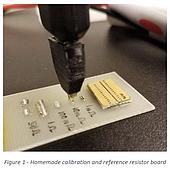
A 2-port probe can measure PCB power-rail impedance with minimal board changes. For the VDD_3V3_S0 example, ON-state impedance was checked against an approximately 8 mΩ target through 7 kHz.
Get exclusive volume discounts, bulk pricing updates, and new product alerts delivered directly to your inbox.
By subscribing, you agree to our Terms of Service and Privacy Policy.
Direct access to our certified experts