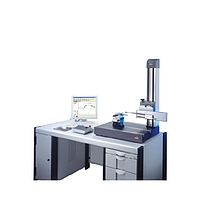
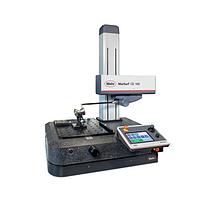
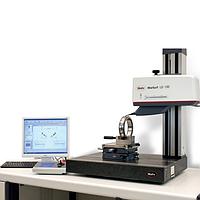
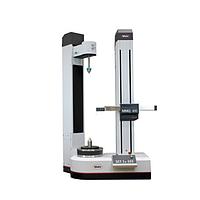
Contour measuring machine
When dimensional inspection goes beyond simple length or diameter checks, contour analysis becomes essential. Complex edges, radii, angles, grooves, and transitional profiles often need a more detailed evaluation to confirm that a part matches its drawing and performs as intended. That is where a Contour measuring machine becomes especially valuable in quality control, toolroom inspection, and precision manufacturing.
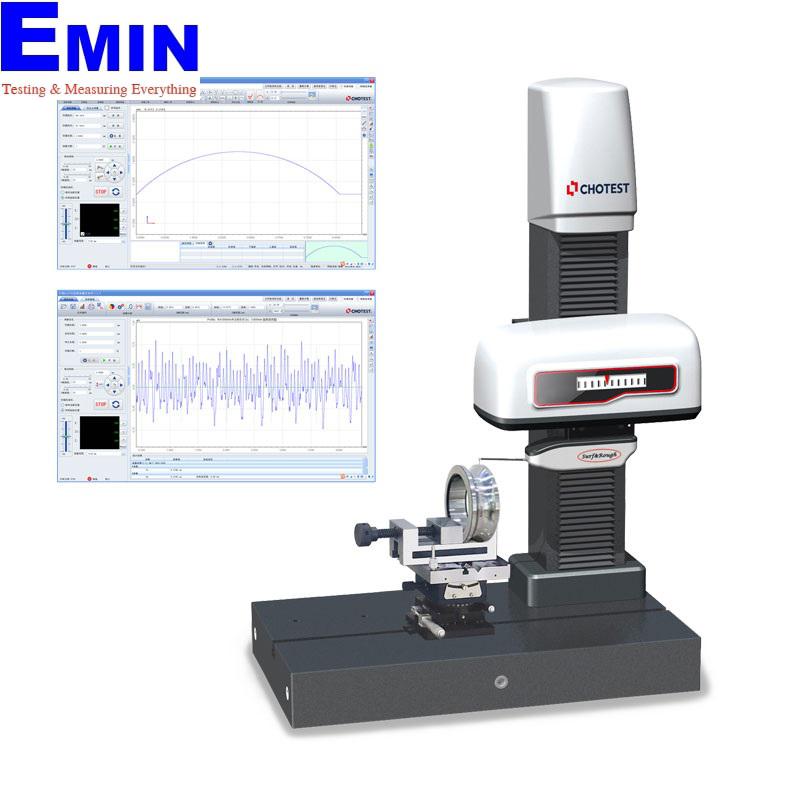
Why contour measurement matters in precision inspection
Many machined and formed components cannot be evaluated accurately with basic handheld tools alone. Even when instruments such as callipers or micrometers are useful for quick checks, they do not provide a full profile trace of a part’s geometry. Contour measurement helps verify whether the actual shape follows the intended nominal contour across a defined measuring path.
This is particularly important for components with steps, slots, chamfers, arcs, grooves, and complex transitions. In production environments, contour data supports process adjustment, first-article inspection, incoming quality checks, and documentation for traceable dimensional control.
What a contour measuring machine is designed to evaluate
A contour system is used to capture and analyze the profile of a workpiece by moving a probe across the surface in a controlled path. The measured data can then be used to assess geometric elements such as distances, heights, angles, radii, form deviations, and relationships between features. In practice, this makes the equipment suitable for both simple profile checks and more demanding inspection tasks.
Compared with general-purpose measuring methods, a profile measurement system is better suited when repeatability, fine resolution, and software-based evaluation are required. It is often chosen for parts in automotive manufacturing, precision machining, metalworking, mold production, and component validation where contour quality directly affects assembly or function.
Typical machine configurations in this category
This category includes precision contour stations from Mahr, with models designed for different traversing lengths, Z-axis capacities, and setup preferences. For example, the MarSurf CD 140 and MarSurf CD 280 series address different measuring ranges, making it easier to match the machine to part size, feature depth, and inspection workflow.
Some representative models include the Mahr MarSurf CD 140 BG 21 and MarSurf CD 140 BG 22 for applications requiring a 140 mm X range, as well as the MarSurf CD 280 BG 21 and MarSurf CD 280 BG 22 for longer measuring paths up to 280 mm. Variants with or without angular adjustment of the X-axis can be relevant depending on fixture strategy, feature accessibility, and the complexity of the contour being inspected.
How to choose the right contour measuring machine
Selecting the right system starts with the geometry of the parts you need to inspect. The first consideration is the required measuring path in X and Z, because this determines whether the machine can access the full contour in a single setup. Probe arm length, measuring force, and positioning speed also matter when working with delicate surfaces or narrow features.
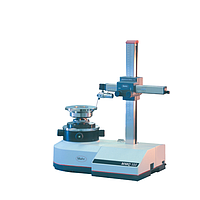
A second consideration is the type of evaluation needed in daily use. If your inspection routines involve repeated profile measurements across multiple part families, software workflow and setup flexibility become just as important as hardware capacity. For users comparing contour inspection with other form-analysis tasks, it may also be helpful to review a roundness measuring machine when circular form and rotational characteristics are part of the same quality requirement.
In many factories, the best choice is not simply the largest machine. A compact system may be more efficient for smaller precision parts, while a higher-capacity platform is better suited for larger components or applications that need more vertical travel and broader measuring reach.
Representative Mahr systems for contour analysis
The Mahr MarSurf CD series in this category covers several practical inspection scenarios. Models such as the MarSurf CD 280 BG 22 and MarSurf CD 280 BG 21 provide extended X-axis travel and a 600 mm Z-axis configuration, which can be useful for larger profiles or fixtures that require more vertical space. Where shorter traversing distances are sufficient, the MarSurf CD 140 BG 21 and BG 22 offer a more focused solution.
These machines are presented with fine resolution capability, adjustable measuring force, and different probe arm options, which are all relevant in precision contour work. In broad metrology workflows, contour stations are often used alongside other instruments such as dial indicators for setup verification or comparative checks at the workstation.
Applications across manufacturing and quality departments
Contour measuring machines are commonly used wherever edge shape and profile fidelity affect product performance. Typical examples include turned parts, stamped parts, sealing surfaces, tool components, bearing-related features, and machined housings with defined grooves or transitions. Inspection teams use contour data to detect deviations that may not be visible through point-based measurement alone.
They are also useful in process development and troubleshooting. When a tool wears, a cutting parameter changes, or a formed edge drifts from specification, contour traces can help identify where the deviation occurs along the part profile. This improves feedback between quality control and production engineering.
Contour measurement within a broader metrology workflow
In many inspection rooms, contour analysis is one part of a wider measurement strategy. Hand tools remain practical for routine dimensional checks, while specialized systems are used when geometry becomes more demanding. For example, a quick thickness check may be handled with a thickness meter, but detailed evaluation of radii, intersections, and profile transitions requires a dedicated contour platform.
This distinction is important when planning equipment investment. A contour measuring machine does not replace every measuring instrument; instead, it adds a higher level of capability for parts where shape verification, traceable profile analysis, and repeatable data evaluation are required.
Finding the right fit for your inspection tasks
The most suitable system depends on part size, contour complexity, fixturing needs, and the level of precision required in your inspection process. Reviewing available measuring ranges, axis configurations, and probe setup options is usually the best way to narrow down the selection. For users already working with Mahr equipment, choosing within the same ecosystem can also simplify operation and standardize measurement workflows.
Whether the goal is routine profile inspection or more advanced contour evaluation for precision components, this category brings together machines designed for accurate and repeatable measurement. By matching machine capacity to actual part requirements, buyers can build a more efficient and dependable metrology process.
Get exclusive volume discounts, bulk pricing updates, and new product alerts delivered directly to your inbox.
By subscribing, you agree to our Terms of Service and Privacy Policy.
Direct access to our certified experts