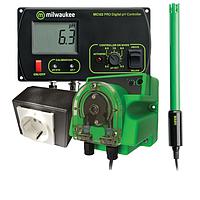
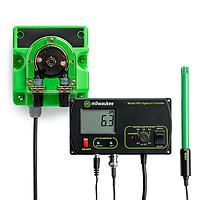
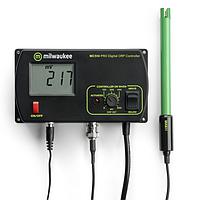
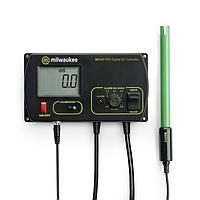
Environmental controllers
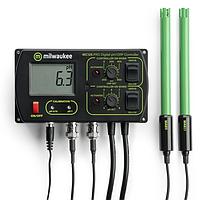
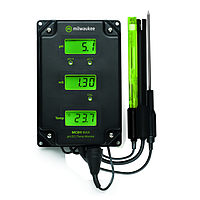
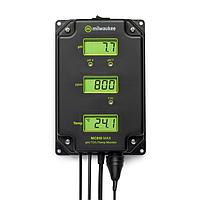
Stable process control depends on more than measurement alone. In water treatment, chemical dosing, utility systems, and industrial liquid handling, operators need instruments that can not only detect a parameter but also trigger alarms, switch outputs, and support continuous control decisions. That is where Environmental controllers become practical tools for day-to-day operation.
This category brings together controllers used to monitor and manage critical liquid and water-quality related variables such as level, pH, ORP, conductivity, TDS, and similar process conditions. Whether the goal is overflow prevention, chemical feed control, or maintaining a stable process window, these devices help turn sensor signals into usable actions across industrial and facility environments.
Where environmental controllers are used
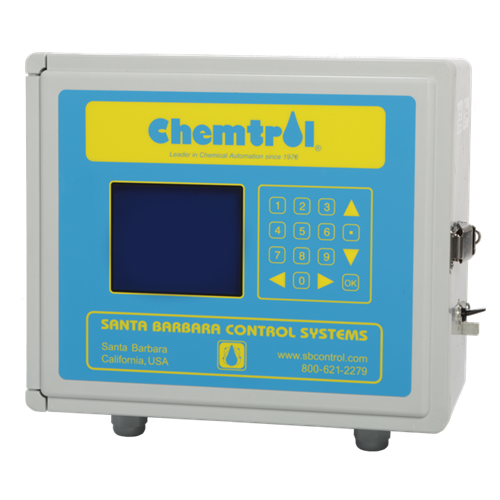
Environmental control equipment is commonly selected for applications where liquid condition or liquid presence directly affects safety, quality, or operating cost. Typical use cases include water treatment skids, cooling systems, tanks, sumps, process vessels, dosing panels, and utility monitoring points where one or more process variables must stay within a defined range.
In these environments, a controller may perform simple switching logic or provide a more advanced control role. Some units are built for point level detection, while others are intended for panel-mounted monitoring with relay outputs, analog transmission, alarms, and configurable operating modes. For broader process architectures, users may also compare these products with a multi-function controller when multiple signals or control strategies need to be handled in one platform.
Core measurement and control functions in this category
The strength of this category lies in its range of process control functions. Some controllers are designed around liquid level monitoring, helping operators detect minimum, maximum, or multiple level points inside a vessel. Others focus on water chemistry and support process decisions based on pH, ORP, conductivity, or TDS values.
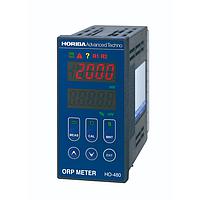
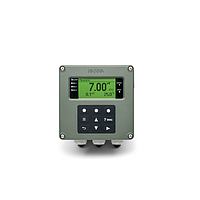
For example, the HORIBA HO-480 ORP meter represents a panel-mount approach for oxidation-reduction potential monitoring, which is relevant in water treatment and chemical process control. In a different application, the Cosasco CT3000 cooling tower controller combines control around pH, ORP, and conductivity/TDS-related parameters for system management in recirculating water applications. These examples show that environmental controllers are not limited to one sensing principle; they support a wider control ecosystem around liquid quality and operating stability.
Level control for tanks, vessels, and sump monitoring
Level control remains one of the most common requirements in industrial environmental systems. When a process needs pump protection, overflow prevention, or minimum/maximum level switching, dedicated level controllers and level switches provide direct and dependable response based on probe status or conductive liquid contact.
The Dwyer DPL110 dual point level switch is a good illustration of a compact solution for liquid monitoring in environments such as food, pharmaceutical, or sewage-related processes. In applications requiring conductive media detection at one or multiple points, several OMEGA conductivity level controllers and switches in this category can support min/max or multi-point level logic. These products are especially relevant where relay outputs and robust enclosure protection are important for field installation.
Conductivity, TDS, pH, and ORP control in liquid processes
Water and process-liquid control often involves more than a single measurement. Conductivity and TDS are widely used to indicate dissolved solids concentration, while pH and ORP help operators evaluate chemical balance, oxidation state, and treatment effectiveness. Controllers in this group help maintain these values within acceptable operating bands through alarms, relay actions, or signal transmission to higher-level systems.
In practical terms, this means a plant can use dedicated devices for a narrow task or choose a controller suited to a broader treatment loop. If your application is specifically centered on oxidation-reduction potential, it may also be useful to review the dedicated ORP controller range. For conductivity-driven liquid management, there is also a focused conductivity and TDS controller section that may better match highly specific search intent or process requirements.
How to choose the right controller
Selecting the right unit starts with the variable being controlled. A level application calls for a different device architecture than a panel-mounted chemistry controller. Before comparing models, it helps to confirm whether the task is point detection, continuous monitoring, alarm handling, output switching, or integration into a larger control system.
It is also important to review the installation environment and process conditions. Probe length, wetted materials, enclosure rating, connection style, output type, supply voltage, and chemical compatibility all influence suitability. In the products shown here, for example, some models are built with ETFE or stainless-steel wetted parts, while others offer panel-mount formats, relay contacts, analog output, or field-oriented enclosures for washdown and industrial service.
Examples of product types available
This category includes several practical controller formats rather than one uniform product style. Panel instruments such as the HORIBA HO-480 are relevant when the controller is installed in an enclosure or operator panel. Cooling-water management devices such as the Cosasco CT3000 suit more integrated treatment and control schemes where multiple parameters and outputs are needed.
On the switching side, the OMEGA LVCN and LVCF series illustrate conductive level control for tanks and vessels, with variants intended for different probe lengths, connection sizes, and point-detection arrangements. The Dwyer DPL110, meanwhile, reflects a dual-point liquid level approach for industries that need reliable detection in process and wastewater-related duties. Together, these products show how environmental controllers span both measurement-driven control and switch-based automation.
Integration and operational considerations
Beyond the sensing principle itself, many buyers also evaluate how a controller fits into the surrounding control architecture. Relay outputs may be enough for local pump or alarm logic, but some applications require analog retransmission or communication toward SCADA, BMS, or PLC systems. That is particularly relevant in utility and water-process installations where data visibility and remote supervision matter as much as local control.
Maintenance is another practical factor. Controllers used in liquid service should be selected with attention to cleaning needs, sensor exposure, expected fouling, and the ease of replacing probes or recalibrating related measurement components. A well-matched controller helps reduce nuisance alarms, unstable switching, and unnecessary intervention over time.
Finding a controller that fits the process
Environmental control requirements vary widely from one application to another, so the right selection usually comes down to matching the instrument to the process variable, media characteristics, control logic, and installation method. A simple dual-point level switch can be ideal for basic tank protection, while a panel-mounted chemistry controller may be better for managed treatment loops and monitored utility systems.
By comparing the control purpose, outputs, mounting format, and material compatibility, buyers can narrow the category efficiently and focus on products that genuinely fit their operating conditions. If you are building or upgrading a monitoring system, this category is a practical starting point for selecting controllers that support safer, more stable, and more manageable liquid process operation.
Get exclusive volume discounts, bulk pricing updates, and new product alerts delivered directly to your inbox.
By subscribing, you agree to our Terms of Service and Privacy Policy.
Direct access to our certified experts